


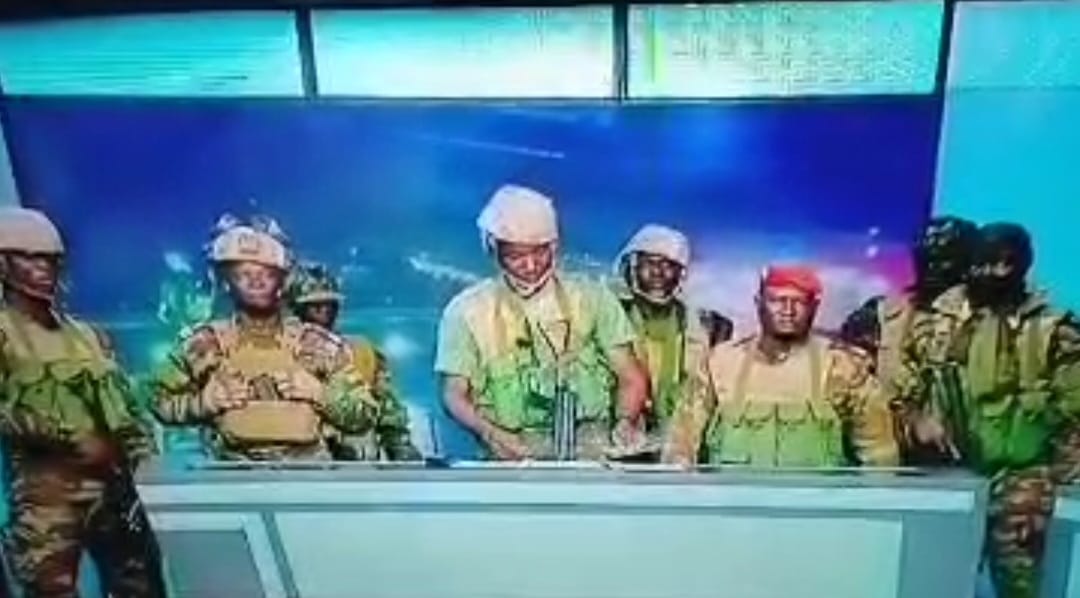

Updated: A group of Benin military officers announced early on Sunday, 7th December, that it had seized power from President Patrice Talon.
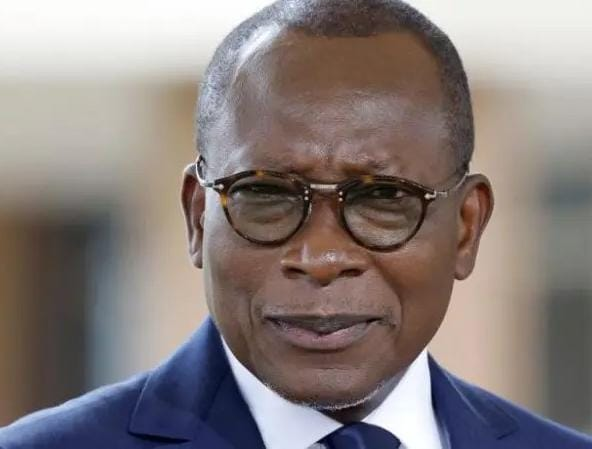
Benin President Patrice Talon
The group, led by Lt-Col. Pascal Tigri ordered the suspension of the constitution and closure of all the country’s borders, promising peace and stability, and assuring the international community that it would respect all treaties and obligations.
However, the situation remained unclear. The state television, which was broadcasting the coup makers’ statement, suddenly went off the air without any official explanation.
Foreign Minister Olusegun Adjadi Bakari told the media the “situation has been brought under control.”
A highly placed source who spoke on condition of anonymity said the residences of the president and his chief of staff were attacked, but that the attackers were “being repelled to bring the situation to normalcy.”
Benin planned parliamentary elections in January 2026 to be followed by a Presidential poll in April. Talon, who has ruled Benin with an iron hand for 10 years, said he would not run for a third term, throwing his weight behind a favourite candidate. Several of his political opponents are either in jail or in exile abroad.
Benin shares borders with the West African regional power, Nigeria.
If the coup in Benin succeeds, it means that six member States of the 15-nation Economic Community of West African States (ECOWAS) are now ruled by the military, following the dubious examples of Mali, Burkina Faso, Niger, Guinea and recently Guinea-Bissau.
Mali, Burkina Faso and Niger have quit the regional organisation to form the Alliance of Sahel States, AES.