


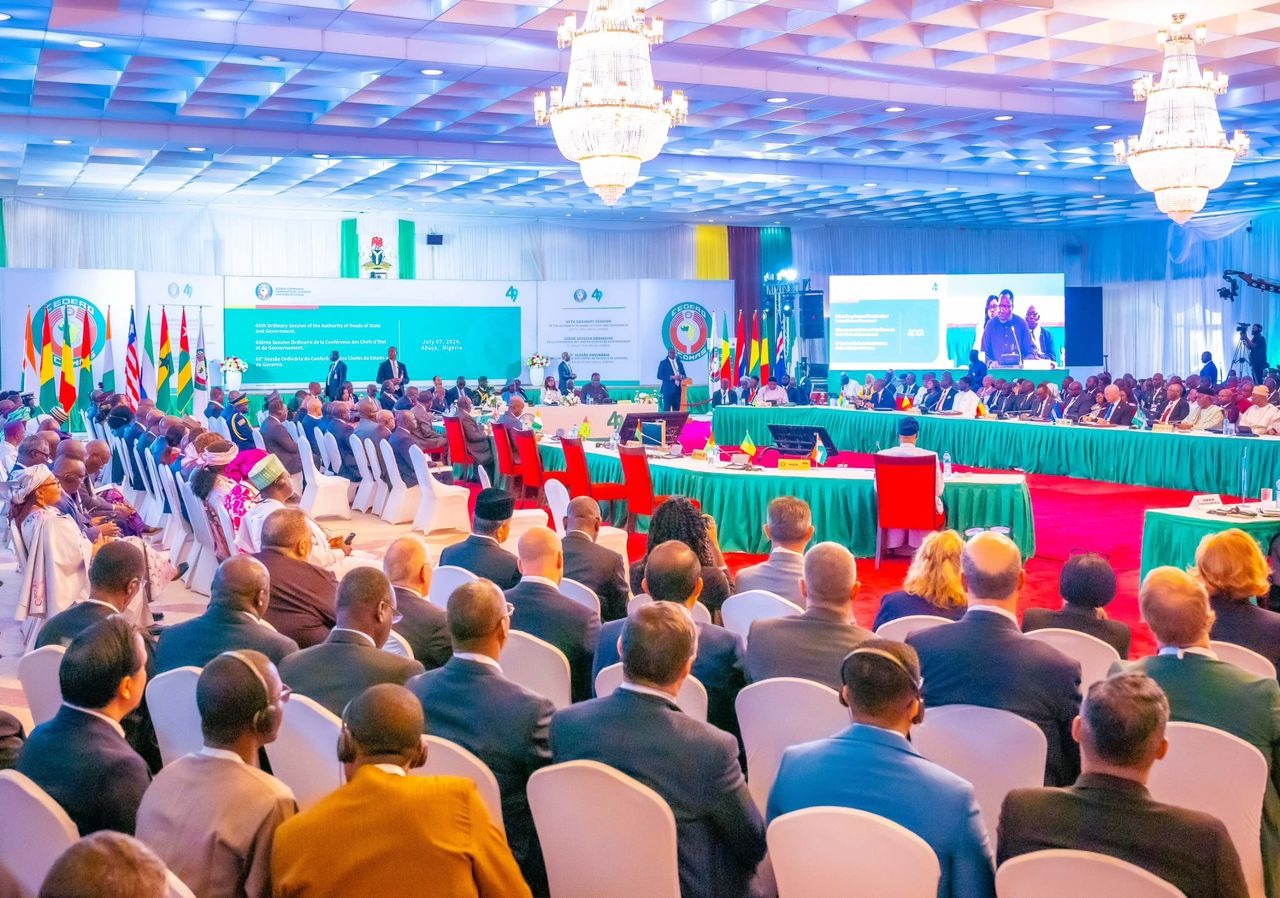

The Economic Community of West African States (ECOWAS) on Tuesday, 9 December, declared a state of emergency across the region, the first time since the regional bloc was formed in May 1975.
The President of the ECOWAS Commission, Dr Omar Touray, announced during the 55th Session of the Mediation and Security Council at the ministerial level in Abuja, saying that “recent developments underline the imperative of serious introspection on the future of our democracy and the urgent need to invest in the security of our community.”
Touray gave no further details, but this followed the latest army takeover of power in Guinea-Bissau, an attempted coup in Benin and the arrest of a Nigerian military plane with its crew and personnel by the military junta in Burkina Faso.
With a history of prolonged army rule, Nigeria is no stranger to military coups – successful and failed. However, since its return to civilian rule in 1999, reports of an alleged coup only surfaced in the country in October this year, after the Government had announced the cancellation of the country’s 65th Independence Day Anniversary Parade.
In a statement, the Defence Headquarters DHQ said “the decision to cancel the October 1 parade had nothing to do with any alleged coup attempt, but was taken to allow President (Bola) Tinubu to attend a strategic bilateral meeting outside the country.”
The statement added that “the move also enabled members of the Armed Forces of Nigeria (AFN) to sustain momentum in ongoing military operations against terrorism, insurgency and banditry.” However, the media later reported the arrest of some military officers over an alleged coup attempt.
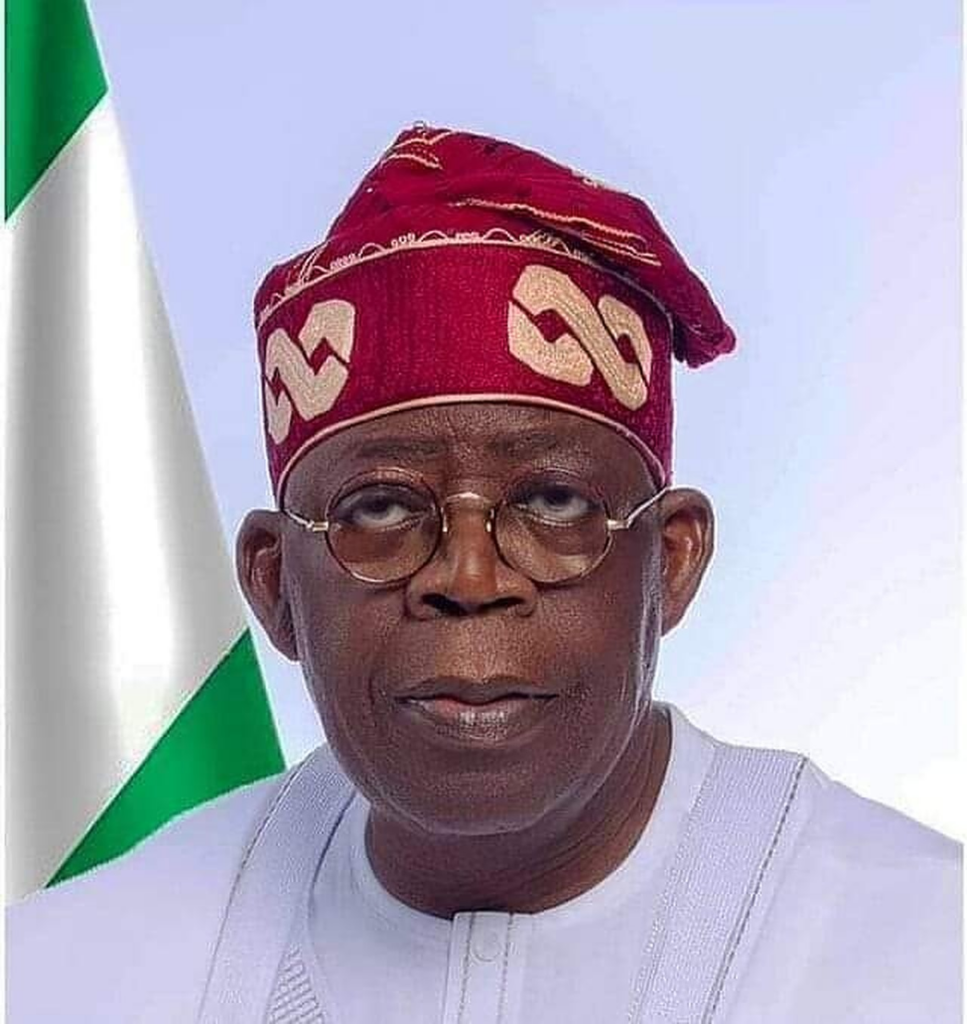
President Tinubu
While Nigerians were internalising the impact of the alleged putsch, President Tinubu announced changes to his service chiefs, including the replacement of the Chief of Defence Staff, Gen. Christopher Musa, who has since been appointed the country’s new Defence Minister.
Fast forward to 26 November, while the world was waiting for the announcement of the results of the 23 November parliamentary and presidential elections in Guinea-Bissau, President Umaro Sissoco Embalo strangely announced that he had been toppled in a military coup, which critics believe he stage-managed.
At an extraordinary ECOWAS virtual summit that decided the suspension of Guinea-Bissau over the coup, President Tinubu was among the regional leaders who called for strong measures against the disruption of constitutional order and democracy in the region. The meeting by consensus agreed on dialogue.
An ECOWAS mission has visited Bissau for mediation, but the junta is consolidating its hold on power. It has named a 28-member cabinet and announced a 12-month transition programme, while Embalo is believed to be remotely controlling affairs from an undisclosed refuge.
On 7th December, the army struck again, this time in Benin, very close to Nigeria. Soldiers led by Lt.-Col Pascal Tigri, said they had toppled President Patrice Talon, citing “the neglect of fallen colleagues and their families,” a reference to casualties in the fight against jihadists, and also “cuts in health care and tax rises, as well as curbs on political activities.”
But according to the Nigerian presidency, based on official requests by Benin, Nigeria swiftly deployed two Air Force fighter jets and some ground troops to assist the Benin armed forces in dislodging the “military mutineers,” in what later turned out to be a failed coup attempt.
While President Tinubu and other Nigerians are praising the country’s armed forces for “defending democracy,” some critical questions have emerged.
Did Nigeria act unilaterally? Was the intervention legal under the Nigerian constitution? And was it at the instance of France, following reports that French President Emmanuel Macron had called President Tinubu before the Nigerian intervention?
Section 5(4)(b) of Nigeria’s 1999 Constitution (as amended) states that “…except with the prior approval of the Senate, no member of the armed forces of the Federation shall be deployed on combat duty outside Nigeria.”
Section 5(5) “empowers the President, after consulting the National Defence Council, to deploy troops for limited combat; such deployment must relate strictly to the national security of Nigeria.” As expected, the Nigerian Senate on Tuesday approved Tinubu’s actions in Benin.
Surprisingly, in his statements after the coup attempt, Talon did not mention the Nigerian military assistance, but Tinubu was believed to have “acted in self-preservation with the coup fever dangerously too close for comfort.”
Benin is a strategic neighbour of economic and security importance to Nigeria, and there are bound to be implications or fall-outs, whether Abuja had acted or not over the Benin coup attempt.
But coming at a time when the Nigerian military is struggling in the fight against terrorism and Boko Haram insurgency, coupled with the negative reactions to U.S. President Donald Trump’s recent threat to send troops to Nigeria over alleged Christian mass killings, and the argument about national sovereignty, how was Nigeria’s military able to deploy so swiftly against the coup in another country?
The Communist Party of Benin, PCB has condemned the military intervention by Nigeria and France. While reiterating its opposition to military takeovers, the Party accused the Talon administration of being responsible for “widespread discontent” in the country.
Also, while ECOWAS has issued statements condemning the Benin coup attempt with the Chair of Authority, Sierra Leone’s President Julius Maada Bio, authorising the “immediate” deployment of a regional Standby Force to Benin, it remained unclear if the Nigerian and ECOWAS interventions enjoy full membership and community support.
President Tinubu visits Paris for his medical treatment, and the military juntas in Mali, Burkina Faso and Niger have cited the “overbearing influence of France” as a major reason for pulling their countries out of ECOWAS to form the Alliance of Sahel States, AES.
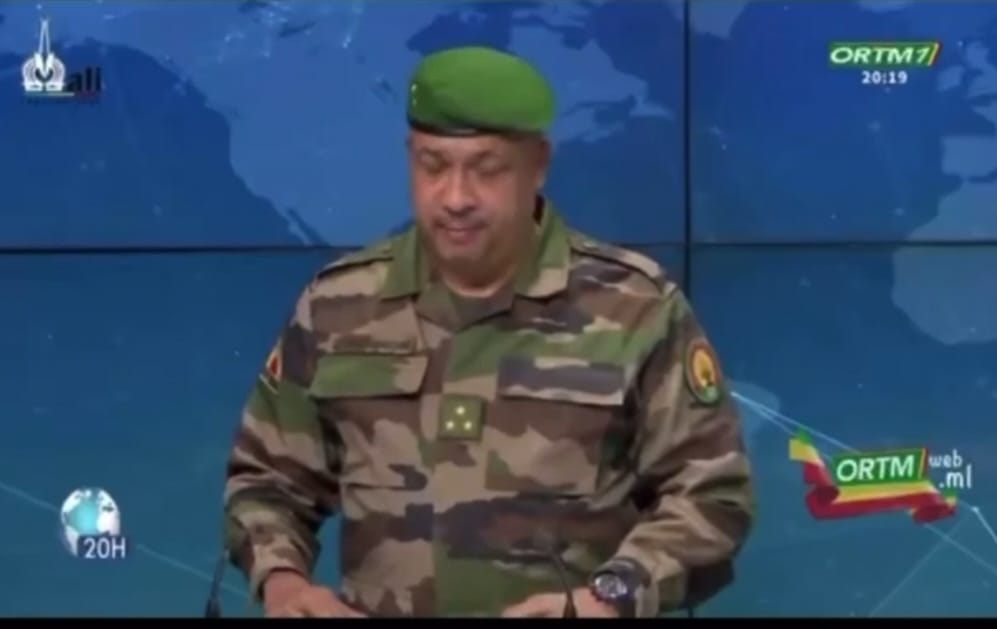
A Burkinabe military officer announcing the arrest of a Nigerian Air Force Plane with 11 personnel
To compound matters for Nigeria, an official of the junta in Burkina Faso announced on state television on Monday that the country’s armed forces had detained a Nigerian military aircraft, which made an emergency landing in Bobo-Dioulasso, with its 11 military personnel. He accused the Nigerian aircraft of violating the AES’ airspace.
However, in a statement on Tuesday, the Nigerian Air Force (NAF) said its C-130 “crew observed a technical concern… during its ferry mission to Portugal on 8 December 2025… which necessitated a precautionary landing in Bobo-Dioulasso, Burkina Faso, the nearest airfield, in accordance with standard safety procedures and international aviation protocols.”

File photo of an NAF C-130 plane
The statement further said that the “NAF crew is safe and has received cordial treatment from the host authorities.” It added that “the Nigerian Air Force appreciates the support received during this period and assures the public that NAF remains professionally committed to strict compliance with operational procedures and safety standards, ensuring the protection of its personnel while fulfilling its constitutional mandate.”
It is obvious that the C-130 aircraft was in distress and did not deliberately violate the AES’ airspace. But the junta leaders, eager to see more successful coups in the region to swell their renegade ranks, are making unnecessary capital out of the incident. That propaganda cannot sell.
Even so, ECOWAS political leaders have not covered themselves in glory, and there should be no support or encouragement for impunity in the name of defending democracy, just as military power grabs and opportunism must fail.
Without justifying military coups or dictatorship as an alternative to democracy or good governance, many African political leaders have distanced themselves from the citizens they are supposed to serve through authoritarian policies, suppression of opposition, corruption and cronyism, manipulation of national constitutions for tenure elongation, rigging of elections and shrinking of the democratic space.
Their “political, constitutional and ballot box coups,” which are as dangerous if not more damaging than military coups, are enabling unconstitutional change of governments.
The violations of the ECOWAS and African Union protocols and instruments persist without consequences, hence the growing military strikes. To regain their relevance or legitimacy, these inter-governmental organisations must stop the impunity of the political leaders, allow the rule of law to prevail with clear separation of powers, and respect for the independence of the three arms of government – the executive, legislative and the judiciary.
More importantly, there should be an intentional, deliberate and effective political education and reorientation of all stakeholders towards building/nurturing a democratic culture, to ensure that citizens vote leaders with character, competence and credibility, and also hold them to account.
Paul Ejime is a Media/Communications Specialist and Global Affairs Analyst