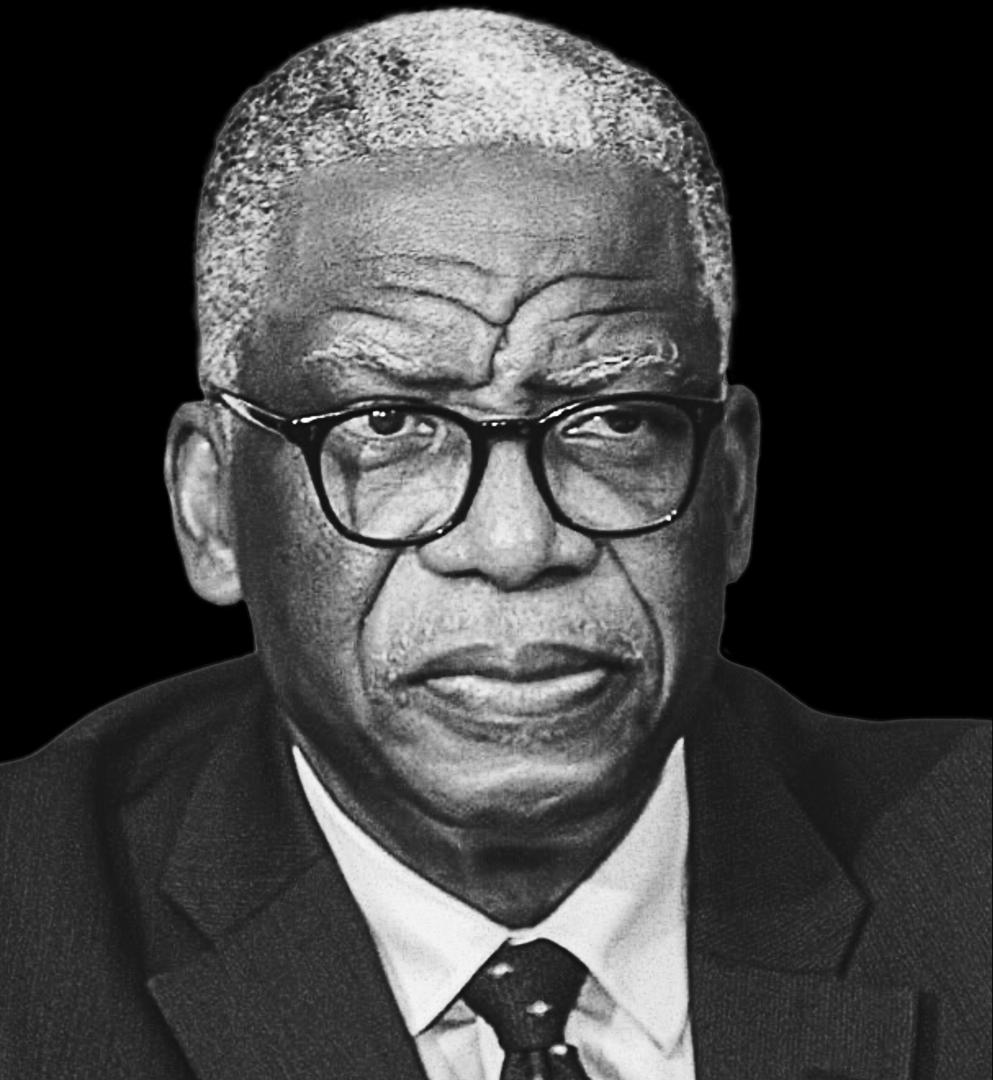




A Keynote Address Delivered By Richard Ikiebe, PhD, at the International Organisation for Peacebuilding and Social Justice (PSJ-UK) Roundtable, on Peace, Security and Justice, at the Jubilee Hall, Houses of Parliament, Westminster, London, on the Margins of the Official State Visit by Nigeria’s President Bola Ahmed Tinubu to the United Kingdom.
I am deeply honoured and humbled to stand before this distinguished gathering in one of the most hallowed chambers of democracy in the world, the Jubilee Hall of the Houses of Parliament, Westminster.
This occasion is special. Nigeria’s President is here on a State Visit to the United Kingdom, a visit that speaks to the strength of the historical ties between our two nations, the growing ambitions of our bilateral partnership, and the shared values of democracy, rule of law, and human dignity.
Normally, occasions arranged around a State Visit are carefully curated to project the best image of the visiting nation. Diplomacy demands decorum; protocol insists on positivity. And yet, we have gathered here today to do something different, and I believe, something quite brave.
We are here to speak truth to power; to elevate the voices of those who cannot speak for themselves; to ensure that in the celebration of our diplomacy, we do not forget the millions of our compatriots who live not in state houses, but in displaced persons camps, robbed of their land, their livelihoods, their dignity, and in too many cases, their lives.
We gather here and I stand before you, therefore, not to embarrass Nigeria, but to honour it, by demanding better of it.
I. The Current Situation: A Nation Within a Nation
Nigeria today hosts one of the largest internally displaced populations in Africa. According to the United Nations High Commissioner for Refugees (UNHCR), as of December 2025, Nigeria has approximately 3.6 million internally displaced persons (IDPs), primarily as a result of insurgency, armed banditry, jihadist activities, and ethno-communal conflicts. This number makes Nigeria home to 3% of the world’s total forcibly displaced persons.
The situation is particularly acute in the North. The International Organization for Migration’s (IOM) Displacement Tracking Matrix (DTM), in its most recent Round 18 assessment conducted between September and October 2025, identified 1,378,124 IDPs in just ten states of the North-Central and North-West geopolitical zones alone. This is not a static figure; it represents a 10% increase from the previous round of assessments. The displaced population is growing, not shrinking.
Beyond the North-East, where Boko Haram and its offshoot ISWAP have long wreaked havoc, the North-West and North-Central states have increasingly become theatres of mass displacement. Zamfara, Katsina, Sokoto, Kaduna, Benue, Plateau, Niger, and Nasarawa are all states bleeding internally displaced communities.
II. How Many People Are Displaced?
The headline figure of 3.6 million IDPs from UNHCR is itself a conservative estimate, as it covers only those who are formally tracked. Some UN-affiliated reports placed the figure at over 8 million Nigerians displaced by mid-2025, making Nigeria the largest host of IDPs in West Africa.
What is equally alarming is the pattern of displacement: in 2024 alone, an estimated 295,000 new internal displacements associated with conflict and violence were recorded. That is nearly a thousand new displaced persons every single day of the year.
In the North-West alone, the IOM has documented IDPs spread across 1,761 locations, 104 of which are formal camps or camp-like settlements, while the vast majority (81% of all IDPs) are not in formal camps but are absorbed into already stressed host communities, living in informal settlements, with relatives, or in makeshift shelters. This renders them largely invisible to policymakers and international humanitarian response systems.
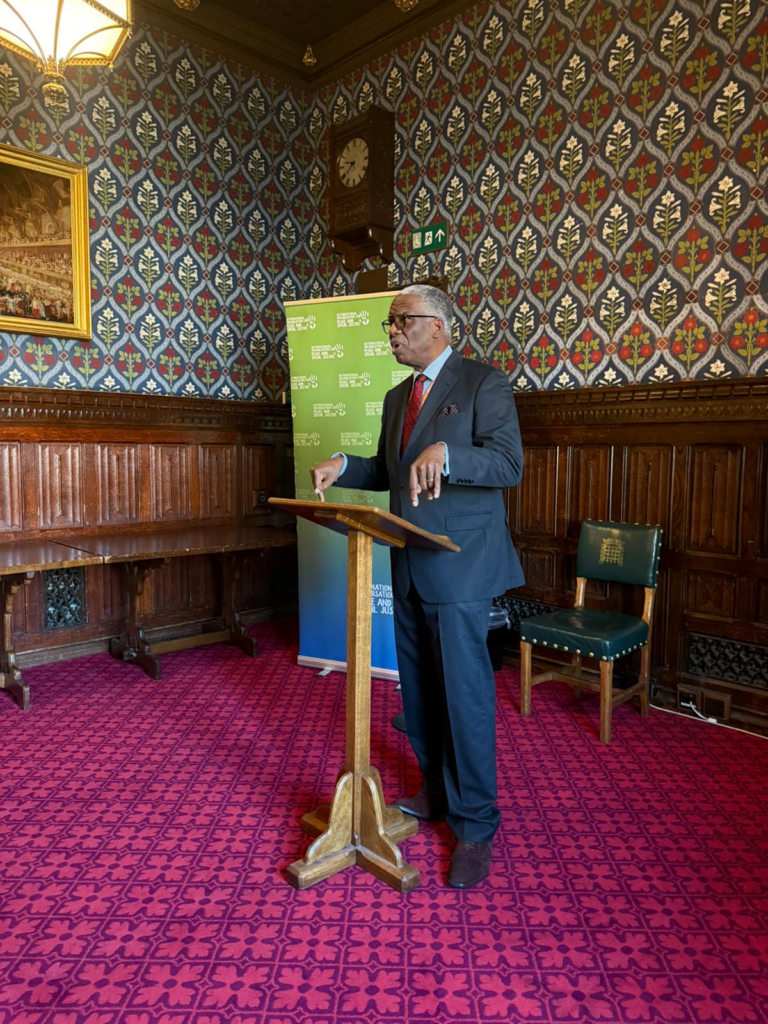
Dr Ikiebe delivering his Address
III. What Is Peculiar About Displaced Persons in Nigeria?
The profile of the Nigerian IDP is tragically distinct in several ways.
First, the overwhelming majority are rural farmers and peasant communities, the very backbone of Nigeria’s food production system. They are not combatants; they are cultivators. They are not extremists; they are grandmothers, schoolchildren, subsistence farmers, and market women. Their displacement is not the collateral of their choices; it is the consequence of a state that has failed to protect them.
Second, unlike refugee situations in many conflict zones, Nigerian IDPs are largely invisible in the national discourse. Most do not live in formal, registered camps. They are absorbed silently into urban slums and peri-urban settlements in cities like Maiduguri, Kano, Kaduna, Abuja, and even Lagos, swelling these cities with populations of extreme poverty and despair, with no clear pathway back to normalcy.
Third, a significant portion of displaced Nigerians are women and children, the most vulnerable demographics, who face compounded risks: sexual violence, forced marriage, child labour, hunger, and denial of education. The psychological trauma of displacement is generational.
Fourth, the causes of displacement in Nigeria are uniquely multi-layered. The IOM’s DTM data reveals that armed banditry and kidnapping account for 54% of displacement causes in the North-West and North-Central, Jihadist mayhem in the Middlebelt accounts for 33%, communal conflicts for 7%, and Boko Haram-style insurgency for 2% (disputable). This means that even if the Boko Haram insurgency were fully resolved tomorrow, the displacement crisis would not end. The problem has metastasised into a broader structural collapse of security.
IV. The Paradox of Priorities: Rehabilitating Jihadists While Abandoning Victims
Ladies and Gentlemen, I must now raise a question that many in polite diplomatic circles prefer to avoid. Yet it is a question that every displaced Nigerian is asking: Why does the government appear more committed to the rehabilitation of those who created the crisis than to those who are the victims of it?
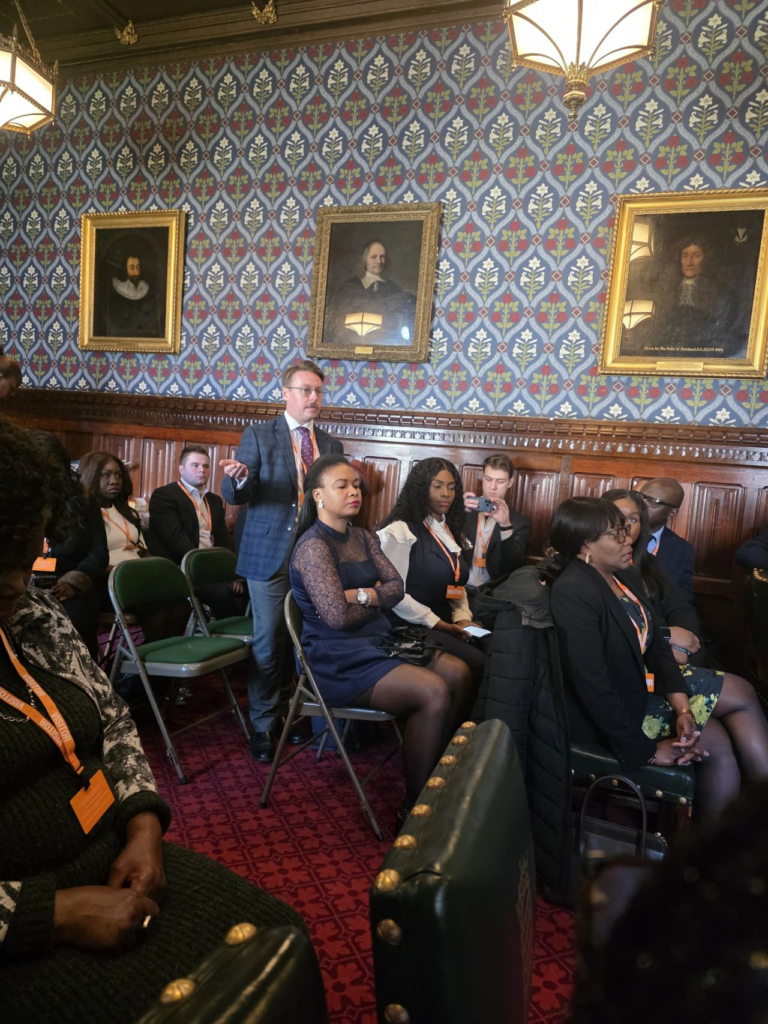
Q&A session of the event
Nigeria’s federal government operates Operation Safe Corridor, an official programme to de-radicalise, rehabilitate, and reintegrate defecting Boko Haram and ISWAP fighters. The Federal Government has spent at least N1.4 billion on rehabilitation centres for repentant terrorists, with an additional N2.4 billion budgeted for further infrastructure in 2023. Over 50,000 individuals have reportedly surrendered and are being processed through this programme.
In principle, de-radicalisation is a legitimate and necessary tool of conflict resolution. No serious peacebuilding expert would dismiss it outright. However, the moral and political problem arises when the same government that funds the rehabilitation of former terrorists allocates a fraction of equivalent resources, (in scale, in urgency, and in institutional commitment) to the millions of innocent civilians who have been displaced, traumatised, and impoverished by those same terrorists.
The Borno State government, for example, has been offering male returnees a one-off resettlement stipend of just $70, and women $35, a derisory amount that Human Rights Watch and other organisations have condemned as wholly inadequate and inconsistent with the state’s own Safe Return Strategy, which requires that resettlement be safe, dignified, informed, and voluntary. Meanwhile, IDPs are being pressured to vacate formal camps, with 2026 set as a deadline for shutting all formal IDP camps in Borno State, even as Boko Haram continues to attack returnee communities.
In September 2025, more than 60 civilians were killed when Boko Haram attacked the village of Darul Jamal, a resettlement site that housed 3,000 IDPs returned from camps, demonstrating that the government’s resettlement policy has dangerously outpaced the security conditions required for it. This is not resettlement. It is abandonment.
The question before us is not whether to rehabilitate former insurgents. The question is: why does the state invest in the perpetrators of violence while paying lip service to its victims?
V. The Cost to the Rural Economy
The economic devastation visited upon Nigeria’s rural communities by insecurity-driven displacement is catastrophic and under-reported.
Agriculture accounts for more than 25% of Nigeria’s GDP and employs over 60% of the workforce – and the bulk of this agricultural activity is concentrated in the rural North. Banditry has transformed Nigeria’s most productive agricultural zones into ghost towns. A 2025 National Bureau of Statistics assessment revealed that agricultural production has plummeted by 35% in Zamfara and Katsina, while market activity in Sokoto and Kaduna has dropped by more than half due to sustained security disruptions.
In Zamfara State alone, 638 out of 973 villages remain under the de facto control of armed bandits, according to Amnesty International. This means farmers cannot access their fields, crops cannot be harvested, livestock cannot be grazed, and rural markets cannot function. Insecurity is also responsible for wiping out an estimated 40% of Nigeria’s livestock, cattle, sheep, goats, and poultry, causing direct losses to rural livelihoods.
Nigeria’s highways, once the arteries of rural commerce, are now among the most dangerous in West Africa. Haulage firms require armed escorts. Supply chains have collapsed. Farmers who survive the violence cannot safely transport their produce to markets. Post-harvest food losses alone cost Nigeria an estimated $3.7 billion annually. Rural economies that took generations to build have been hollowed out in less than a decade.
VI. The Cost to the Entire Nation
The national economic cost of insecurity in Nigeria is staggering. Conservative estimates from security analysts, development agencies, and fiscal analysts indicate that Nigeria loses approximately $15 billion (N20 trillion) annually due to insecurity-induced disruptions across agriculture, trade, manufacturing, transportation, and extractive industries. A separate analysis by Agramondis Research and Consulting placed the insecurity-attributable loss at N7.17 trillion, incorporating livestock destruction, farm abandonment, and infrastructure damage.
Nearly 35 million Nigerians are projected to face acute food insecurity in 2026, with northern states disproportionately affected — a direct consequence of the displacement of farming communities and the collapse of rural food systems. This food insecurity is not a natural phenomenon; it is a man-made catastrophe, driven by insecurity and the failure of governance to protect food producers.
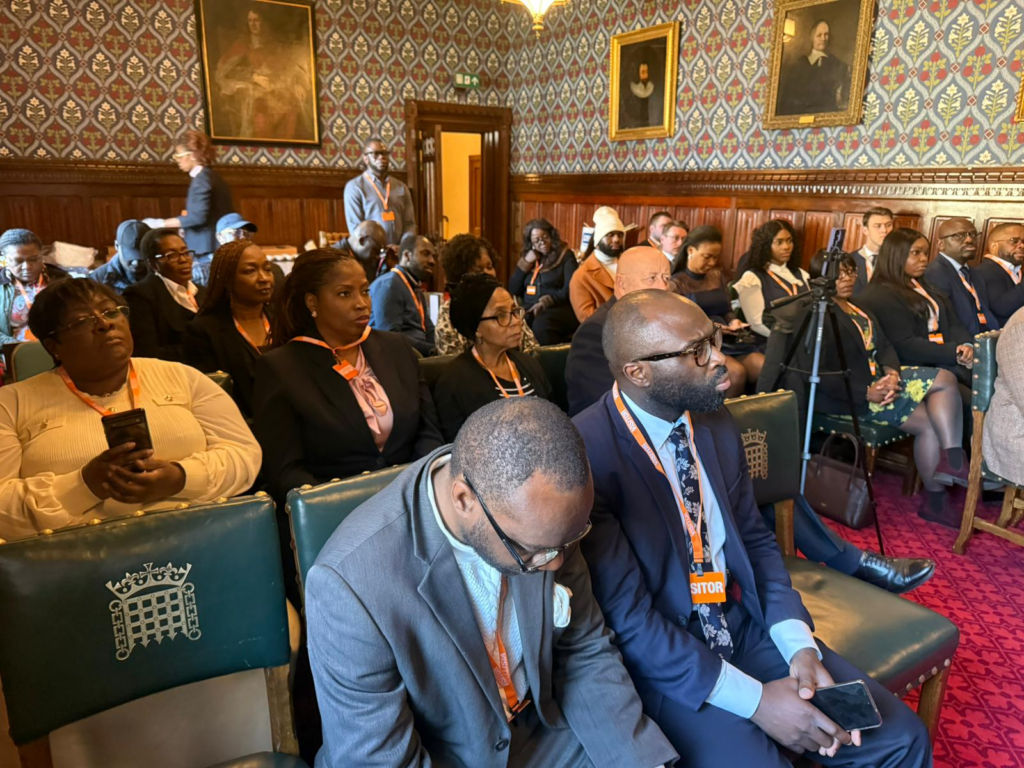
A cross-section of attendees
Beyond economics, the social costs are incalculable. Schools have closed across conflict-affected zones, denying an entire generation of children their fundamental right to education. Healthcare systems in displaced communities have collapsed. Social cohesion – the trust, relationships, and communal bonds that define Nigerian rural life – has been shattered. And with 36,934 Nigerians filing for asylum abroad in 2024 alone, the displacement crisis is not merely internal; it is driving an exodus of talent and human capital from Nigeria’s future.
VII. How Many Persons Have Been Resettled?
The government points, with some pride, to its resettlement numbers. The Borno State government, under its “Reconstruct, Rehabilitate, and Resettle” strategy, has returned more than 170,000 IDPs to their home areas in recent years. At the national level, the IOM has recorded 428,969 returnees in the North-Central and North-West alone as of October 2025.
However, these figures must be read carefully. Resettlement, as currently practised, is not the same as a durable solution. The attack on Darul Jamal, a government-promoted showcase resettlement site, in September 2025, in which over 60 people were killed, is a stark reminder that returning IDPs to insecure areas is not resettlement; it is re-exposure to danger. Human Rights Watch has noted that IDPs are being coerced rather than voluntarily returned, that consultation with displaced communities has been minimal, and that the economic support available to returnees is wholly insufficient to rebuild their lives.
True resettlement requires three conditions: security, livelihood restoration, and social services. On all three counts, current government efforts fall critically short.
VIII. What More Must the Government Do?
Ladies and Gentlemen, the challenges are immense, but the solutions are not beyond reach. What is required is political will, institutional reform, and accountability. I urge the Nigerian government, both federal and state, to take the following urgent steps:
1. Prioritise the protection of IDPs as a constitutional duty, not a humanitarian afterthought. The government must enact and implement a comprehensive National IDP Policy aligned with the Kampala Convention, which Nigeria has ratified but insufficiently domesticated.
2. Restore security in rural communities through enhanced military deployment, community policing, intelligence-driven operations, and inter-agency coordination. Farmers must be able to return to their farms.
3. Re-balance resource allocation: ensuring that funding for victim rehabilitation and IDP resettlement is at least proportionate to, if not greater than, spending on insurgent de-radicalisation programmes.
4. End coercive camp closures: resettlement must be voluntary, safe, dignified, and supported with credible livelihood packages. No IDP should be returned to an area that remains militarily insecure.
5. Invest in rural reconstruction: rebuilding schools, clinics, markets, and roads in conflict-affected areas as a precondition for sustainable return.
6. Establish an independent National IDP Commission with the mandate, funding, and authority to coordinate humanitarian response, track displaced populations, and hold government agencies accountable.
7. Address the root causes: including youth unemployment, political marginalisation of vulnerable communities, proliferation of small arms, and impunity for perpetrators of violence.
IX. What Can the UK Government Do?
The United Kingdom is not a disinterested party in this conversation. Britain and Nigeria share deep historical ties; and with the largest Nigerian diaspora in Europe resident in the UK, Britain has both a moral and a strategic interest in Nigeria’s stability and prosperity.
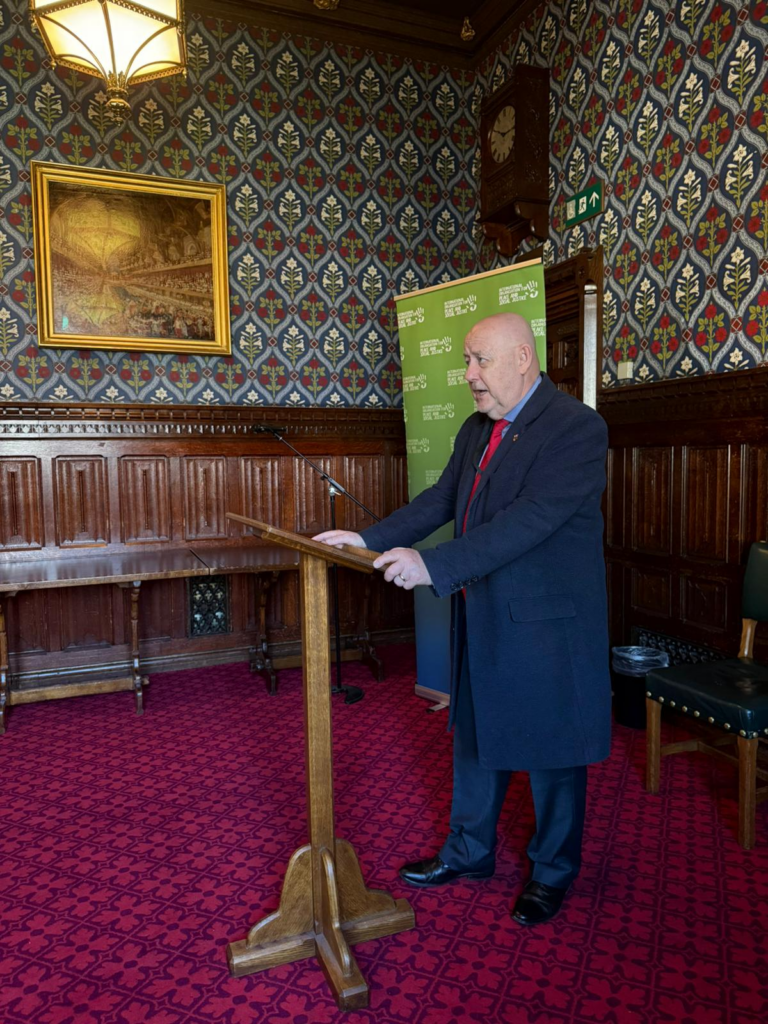
Mervyn Thomas, a statesman and UK Founding President of Christian Solidarity Worldwide (CSW), who also spoke at the occasion
I respectfully call on the UK Government to:
· Increase bilateral development assistance specifically targeted at humanitarian response in conflict-affected states in Northern Nigeria, channelled through transparent and accountable mechanisms.
· Support civil society organisations, both in Nigeria and in the diaspora, working on peace-building, IDP advocacy, and post-conflict reconstruction.
· Use the platform of this State Visit to formally raise the IDP crisis with President Tinubu: making it an explicit agenda item in bilateral discussions, rather than a footnote to trade and investment talks.
· Expand Asylum and protection pathways for Nigerians fleeing insecurity, in a manner consistent with the UK’s international obligations under the 1951 Refugee Convention.
· Fund research and data collection on Nigeria’s IDP crisis through UK Research and Innovation (UKRI) partnerships with Nigerian and British universities, to improve the evidence base for policy response.
X. What Can the Nigerian Diaspora Do?
To fellow Nigerians, who are in the diaspora, and particularly those resident here in the United Kingdom, I say this: we are not spectators. We are stakeholders.
The Nigerian diaspora remits billions of pounds annually to Nigeria; funds that sustain families, educate children, and build communities. But in this moment of national crisis, we are called to do more. We can:
· Advocate loudly and consistently in the public sphere, in the British Parliament, in the media, in academic institutions, and in international organisations, ensuring that the IDP crisis in Nigeria remains on the global agenda.
· Fund verified humanitarian organisations working directly with IDP communities, organisations that provide food, shelter, psychosocial support, and education to displaced families.
· Build bridges between communities, supporting reconciliation and peacebuilding initiatives between farming and herding communities, and between displaced and host communities, at the grassroots level.
· Engage the Nigerian government, through formal diaspora channels, town halls, open letters, and direct dialogue with officials — holding leadership accountable to its people.
· Invest in education, sponsoring children in IDP communities through school bursaries, distance learning platforms, and scholarship programmes.
· Pool resources through diaspora associations to fund livelihood restoration projects like agricultural inputs, tools, irrigation equipment, and market access for communities ready to return.
XI. Conclusion: The Measure of a Nation
Distinguished Ladies and Gentlemen,
The measure of a nation is not found in huge diplomatic ceremonies or in the splendour of its state visits. It is found in how it treats its most vulnerable citizens. It is found in whether a grandmother displaced from her village in Zamfara has a safe place to sleep. It is found in whether a child born in an IDP camp in Maiduguri will one day go to school, grow up to know peace, and contribute to the Nigeria of our dreams.
President Tinubu is here in the United Kingdom, the land of Magna Carta, of habeas corpus, of parliamentary democracy. These are not merely British values; they are universal values that Nigeria also claims. And so we say to our President, with deep respect and with sincere patriotism: Mr President, let the world see, in your legacy, a Nigeria that puts its people first.
The displaced millions are not statistics. They are not political problems to be managed. They are Nigerians – full citizens, endowed with rights, steeped in dignity, and deserving of justice.
We in the diaspora stand ready to support. The United Kingdom stands ready to partner. The international community stands ready to assist. But the will to act must begin in Abuja.
The time to act is not tomorrow. The time to act is now.
God bless Nigeria, its people, and may those in displacement find their way home – safely, with dignity, and in peace!
Dr Richard Ikiebe is a Media and Management Consultant, Teacher and Chairman, Board of Businessday Newspaper