



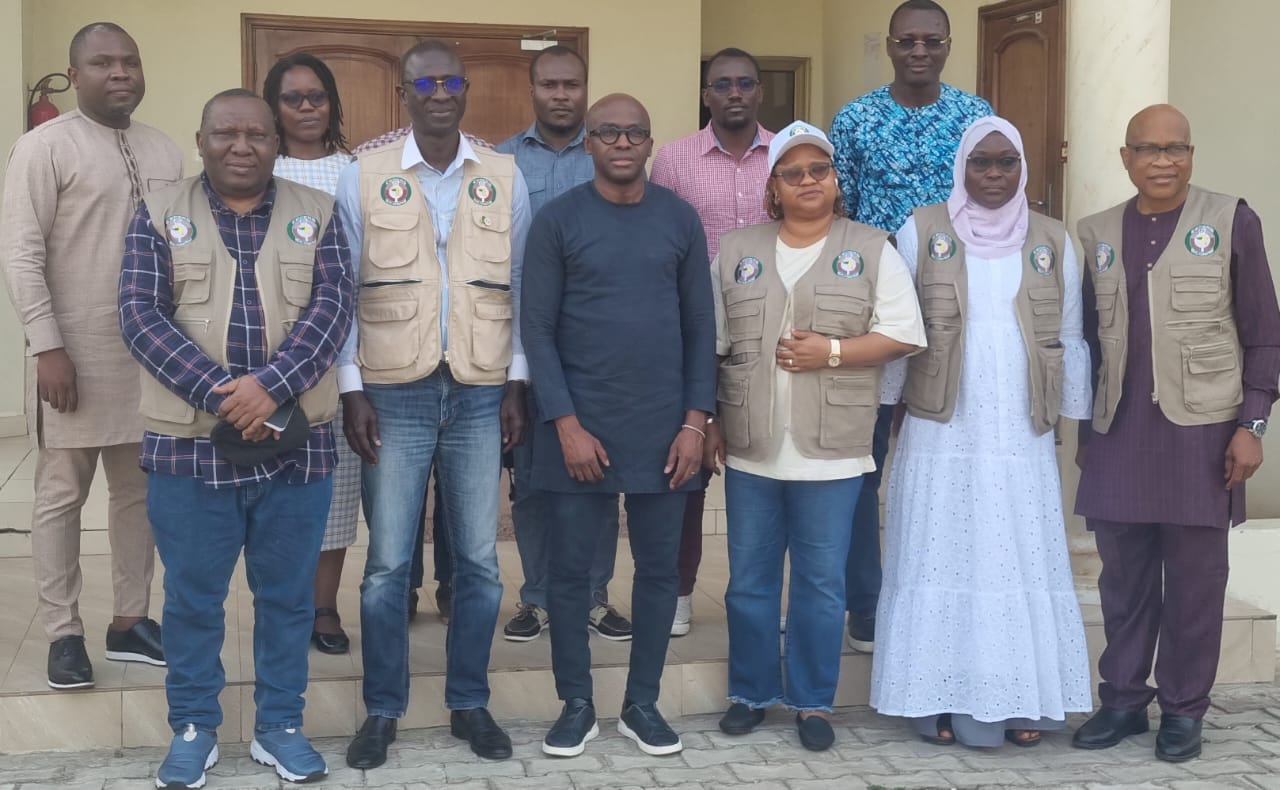

PRESS RELEASE – Cotonou, Benin, 9 April, 2026
The Benin National Agency for the Identification of Persons, or l’Agence Nationale d’Identification des Personnes (ANIP), which is in charge of voter registration in the country, has assured ECOWAS Election Observers on the integrity and reliability of the voters’ list for the 12th April presidential election.
A serious crisis arose during the country’s 2016 elections, and it was resolved through the intervention of the ECOWAS Observation Mission, which advised the authorities then to allow any registered voter on the queue with a verifiable ID to vote, instead of insisting on the presentation of the official Voter’s Card.
“We now have a consolidated National Registration System with a Data Centre, considered as one of the best and cost-effective produced by Benin citizens with external collaboration, which contains data on Civic Registration, National Population and the Voter’s List,” the ANIP Director General, Aristide Adjinacou, told the ECOWAS Long-Term Election Observation Mission (LTEOM) at the agency’s headquarters in Cotonou on Tuesday 7th April 2026.”
Accompanied by other officials of the agency, he expressed appreciation to ECOWAS for its intervention in 2016, noting that the new registration system with several security features was developed in 2023 to ensure that every Benin citizen aged 18 and above was captured in the electoral roll.
“It may not be 100% fool-proof, but we are making constant efforts to ensure the system’s reliability, guaranteed security assurance, and easy accessibility by the citizens, with interactive features,” Adjinacou said. He confirmed that 7.8 million voters were registered for this year’s elections, from the country’s estimated population of 14 million, and demonstrated the operation of the voter’s list by entering a random voter’s number, which revealed the ID of the voter with the relevant details.
The director general also explained that ANIP was working hand-in-hand with the National Electoral Commission, CENA, to address any challenges that might arise from the database.
On the question of low voter turnout raised by civil society organisations, he said the figures being quoted might not be entirely correct because, unlike in other countries where voters register themselves to vote, in Benin, any citizen aged 18 and above is automatically added to the voter roll.
He, however, noted that while it is easy for ANIP to register new births, removing the names of the dead from the register still posed a challenge that the agency was addressing.
The LTEOM members also met with officials of the Women’s Network for Peace and Security in the ECOWAS region, or Réseau Paix et Sécurité Des Femmes dans L’espace CEDEAO (REPSFECO-Benin), who explained the Network’s role within the Electoral Platform.
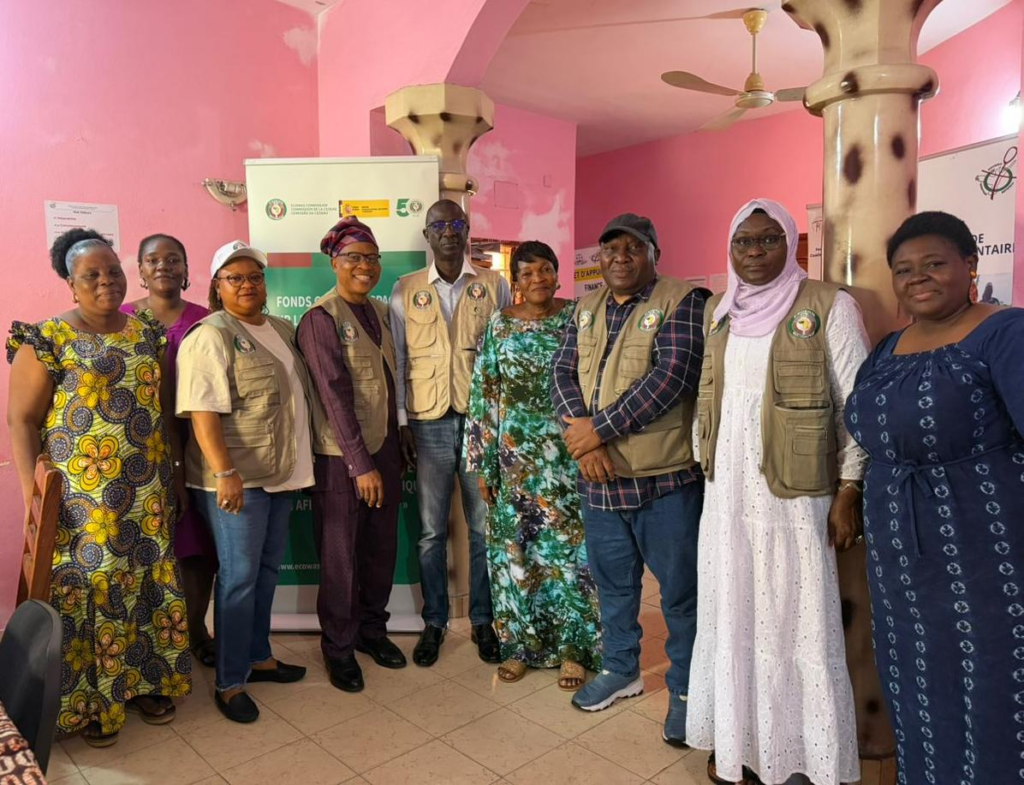
The National Coordinator, Blaindine Sintondje Yaya, thanked ECOWAS for its financial support, which she said assisted the Network in its activities in political sensitisation of women and the prevention of conflicts and electoral violence.
She said that REPSFECO would like to see a deepening of Affirmative Action, including the reservation of seats for women and their involvement in decision-making institutions.
During their visit to the National Institute for Women or L’institut National de la Femme (INF), the President, Huguette Bokpe Gnagadja, said the institute, in collaboration with government agencies such as the Ministries of Social Affairs, Justice and Micro-Economy, was working for women’s empowerment and political inclusion. It is also involved in promoting and protecting women’s rights, tackling violence against women, including rape and assisting the victims.
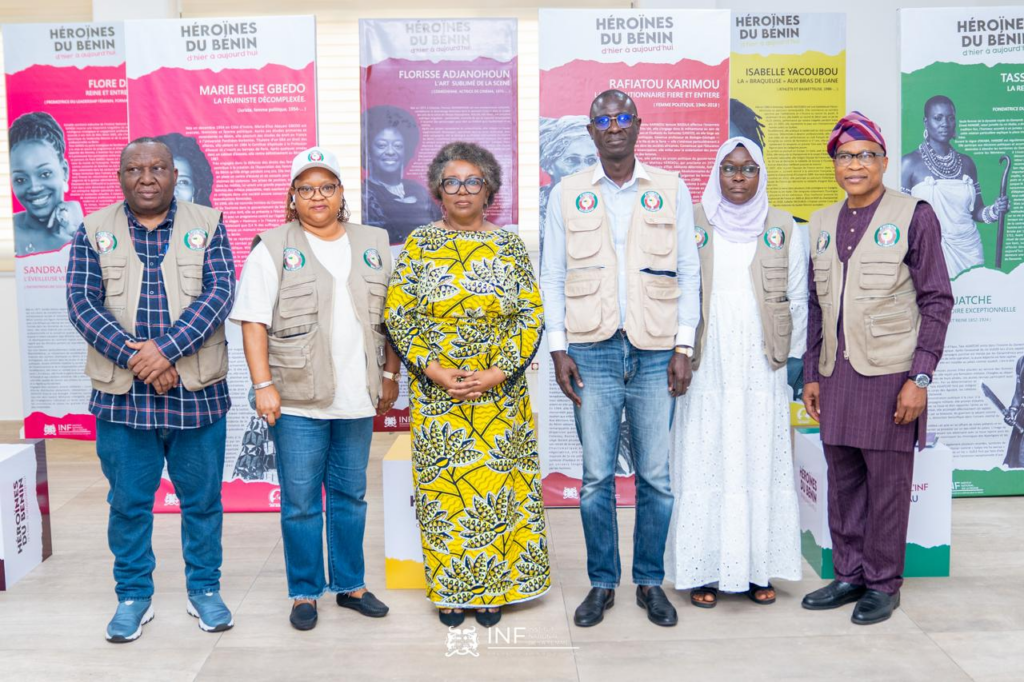
“We are also working with women advocacy organisations on the Affirmative Action to increase women’s political participation and representation, such as raising the number of women MPs, which is currently standing at 32 or 25% in the 109-member Parliament,” the INF president said. “This is even though 28 of the seats were reserved for women, so only eight of the 32 were elected,” she said, stressing the need to also increase the number of female Mayors in the country.
The two candidates for the 12th April presidential contest are Kossi Romuald Wadagni, the Finance Minister, of the ruling Coalition, who has a female running mate, and the opposition flag-bearer Paul Hounkpè.##