




“All judges are politicians whether they know it or not.” – Enrique Petracchi, former Chief Justice of Argentina, (2002).
Among lawyers trained in the traditions of the Common Law, judicial power is often misunderstood. In Nigeria, the 1999 Constitution divides the powers of the federation among the legislature, the executive and the judiciary. The first two are elected. Judges are not. In the elected arms, it vests the legislative and executive powers of the federation. In turn, the same constitution vests the “judicial powers of the Federation” in the courts. This suggests that judicial power is political not institutional.
Yet, the tradition of Nigerian law is largely to equate judicial powers with the jurisdiction of courts to both adjudicate over cases and fashion remedies in accordance with the pleadings of the parties and with judicial interpretation of the applicable laws. That is an error. Jurisdiction is inherent in the judicial office; judicial power is functional in how the judiciary deploys its jurisdiction behind the party or cause that it prefers. This is the sense in which lawyers trained in the methods of the Civil Law system speak of le pouvoir judiciaire – the judicial power.
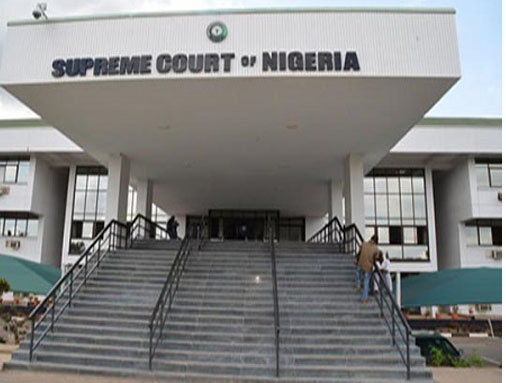
On 15th December 2025, Nigeria’s Supreme Court indulged in a dramatic demonstration of judicial power in a case in which it determined that it lacked jurisdiction on the facts. The dispute arose over the proclamation of a State of Emergency in Rivers State on by President Bola Ahmed Tinubu 18th March 2025. The duration of the emergency was an initial period of six months. In the proclamation, the president also pronounced the suspension of the elected governor and the state House of Assembly.
At the time, the governor of Rivers State, Siminalayi Fubara – who recently christened himself a lifelong “progressive” – was in supposedly retrograde company in the Peoples’ Democratic Party (PDP), on whose platform he was elected.
Twenty-three days after the emergency proclamation, 11 Governors elected on the platform of the PDP – naturally suffering from a profound bout of “there but for the grace of geography go I” – invoked the original jurisdiction of the Supreme Court to challenge the constitutionality of the emergency proclamation. Under Nigeria’s constitution, the Supreme Court is the final court of appeal in the country and most cases get to the court by way of an appeal from the lower courts. However, the court also has original jurisdiction as a court of both first and final instance in legal disputes between the federation and states or between states among themselves.
When the Rivers state case was filed, the emergency still had five months and one week to run. A Supreme Court which desired, could easily have accorded the case due priority and dealt with it expeditiously. For instance, the case concerning Local Government autonomy filed in May 2024 (which arrived the court by similar means), took only 45 days from filing to judgment on 11 July of the same year.
In the emergency rule case in Rivers State, however, the Supreme Court chose a deliberately somnolent route to scheduling. Everything the court did subsequently appeared to have been underpinned by that imperative.
On 18th September 2025, the emergency proclamation in Rivers State expired, and the suspended institutions and officials were restored to office. By the time the Supreme Court found time to address the case three months thereafter, five of the 11 governors who filed the original action had relocated their party loyalty from the PDP to the president’s All Progressives Congress (APC). Two more would do so in the days immediately following the judgment. No one will ever truly know whether the jurisprudence of political coercion confirmed in this case had anything to do with the desperation of these gubernatorial acts of party political transfiguration.
The Supreme Court later released an unsigned, 14-page media summary of the majority judgment by Mohammed Baba Idris, who led a majority of six of the seven Justices. There followed a public race to unravel what the Justices had decided. The media reported that the Supreme Court had licensed the president to suspend elected state officials under the colour of an emergency. Femi Falana, SAN, provided a spin on the judgment from a segment of the legal profession initially in shock, which argued that the court did not go as far. In reality, it did, and much more, so the initial media reports were very accurate.
Five issues are notable with the decision of the Supreme Court in this case. First, in a mere four pages, all seven Justices made short shrift of the case as filed, declining jurisdiction on the basis that “the plaintiffs failed to disclose any reasonable or justiciable dispute between them and the federation capable of invoking the original jurisdiction of the court.”
At this stage, the job of the court was done. However, the Justices decided to “undertake a considered discussion on the scope and exercise of the powers” under the constitution concerning emergency proclamations. Notably, the court framed what it undertook in the remaining two-thirds of its “summary” as a “discussion”, rather than an exercise in judicial decision-making. Scholars and jurists will expend considerable froth in the years to come on the import of what may well become known as “Supreme discussion.”
Second, the court embarked on its self-appointed discussion by locating the bases of emergency powers in an invented doctrine of “a temporary expansion of federal powers” which lacks any foundations in the text or structure of Nigeria’s constitution.
Indeed, emergency powers under Nigeria’s federal system are not an expansion of federal powers. On the contrary, they are contingent powers, ripe to be exercised upon the fulfilment of the twin requirements of substantive and procedural compliance with constitutional preconditions.
Third, turning to the constitutional preconditions, the Supreme Court continued its disquisition by pronouncing the emergency proclamation in Rivers State as having fulfilled the substantive preconditions under the constitution.
Fourth, the Court turned to the procedural arithmetic preceding the emergency proclamation. Nigeria’s constitution requires an emergency proclamation to be sustained by a joint resolution supported by a two-thirds majority of each chamber of the National Assembly. The court ruled that this implies that the voting “process adopted renders the attainment of the two-thirds majority clearly ascertainable.” In this case, the National Assembly used a voice vote to ram through its joint resolution in support of the emergency rule. The Supreme Court managed to see this as a competent constitutional computation, not parliamentary voodoo.
Fifth, the Court discussed whether the president had the power under an emergency proclamation to suspend elected state officials, including the governor and legislators. It laid down one constraint to the effect that “emergency measures must be temporary, corrective, and proportionate”; and added that “any permanent displacement or abrogation of democratically elected institutions would constitute a constitutional aberration.” “Outside a validly declared state of emergency”, the court further discussed “the President possesses no power whatsoever to interfere with State executive or legislative institutions.”
It was an odd way to phrase arguably the most cynical and gratuitous expansion of presidential power in the history of the Nigerian Supreme Court. In other words, the Supreme Court clearly discussed its way to support the assertion by the president of a power to suspend any governor he does not like under the colour of an emergency proclamation. It is also cynical because the court does not offer this as a decision but as a discussion, without even the ceremony of a declaratory import.
One of the seven Justices, Obande Ogbuinya, concurred in the decision that the court lacked jurisdiction but reportedly dissented on judicial tolerance of a presidential power to suspend elected state officials. Unlike the majority decision, the court did not bother to provide a summary of his dissent.
For the decision of the Supreme Court to become a “discussion” forum on such an issue of extraordinary constitutional significance is guaranteed to roil governance and politics in Nigeria for a long time. “As an exercise of judicial power, it is supremely wilful, cynical, and political.”
A lawyer and a teacher, Odinkalu can be reached at chidi.odinkalu@tufts.edu