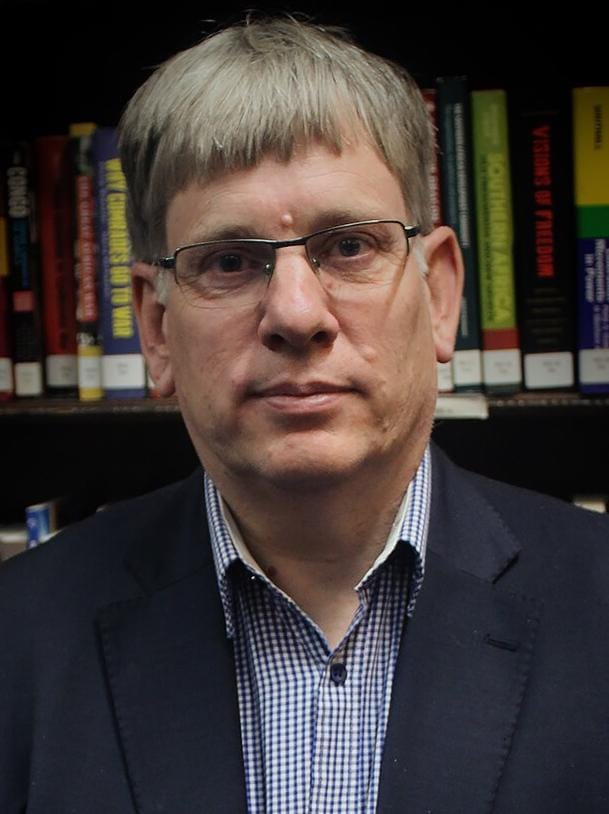



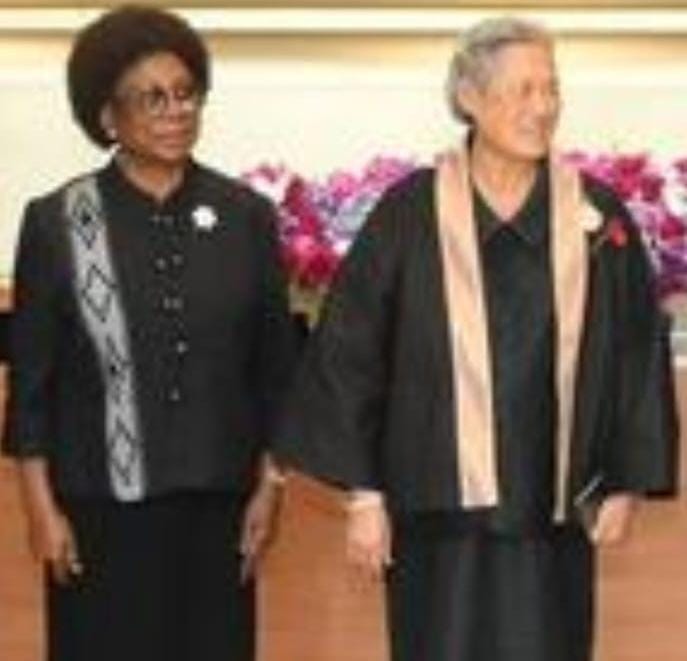

Prof. Uche Veronica Amazigo, Nigeria’s renowned scientist and recipient of several international awards, is among honorees from across the world celebrated last week by the Thai Royal Family, administrators of the prestigious Prince Mahidol Award (PMA), which she won in 2012.
Since 1992, the Prince Mahidol Award Foundation has bestowed the Award on individuals whose contributions to Medicine and Public Health have had a profound and lasting impact on global health. In 2025, it reached a historic milestone, “with 100 distinguished laureates, whose collective efforts have shaped medical advancements and public health policies worldwide.”
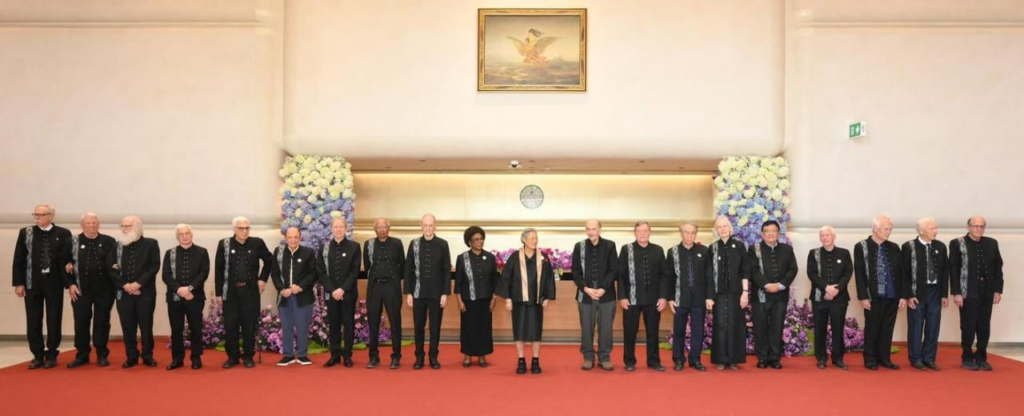
Group picture of Prince Mahidol Award Leaureates with Princess Maha Chakri Sirindhorn in the middle & Prof. Amazigo to her right
The laureates include three Africans – the late Prof. Frederick Sai of Ghana (1995), Prof. Amazigo (2012), and the late internationally renowned public health expert Prof. Adetokunbo Lucas, the first Nigerian to have won the award in 1999.
Seven of the PMA Laureates have also won the Nobel Prize.
The 45 American Awardees include Walter C. Willett, a nutrition researcher (2025), and Alfred Sommer, an ophthalmologist and professor of epidemiology (1997).
PMA honorees from other countries include Japan’s world leader in bio-organic chemistry, Prof. Satoshi Ōmura (1997), who also won the Nobel Prize in Physiology in 2025, and former WHO Director-General Dr Margaret Chan of Hong Kong (1998).
To commemorate the 100-milestone, the Foundation, under the Royal Patronage of Her Royal Highness Princess Maha Chakri Sirindhorn as the President, hosted the PMA Laureates in Thailand’s northern Nan Province from 2-5 February 2026.
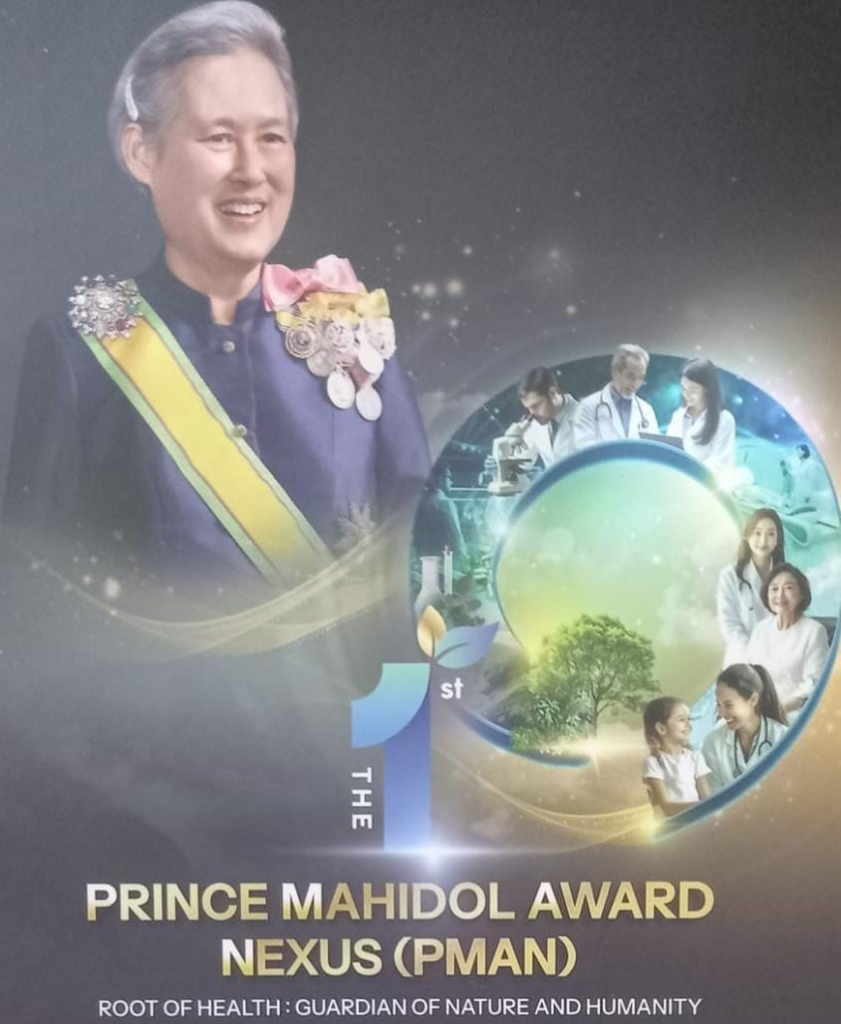
The Prince Mohidol Award Nexus (PMAN) emblem
King Bhumibol Adulyadej founded the Prince Mahidol Award Foundation in 1992, on the occasion of the 100th anniversary of his father, Prince Mahidol Adulyadej’s birth.
The Foundation said the 2026 “special gathering aims to foster connections among past laureates, reflect on the legacy of the Award, and explore future opportunities to advance global health.”
The “100 Prince Mahidol Laureates Celebration Award Nexus (PMAN)” featured the launch of a publication and a display of all the laureates in paintings with write-ups on their discoveries and contributions to medicine and public health.
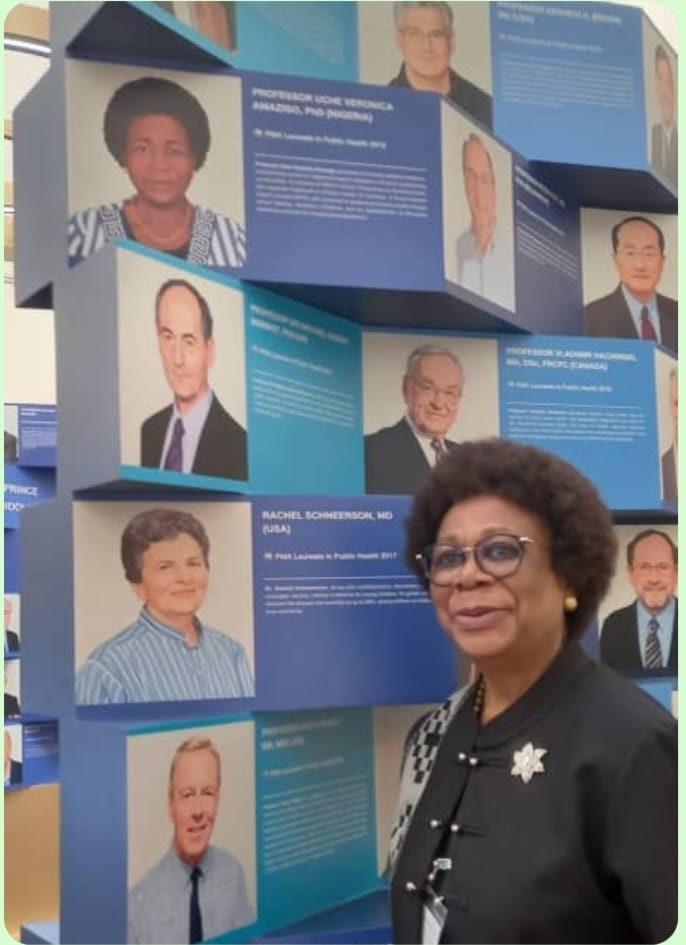
Prof. Amazigo by the wall painting of the PMA laureates & write-ups on their discoveries and contributions
The laureates visited Nan Province’s Artistic, Cultural and Academic Heritage Centres, and met the Wolith monks at the Phumin Temple. They also toured the 888-metre Nan Cultural Art Route and explored the Pharma-Agroforestry District.
According to the PMA Foundation, Prof. Amazigo “pioneered community-directed treatment, transforming control of neglected tropical diseases in Africa by empowering communities. As Director of WHO’s African Programme on Onchocerciasis (River blindness), she expanded treatment to millions across 19 countries… She continues to advance community health through school feeding, education initiatives, and the establishment of affordable healthcare services for marginalized populations.”
Under Amazigo’s leadership, the WHO/APOC Programme, one of the most successful health interventions in Africa, received the One-million-Euro António Champalimaud Vision Award in 2011, the biggest global award for outstanding contributions to the prevention of visual impairment and blindness.
She has also provided expertise to the Campaign by the Economic Community of West African States (ECOWAS) to eliminate malaria in the region, through an integrated vector control strategy, as happened with the successful River Blindness control programme.
In 2018, Amazigo was among nine personalities and an institution, honoured by the Hallmarks of Labour Foundation (HLF), which “celebrates Nigerians, Africans and people of the Black race, who have achieved success through hard work, honesty, integrity and justice in every field of human endeavour.”
Her “HLF Role Model Award for Outstanding Contributions to the Field of Public Health” acknowledged her as “one of the few Africans to have led a specialised UN Agency, overseeing a highly successful multilateral, multidisciplinary partnership in global public health.”
Uche Amazigo is married to Emeritus Professor of Mathematics, John Amazigo. Both are Fellows of the Nigerian Academy of Science and are blessed with children.
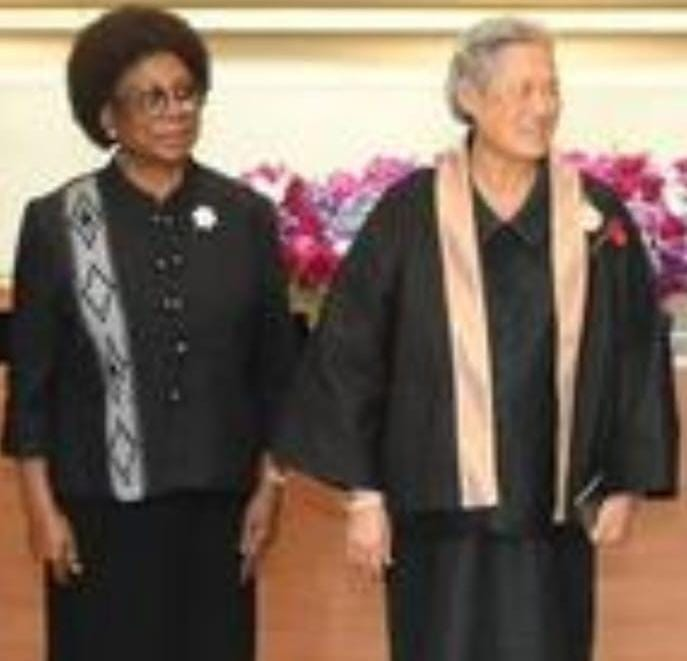
Prof. Amazigo and the Thai Monarch, Her Royal Highness Princess Maha Chakri Sirindhorn at the PMAN Nexus Celebration in Thailand
A Knight of the National Order of Burkina Faso (2011), she has, since retiring as WHO/APOC Director, established an NGO, the Pan-African Community Initiative on Education and Health (PACIEH), which trains and empowers mothers to provide a comprehensive feeding and health programme for their children in rural schools.
A committed scientist, philanthropist and humanist with a large heart for the poor, Amazigo, is the brain behind the Goodwill Medical Centre (GMC), constructed and equipped by the TY Danjuma Foundation, in Enugu, eastern Nigeria, which provides quality primary and secondary healthcare services to low-income families, transforming lives in its host and neighbouring communities.
Commissioned in November 2023 by its chief benefactor, General TY Danjuma, the hospital, in April 2025, constructed and unveiled for public use a multi-million-Naira iron bridge across a river linking at least three urban slums to essential services in Enugu State.
By removing the transportation barrier in the area, the Avah River Bridge has opened up healthcare and other essential services to forgotten Enugu East LGA communities.
The GMC’s maternal, newborn and child health, eye care and family medicine units provide essential services to surrounding communities and beyond, with a commitment to achieving zero maternal and child mortality despite the challenges.
In February 2025, the hospital signed an MoU with the Enugu East Local Government Authority to significantly increase the number of health insurance beneficiaries.
The hospital collaborates with local groups and residents to address their needs, with resilience, vision and unwavering commitment to saving lives and inspiring community buy-in and collective ownership of the Centre’s programmes.
In these days of global economic difficulties, when scarce financial resources are shared among competing needs, the health sector is usually the most severely affected.
By contributing to revolutionising healthcare delivery and other essential services to rural communities through public-private partnership, the GMC is setting the pace through a model that complements government efforts in transforming the lives of poor communities for accelerated development and progress.
Ejime is a Global Affairs Analyst and Consultant on Peace & Security and Governance Communications.