


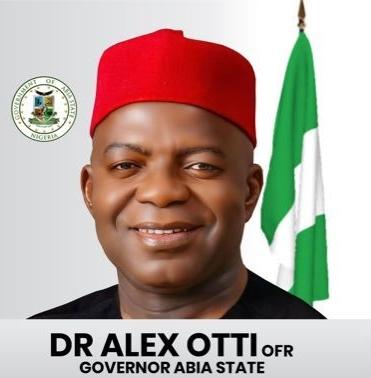

I should begin my remarks by transmitting congratulations to the people of Abia State for instituting a government founded on their collective will. This extends naturally to Governor Alex Chioma Otti, OFR, for being intentional about not trifling with that trust.
I also want to transmit my personal thanks for the opportunity to be able to join in this anniversary. It is essential, for this purpose, to establish my credentials. I should clarify that these have nothing to do with the last four letters of my surname!
From the precincts of Ohanku Road Primary School in the post-war years, when slopping-out was the primary method of sewage disposal to Nwogu Street in Umungasi, both in Aba, this State was an intimate part of my growing up.
When the government of Sam Mbakwe in the old Imo State began the multi-campus experiment at the old Imo State University, it made temporary use of the premises of Ngwa High School as the campus for the College of Legal Studies, and my set passed through those premises before relocating to the permanent site, the present location of the Abia State University in Uturu.
This, therefore, is the State to which I owe a most fulsome debt of both memory and gratitude for its impact on my formation. It is a debt that fosters a duty of more than mere civic stakeholding. Through three different administrations over the better part of the first quarter century after Nigeria’s return to civil rule in 1999, this – God’s Own – State fell into ungodly hands, and its people suffered through untold depths of despair. I am grateful to join in this moment today, when the prospects for the state offer something happily different.
Subverting Malevolence
None of this would have been possible without the determination, sacrifice, and values of the governor, Alex Otti, who chose to persevere when he would have been very justified in giving up or enjoying his creature comforts. I am only one among millions from other parts of this part of Nigeria and beyond, rooting for him and for Abia State, not because he is perfect but because he has shown that in a land where constructive examples are sparse, the people can reap constructive dividends from political choice.
Less than 24 hours to my trip to this venue, a colleague who had learnt that I was due to be at this event handed me a card addressed to the Governor. I have secured their permission to read the text of the message publicly:
“I wish to sincerely appreciate your exemplary leadership and unwavering commitment to the welfare of the people. Under your administration, the people of Abia State are experiencing the true meaning of good governance through visible development, improved public service and people-centred policies. Thank you for prioritizing the needs of the people. Please accept my highest regards and best wishes for continued success in service to the people.”
Around the State, many point to tangible evidence of a turnaround in the fate of Abia State engineered under the current administration. They count the evidence mostly in the quantity of projects in such areas as:
* urban regeneration in the State capital, Umuahia and in the industrial hub of Aba;
* fiscal rectitude in the form of clearing long-standing salary and pension debts;
* major infrastructure works, especially in the road network – with a remarkable mileage already done and many more on the brink of joining them, bringing the State to close to 1,100 kilometres of roads paved over and asphalted in the first three years of the present administration (e.g., Umuahia-Uzuakoli-Abiriba Road, Port Harcourt Road in Aba; the Aguiyi-Ironsi Boulevard); and
* inter-generational investments, such as captive power on Aba.
These are important, but they are not nearly close to the reason why this anniversary matters and why the people of Abia State should heed seriously and guard jealously the foundations that appear to be emerging. All these tangible investments can easily be frittered away, absent the collective stake-holding. The National Stadium in Surulere, Lagos, commissioned to announce Nigeria’s survival from near-terminal internal armed conflict and to welcome the continent to the All-African Games in 1973, is today a monument to how infrastructure can go to waste without a sub-structure.
That sub-structure is an intangible located in the imagination of the people. It alone can feed the desire in the people for a future that sustainably improves on the present rather than cannibalize it. Important, therefore, as the projects are which presently abound all over the state, the intangibles – from the rubbish heaps that have disappeared around the state to the investments in human capital and public goods – are more significant in pointing to the foundations and ambitions that the state must protect. The physical outlines of the ambitions and stewardship are evident. So, Governor Alex Otti’s biggest achievements lie in:
* restoring dignity and hope to a people who had given up on both
* his desire to elevate the gaze of the state to prepare it for a mass consumption world that is upon us; and
* his intentional investment in the idea of government as propositional and in politics as virtuous.
The Alex Otti Challenge
I suggest in the remarks that follow that the foundations being laid by the current administration in Abia State are too important to be abandoned to the Governor alone. In the trajectory that he has chosen, Governor Otti offers an effective response to the complacent escape of perennial complaints of marginalization. This is not for failure on my part to recognize or acknowledge the inequities of our Nigerian condition, for I see them. Rather, it comes from a recognition of our collective failure to wrest strategic opportunity from the jaws of malevolent inequity.
I argue that Nigeria will not give us anything for free nor treat us better than the treatment it reserves for any others. However, we can subvert the malevolence of 29,500 km 2 of the regional landmass – to which Abia State contributes 6,320 km 2 or 21.42% – turning it into an asset by out-governing the rest of the country.
The south-east is small enough to become a governance incubation model. If we can turn this zone or region into a model of good government underpinned by sustained investments in dignity, enterprise and innovation, Nigeria could yet turn or return to the region to ask it to do at the centre the capabilities that we prove in these parts, not as an act of love but as a mark of respect and of self-preservation. But if we are unable to do so, our case will not lie in our mouths nor in our hands. This, I argue, is ultimately the challenge that Governor Alex Otti presents us with.
Desgobierno
We meet to mark the third anniversary of the current administration in Abia State in a moment rich in context, memory, and coincidence.
First, for this state and its people, this marks a third anniversary of renewal after nearly a quarter of a century of despair or worse. It is easy to recall the experience of Abia State in the first 24 years following Nigeria’s return to civil rule in 1999 and call it mal-governance. Those were years that induced a loss of hope and faith in governance, in civics and in democratic process and its institutions. But “mal-governance” does not begin to describe the ungodliness that was visited on God’s Own State by a succession of three dissolute governors over a quarter of a century. There is a noun for it in Spanish. It is desgobierno. The best translation for this in English would be “un-government.”
The word imports chaos or confusion arising from wilful failure of leadership to administer a territory, institution, or situation. In Abia State, through nearly a quarter century and three administrations, desgobierno took the form of criminalization of the State by those to whom it was entrusted, compounded by impunity. Cameroonian scholar Ndiva Kofele-Kale would call what transpired in the State through those years a crime of “patrimonicide”. It was a crime of pillage of the collective patrimony of a people, compounded by the capture and incapacitation by them of all mechanisms of legal and political accountability for the pillage. The scale of the predation suffered by the state during this period were such as to dislocate the “legitimacy of public institutions and strike at society, moral order, and justice.”
This had severe consequences on the towns, cities, and communities of Abia State, in the desolation of both the physical infrastructure of the state and in adverse outcomes for human life. With baleful governance, a state historically defined by enterprise and discipline became a poster child for the worst of civic chaos. Important decision-making in government got retrenched or captured by unaccountable sorcerers under hitherto unknown nomenclatures such as “Mother Excellency” and “First Son”. Governors of the State yearned to retire into political sinecures at the federal level, not as a reward for their work in improving the state but as evidence that they had subjugated it. So, the first governor in 1999 is now Chief Whip in the Senate; his successor became a two-term Senator; and his successor is now an ambassador.
Second, all of this happened for this long because fundamentally, the composition of government at the state level did not bear any relationship to the legitimate will of the people. Section 14(1) of the 1999 Constitution requires that “sovereignty belongs to the people of Nigeria from whom government through this Constitution derives all its powers and authority.” In our country, including this State, that sovereignty is exercised through the ballot. But for too long in this – as in many other states around our country – numbers were allocated without regard to the will of the people expressed in the ballot.
As governance of the state was outsourced to sorcerers and low-budget bandits, it became obvious that there is no act of pillage or plunder beyond the capacity of a person or group who can steal the collective will of the people. The reason is hidden in plain sight: a government that can come to power with no need for the people or their will has no duty to advance the interests of the people or their well-being. For nearly a quarter of a century, this State was Nigeria’s poster child for the impossibility of a credible government founded on incredible illegitimacy.
Third, with about 232 days to the onset of voting in the 2027 general elections, it is safe to say that we are in active political season. It is usually a season defined by banter, jest, and petty political bribery by politicians with no record of performance. Few people know better than the people of Abia State, therefore, why this should also be a season for honesty with ourselves. The outcomes announced in the elections and routinely validated by the courts and tribunals thereafter have profound implications for the lives and fates of real people. We confront a season that will test the will of the state in defending that which it now has.
Fourth, Abia State is significant to Nd’Igbo here because it is a frontier state in three dimensions:
* Abia has a frontier to the Niger Delta through its borders with both Akwa Ibom and Rivers States;
* Abia is a frontier in Nigeria’s hydrocarbons economy; and
* Abia State is also host to freshwater systems of the Imo and Azumini rivers, and therefore a natural between delicate ecological systems traversing the two geopolitical zones of the old Eastern Region.
Fifth, this anniversary takes place in a time of renewed attention to the Nigerian civil war and its aftermath particularly for the territory and people of south-east Nigeria, occasioned by the recent publication of the memoirs of Nigeria’s war-time ruler, General Yakubu Gowon. Few places embody the scars of that experience like Abia State, site of the Ojukwu Bunker, of a museum on the war and of Enyimba City. This state is also the birthplace of both General Johnson Umunnakwe Aguiyi-Ironsi whose martyrdom arguably sped up the race to the war, and of Chief Michael Iheonukara Okpara, whose vision and impact in governance remain unrivalled more than sixty years after the termination of his tenure as the premier of the Eastern Region.
A Constitutional Command – “Human dignity shall be maintained and enhanced”
This reference to the aftermath of the civil war is important because of its relevance to the theme of dignity. Few people are as invested in the idea of dignity as the Igbo. Among the controlling ideas in our cosmology as a people, the Igbo are deeply invested in contemplation, wisdom, dignity, equity, and spirituality. These are embodied in the five concepts of ako, uche, ugwu, ogu, and ofo. Rev. Professor Emmanuel Matthew Paul Edeh formulates this with economy in his Towards an Igbo Metaphysics as follows:
Philosophy of this kind offers other people an ideal of human existence; specifically, an ideal of human dignity based upon the belief that all beings created by God are ontologically good and deserving of respect….
Emerging from the war, our collective respect and dignity as a people took a battering. The region was decapitated, reducing us to what a recent president of Nigeria called a landlocked “dot” on the map of Nigeria. The post-war settlement of Nigeria set out to deliberately denude us of international borders, direct access to the sea, and significant hydrocarbon reserves. Abia State exists at the frontier of all three decapitations.
Many people listening to this will wonder what it has to do with the anniversary that we are gathered to mark. To which I would answer, everything! Few people understand this like Nd’Igbo, and among the Igbo, that lesson is seared into the memory and existence of Ndi Abia.
The rebuilding of Igbo dignity and identity was to find expression in Enyimba City which embodied an improbable story of rediscovery and renewal in the aftermath of the trauma of the indescribable desolation of the war. A race that emerged shell-shocked from war engineered rebuilding through community effort, enterprise, and industry. On the back of those efforts, the dignity, self-worth, and self-belief of a people were elevated. As young men rediscovered self-belief, Aba, Nnewi, and Onitsha emerged as centres of innovation and enterprise. They were poised for take off at the return to civil rule in 1999 before our desgobierno cost us a generation.
This was the very antithesis of the constitution that previous and successive governors of Abia State swore to “uphold and defend.” In this connection, there are three explicit dimensions to the constitutional sub-structure of governance in Nigeria that are often missed or not adequately acknowledged.
The first is probably the one that most people recognize. It is the reality that, unquestionably, the protection of the people within its territory is the first and most important duty of government. This is an obligation well-grounded in the explicit text of Nigeria’s constitution. Section 14(2)(b) of the 1999 Constitution affirms that “the security and welfare of the people shall be the primary purpose of government.” It is not just any purpose; it is the primary one.
Second, this primary obligation of the government to guarantee and secure the welfare of its people makes sense, however, only in the context of even more fundamental duties that the same constitution places on the government. Accordingly, section 17(2)(b) of the same Constitution requires that “the sanctity of the human person shall be recognized, and human dignity shall be maintained and enhanced.” Under the Nigerian constitution, human dignity is more than just an anchor of coexistence. Its enhancement is a constitutional metric of the performance of the government. In other words, government exists to enhance the dignity of its people not to diminish it. This is why section 34(1) of the Constitution makes dignity a human right and guarantees that “every individual is entitled to respect for the dignity of his person.”
Third, the constitution does not stop here. It also provides a method on how government should pursue the provision and enhancement of dignity. In the shortest provision in the Nigerian constitution, section 17(2)(c) provides in five simple words: “governmental actions shall be humane.” This is arguably the most important provision in the Nigerian constitution and the one provision that every politician in the country should be made to read and inhale before they embark on seeking office.
For 24 years, desgobierno in Abia State took the form of the very antithesis of these constitutional mandates, turning governance into organized nihilism. People to whose care the state was entrusted decided that they were beyond the reach of the constitution and afflicted the state and its people with the chaos of un-government and indignity. Caught between the rabid criminality of government and the morbid randomness of its consequences, the average citizen of the state lost any hope of realizing these constitutional promises, to the point where mass despondency became routine; coexistence was reduced to the survival of the fattest; and violent crime became normalized.
When Government Cares
The projects that people now routinely point to in the state are, in truth, mere symptoms of three underlying dispositions that appear to define governance in Abia State under the present administration:
* clear diagnosis;
* coherent strategy; and
* crystallized value system.
It is quite clear that the administration desires to lay the foundations for an enterprise economy. To do that, it has settled on a strategy that prioritizes:
* mobility and effective facilitation of the urban-rural and inter-state exchange;
* energy to drive productivity, reduce crime, and improve safety; and
* investment in public goods especially education, preventive care, and human capacity.
The headline numbers on transportation and mobility are impressive: 414 roads or a total of 864.12 km asphalted in three years, and another 82 with a yield of 212 km on stream for completion in another few months. That will be 496 (nearly 500 roads) or 1,076.12 km of roads. For perspective, that yields a network of roads inside the state on the scale of 44.12 km more than the distance from Aba to Kano (1,032 km).
The improvement in energy has had a significant impact not just on productivity in the industrial heartland of Aba. It has also reduced crime and is a driver of jobs in both formal and informal sectors.
What this does is to provide proof of concept. But more is needed. As these developments unfold, the skill and human capacity needs of the state will increase exponentially, as will its integration into the supply and logistics chains of export trade. Abia’s competition on this trajectory is not Nigeria. It is in the East – near and far. This is why the ambitions of the administration concerning the Azumini-Obeaku Sea Port, the Isiala Ngwa Inland Dry Port, and the Inland Waterways Corridor in Ukwa East form part of a coherent vision to turn the state into a regional trade hub for the East.
A second major area of investment by the administration is human capacity, especially in the area of education. The administration is committing 20% of the State’s budget to education. That is its pay down to demonstrate seriousness in the implementation of free and compulsory basic education. Abia is one of the states now attaining full absorption of matching UBEC funds. The public school system is now competitive again. The State is on track to eliminate the phenomenon of out-of-school children in the constitutional horizon of the present administration. Smart schools are coming on stream. The state clearly now needs also to upgrade curriculum and investment learning platforms in the digital age.
The underlying value system of the state government under this administration demonstrates what is possible when government cares. A state with the ambitions of the present administration in Abia State needs healthy citizens. The administration is committing 15% of the state budget to healthcare with an emphasis on integrated, preventive care. This enables it to achieve impact with cost-effectiveness and community assets. This strategy is evident in the coherent care architecture in the state, comprising the following:
* Formal Sector Health Insurance Scheme;
* Abia State Senior Citizens Law;
* Abia State Commission for Disabled Persons – the work of the Commission in facilitating the provision of 300 therapists to support the instruction and formation of children with disabilities in basic education in the 17 LGAs of the state is a first in Nigeria and a model for the rest of the country.
* Rural Emergency Services & Maternal Transport System supplemented with the hire of 771 additional health workers;
* Upgrading of 12 General Hospitals and 200 primary health centres across the state; and
* Urban renewal complemented by attention to effective waste management and ecological control.
Looking to the Future
These are not short-term investments. Three years into this administration, a lot has been accomplished, but even more remains to be done. The accomplishments outlined are central to the strategy of the state’s quarter-century development horizon, signed into law in 2025. The advantage of having the development plan backed by law in this manner is that it guarantees sustainability. A future administration minded to depart from the trajectory and foundations laid in this plan will have to return to the State House of Assembly. The pillars of the plan include:
* People & Resources: guaranteeing and optimizing human capital, youth demographic as drivers and beneficiaries of the State’s development.
* Growth & Stability: establishing foundations for economic resilience; attracting local and global investments; and lowering poverty rates.
* Sustainable Economy: revival of the Aba industrial hub through expanding trade, and modernizing the agricultural sector.
* Social Infrastructure & Inclusion: climate-resilient infrastructure, healthcare upgrades, education, and digital connectivity.
* Governance & Reform: eliminating financial leakages, strengthening public institutions, and improving transparency; and
* Cross-Sector Linkages: Encouraging synergy across ministries and private sectors for unified development
As inspiring as these foundations are, they also point to areas of opportunity and attention to guarantee the competitiveness of the state into the future:
* Professional Services Economy: Abia State was host to some of the finest professionals from Nigeria. Dr Nwakanma Okoro, the first president of the Nigerian Bar Association from the old Eastern Region, came from Abia State. Aba was host to the finest professionals in accounting, real estate, law, and medicine. As un-government took hold, they all fled. Some of them tragically died. As the ambitions of the administration begin to crystallize for commerce, industry, and enterprise in the state, attention will be needed to reignite a competitive industry in professional services to complement industry, trade in goods, the real estate, and facilities markets; digital economies and settlements; as well as a putative maritime economy.
* Commercial Dispute Resolution Hub: As these foundations come to fruition, the administration should give attention to establishing an economy in dispute resolution. For this purpose, the state is ripe to become a regional hub for commercial dispute resolution. This will require an upgrade in the standards of professional services in fields such as financial services, dispute resolution, administration of justice, and integration into emerging digital capabilities.
* Knowledge Economy: As the state seeks to lay the foundation for an economy that is 4IR compliant, it must foster a coherent environment for a knowledge economy. This requires attention to the standards of tertiary formation for a new generation of smartened up teachers as well as research and development. For this, multi-pronged strategy for technical, higher, and tertiary education is needed. Imperceptibly, Abia State is evolving a knowledge industry cluster that requires attention. The state is now host to at least eight universities – one owned by the federal government (Michael Okpara University of Agriculture in Umudike); another by the state government (ABSU); and six private. In Uturu-Umunneochi axis, the ABSU is complemented by the Gregory University next door, and the Spiritan University in Nneochi. It makes for there is an emerging knowledge cluster that could easily be turned into an R & D hub. In addition, Abia State is also home to three other private universities:
* Nigerian British University, Asa;
* Lux Mundi University Umuahia; and
* Amadeus University, Amizi.
Irrespective of who owns them, these universities present the state with opportunities for harnessing the knowledge-driven enterprise economy, which must not be missed. A strategy must be evolved for ensuring just that through joined-up policy making by the relevant MDAs.
More specifically, the Administration has already demonstrated the value it places on the ABSU as an essential item in its reconfiguration of human capital and services. This began early in the life of the administration with the restoration of the accreditation of the medical school and the upgrading of facilities at Abia State University Teaching Hospital (ABSUTH), and also with living conditions in the university hostels. But this level of attention is required for all the major faculties in the university, especially the Faculty of Education. Digital instruction capabilities at the university require attention.
* The Diaspora: The diaspora has become a major contributor to Nigeria’s economy. The remittance economy accounts for over $25 billion in inflow annually or about 5% of Nigeria’s GDP. Between them, Abia and Imo States account for about 20% of Nigeria’s remittance inflows. That is over $5 billion. Much of this money at the moment flows into or through private coffers with little impact on the public commons. The explanation is largely that the government has yet to establish the foundations, vision, and capabilities required to engender the trust of diaspora capital. The foundations now exist for the Abia State Diaspora Commission to become a vehicle for diaspora leveraging.
* Abia State Women’s Legacy Fund: Nearly 100 years ago, the women of this state led this region and in this country in an uprising against the arbitrariness of colonial government that continues to resonate around the world. The inheritors and successors of those women continue in fierce traditions of enterprise and leadership. This administration has access to a unique asset in summoning the spirit of Madam Nwanyeruwa and the heroines of Ogu Umunwanyi in a new kind of development challenge. The time is ripe for an Abia State Women’s Legacy Fund to leverage resources dedicated to women-led SSMEs.
* Addressing Safety & Security Corridors & Co-ordination: The quarter century of un-government in the State yielded a harvest of horrors that included Bakassi; Osisikankwu; and Operation Python Dance, among many. This administration proves that achieving safety and security is not an event; it is an outcome. The safety and security horizon has made immense progress. Nightlife has returned and 24-hour production now takes place in many industries that stared down the barrel of liquidation as recently as three years ago. Now, the challenge is to make this sustainable. No state in SE Nigeria can address the challenge of insecurity by itself. Governors may not always have full control of the assets of kinetic security in their states, but they have effective control of the soft levers of safety and security – information, intelligence, coordination, and effective suasion. The corridors with regional neighbours will need sustained attention, and digital integrations will make this much easier to address.
Sustainable Foundation vs Temporary Interregnum?
The capacity to elevate the gaze of the state and of its people under Governor Alex Otti would have been impossible a mere three and a half years ago. It is natural for a people who have slaked the thirst for good government to be impatient for more. But solid foundations take time and patience. They also have a capacity to absorb occasional errors.
For the moment, Abia is now a state in which the smile returned to the faces of its people and where hope appears willing to return from exile. Whether these can be guaranteed to exist indefinitely into the future will depend on God’s own people in God’s Own State.
The hope is that people who have tasted the perimeters of what is possible when government has a legitimate mandate under a leadership that cares, will rise in unison to protect that. In the end, the choice belongs to the people whether they want to return to desgobierno or to do what is necessary to guarantee, in the foreseeable future, the gains of the foundations now being laid for the state. In electoral politics, the reward for good work is renewal of the mandate.
For Abia State, there are two options: whether to make this experience both sustainable and indefinite into the future or to record it as a minor interregnum in a continuum of habitual un-government. The choice is clear.
For these foundations to be sustained and for their promise to pay off, this governor will need the help and mandate of the people renewed. At the appropriate time in the future, early attention will be needed to the quality of leadership that will continue from where he stops. Policies are important, but it will take the enlightened self-interest of the people and communities of Abia State to guarantee that the affairs of this God’s Own State will never again revert to un-government.
A lawyer and a teacher, Odinkalu can be reached at chidi.odinkalu@tufts.edu. He delivered this lecture to mark Governor Alex Otti’s three years in office.