
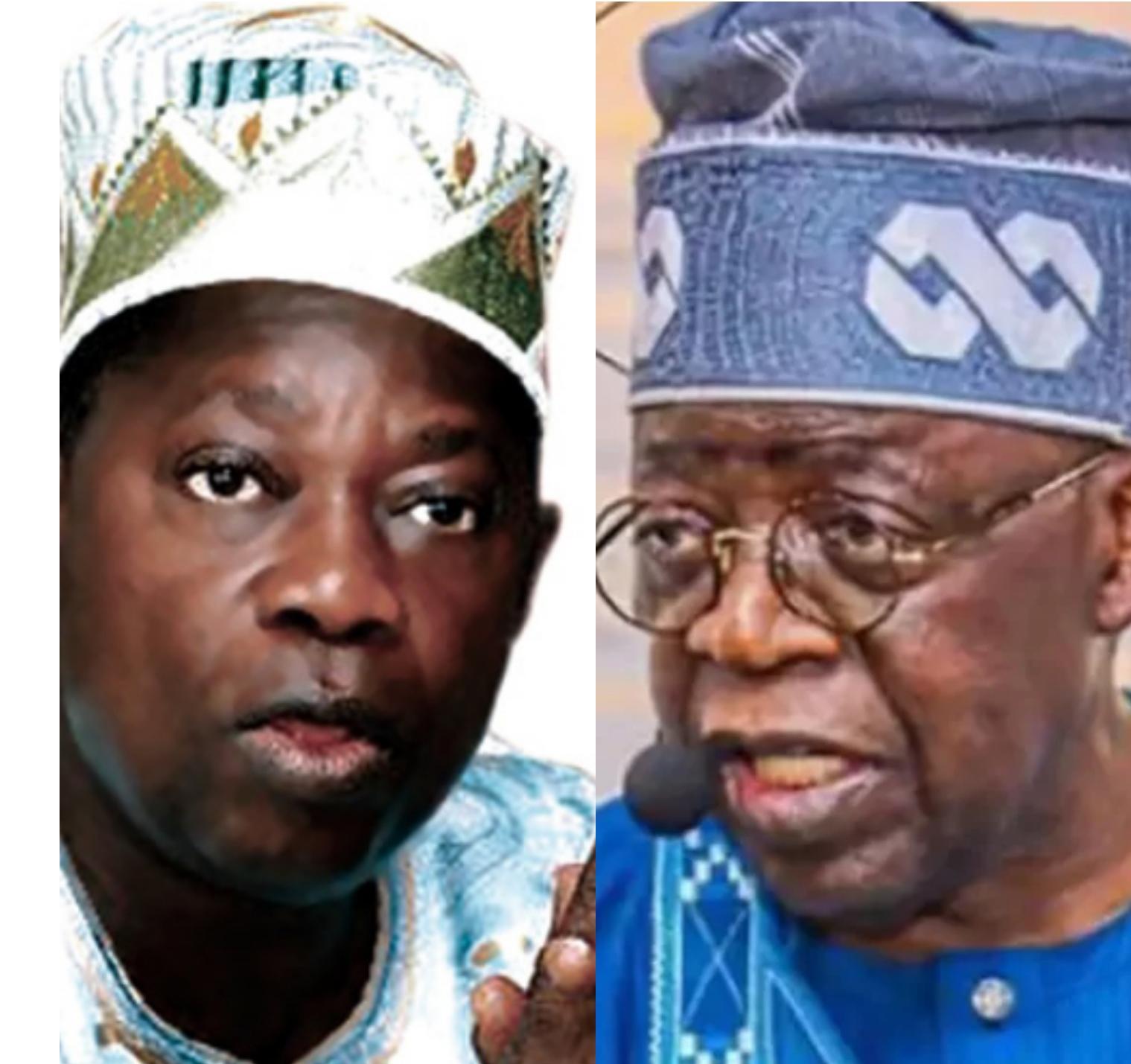

Nigeria on Friday, 12 June, marked 27 years of the return of civilian rule after prolonged military rule and a date in 1993, when the country held a presidential election considered the freest, even though the acclaimed winner, business mogul and philanthropist MKO Abiola, died in detention under a military regime without actualising the mandate.
Today, incumbent President Ahmed Bola Tinubu, one of those who resisted military rule under the NADECO platform before being elected governor of Lagos state (1999-2007), has managed to amass tremendous political power, capital and structure that enabled him to claim presidential victory in 2023, with a strong prospect for a second mandate from 2027.
But it has not been smooth sailing for Tinubu, now accused by opponents of trading his erstwhile pro-democracy garb for an authoritarian camouflage.
He rejects the accusation, and in his presidential broadcast on Friday, June 12, he reeled out the achievements under his three-year administration as Nigeria’s number one citizen.
“Though this year’s mood is dampened by the abduction of our children in Oyo and Borno (states), we remain hopeful for their safe return. Democracy without security is not solid enough. That is why this administration declared a security emergency and approved the recruitment of more than 50,000 new police officers and thousands of military recruits. Our 2026 budget commits 5.41 trillion Naira – our largest ever – to defence and security. Our administration is ever ready to do much more to secure our people,” he enthused.
“We have moved from training with our allies, the United States, France and other European countries, to precision targeting. In Arege, Borno State, we degraded ISWAP’s command centre. Terror-related deaths are down by 81% since 2015,” Tinubu boasted, adding: “Over 13,000 terrorists have been neutralised in the past year. But we also keep the door of surrender open. Over 124,000 fighters and dependents have laid down their arms since 2023 through Operation Safe Corridor.”
Not a few Nigerians believe that the Tinubu administration is not doing enough to fight insecurity in the country, especially with the perceived reliance on external support, to deal with the killings and kidnappings for ransom reported virtually daily.
If he expects his government to take credit for “neutralising terrorists”, so also must the government take the blame for the over 10,217 Nigerians killed since he took office, including ranking military officers, particularly because these human losses during peacetime are avoidable.
On the eve of the presidential broadcast, activist VDM led a ‘Tinubu Must Go’ protest in Abuja over rising insecurity.
And on the same day in faraway Los Angeles, USA, Nigerian music superstar Davido used the FIFA World Cup 2026 Countdown Concert to bring awareness to abducted Nigerian students and teachers
Davido wore a custom jacket featuring the names of abducted students and teachers during coordinated attacks on three schools in Oyo State, Western Nigeria, on May 15.
With a message “Bring Them Home” on the back of his jacket, the musician reinforced a negative global focus on Nigeria, which millions of dollars in image laundering cannot erase.
Nigeria failed to qualify for this year’s FIFA World Cup, but has hogged international headlines for the wrong reason.
While his government has dispatched high-level delegations to some insecurity-afflicted communities, Tinubu has been criticised for not showing empathy for the families of victims. His warning to “bandits, kidnappers, and sponsors of terror,” to “surrender or face the full force of the Nigerian State,” is not new and may therefore not be taken seriously, when more Nigerians are raising alarm over insecurity and electoral manipulation.
The opposition ADC has accused the Tinubu government of running a Ponzi economy with accumulated loans spent largely on consumption.
There is also widespread perception of the capture of state institutions, with the parliament and the judiciary accused of complicity or being compromised.
However, Tinubu remains upbeat, noting: “Since 2023, our reforms have restored stability and credibility to economic management. Federation revenues have risen, providing states and local governments with more resources for infrastructure, education, healthcare, and security. Fiscal transparency has improved, leakage has been reduced, and public funds are better directed to national priorities. Investor confidence has returned, with investments in agriculture, energy, manufacturing, technology, mining, transportation, and the creative industries growing.
“Domestic refining capacity has increased, strengthening energy security and reducing our reliance on imported petroleum products,” he affirmed.
Even so, his critics are unimpressed, insisting that Nigeria’s economic hardship is a crisis that cannot be ignored.
With the removal of oil subsidy, the three tiers of government in Nigeria – the Federal, 36 States and Federal Capital Territory (Abuja), and the 774 Local Councils – are supposed to enjoy improved revenue allocations. But the poverty rate has jumped to 63% after subsidy removal, with the opposition also accusing the government of operating three budgets simultaneously, while capital projects stall
Tinubu acknowledged that “…many Nigerians still face economic hardship,” promising: “We remain focused on reducing inflation, expanding food production, creating jobs, improving living standards, rebuilding confidence in our economy, and creating conditions for sustainable prosperity.”
“We are moving from uncertainty to stability. The next phase is about accelerating growth and ensuring the benefits are felt in every home, every community, and every region. We believe that democracy must be felt in the pocket,” he said.
He told the youth, “Nigeria is your home and your future. Build here, code here, work here, and vote here. Every great nation was built by those who stayed to solve problems, not by those who abandoned ship.”
Whether this appeal will be heeded by young Nigerians who are leaving the country in droves in search of better opportunities abroad remains to be seen.
“The government cannot do it alone,” the president said, adding, “Crime has no ethnicity. We must stand united and be assured that the enemies of our nation shall soon be history. We will triumph over terror and continue to build a more prosperous nation.”
Tunubu also used his broadcast to honour the “heroes” of June 12, dead and alive, with National Awards.
“As beneficiaries of their struggle, we have a duty to strengthen and deepen the democratic institutions for which they fought. The greatest tribute we can pay is to build a Nigeria where freedom is protected, justice is upheld, opportunity is expanded, and government is accountable,” he said, noting that June 12, 1993, revealed the possibility of a true Nigerian nation.
With political parties laser-focused on the crucial 2027 general elections amid troubling security concerns and socioeconomic hardship, public trust in government remains at its lowest ebb. To regain public confidence and support, political elites’ damaging tendencies for selfishness, greed, self-service and corruption must be addressed.
As a regional power, Nigeria is regrettably punching below its weight. The rest of Africa and the world at large are impatiently waiting for the World’s most populous Black nation to assume leadership and take its rightful place among the comity of nations.
Ejime is a Global Affairs Analyst and Consultant on Peace & Security and Governance Communications