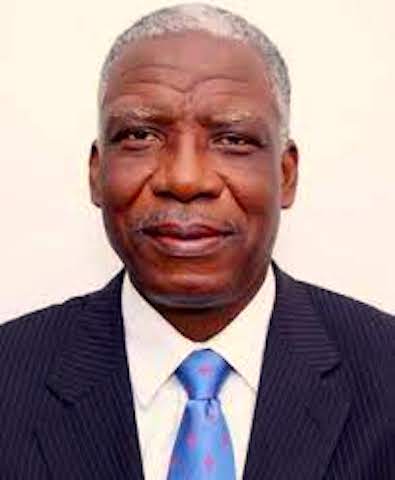



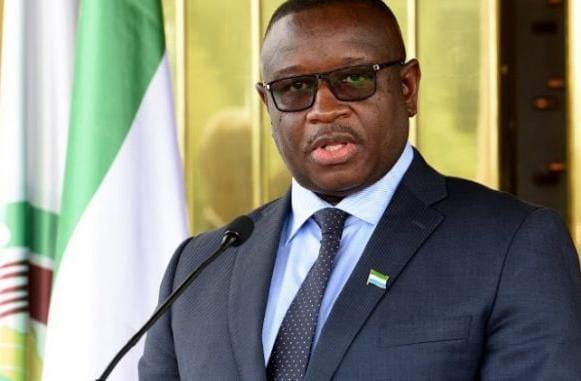

Opposition parties in Guinea-Bissau have accused the Economic Community of West African States (ECOWAS) of bias and legitimizing the military junta government’s controversial review of the country’s Constitution. The Inclusive Alliance Platform (PAI- Terra Ranka), led by the government-banned African Party for the Independence of Guinea and Cape Verde (PAIGC), and Patriotic Alliance (API- Cabaz Garandi), in an Open Letter, said they “are perplexed” by the conduct and outcome of the recent mission to Guinea-Bissau led by Sierra Leone’s Minister of Foreign Affairs and Chair of ECOWAS Council of Minister Timothy Musa Kabba, which also included two Ministers from Senegal and the President of the ECOWAS Commission.
“To our dismay, we found that the mission only met with the coup authorities, completely ignoring the opposition, including the most representative political parties and alliances in the country,” the group said in the letter addressed to Sierra Leone’s President Julius Maada Bio, Chair of the ECOWAS Authority of Heads of State and Government. Other regional Heads of State, the ECOWAS Council of Ministers, the Chairperson of the African Union (AU) and AU’s Special Representative to Guinea-Bissau, were also copied.
The opposition coalition further alleged that the ECOWAS delegation failed to meet with Dr Fernando Dias da Costa, the acclaimed winner of the 23 November 2025 Presidential election interrupted on 26 November by the self-coup by former President Umaro Sissoco Embaló to avoid an electoral defeat.
The statement said “it was no coincidence” that former Nigerian President Goodluck Jonathan, one of the international election observers, characterized the coup “as a ceremonial coup.”
“In effect, ECOWAS, an organisation that consistently advocates inclusive dialogue among all stakeholders as the appropriate means of resolving the political crisis that has gripped Guinea-Bissau since the coup d’état of 26 November 2025, deployed a mission that chose to engage with only one side of the political divide, the coup authorities, while deliberately excluding every other stakeholder,” the statement said.
“Moreover,” it added: “if the mission’s objective was genuinely to assess progress in the implementation of ECOWAS recommendations, the only legitimate benchmark should have been the full body of decisions adopted by the ECOWAS Authority of Heads of State and Government at its Summit held in Abuja on 14 December 2025.”
The statement noted that “In paragraphs 38, 39, 40 and 41 of the (Summit’s) Final Communiqué, the Authority called, among other things, for the immediate release of all detained political leaders and the guarantee of their full participation in every ongoing political process in Guinea-Bissau; the establishment of a short civilian transition led by an inclusive government reflecting the full political spectrum of Bissau-Guinean society, mandated to undertake the necessary constitutional, legal and political reforms and to organise credible, transparent and inclusive elections.
The Authority also authorised the ECOWAS Stabilisation Support Mission in Guinea-Bissau (ESSMGB) to ensure the protection of all political leaders and the country’s national institutions; and an explicit warning that, should the requirement for a short civilian transition led by an inclusive government not be respected, the Authority would impose targeted sanctions on all individuals or groups obstructing the restoration of constitutional order through an inclusive political process.
However, the opposition coalition said: “To date, not a single one of these requirements has been fulfilled. Instead, de facto authorities have chosen to disregard decisions of ECOWAS altogether, pursuing an agenda driven solely by their own interests and those of former President Umaro Sissoco Embaló.”
For instance, the statement noted that “Domingos Simões Pereira, President of the PAIGC and the National People’s Assembly, remains under house arrest without formal charges or any judicial decision warranting the restriction of his liberty,” and “The principal opposition leaders continue to face persecution, while several have been prevented from leaving the country,” it said adding, that “The ECOWAS Stabilisation Force stationed in Guinea-Bissau has provided no protection whatsoever to opposition leaders, in direct contradiction to the decisions adopted in Abuja.”
The opposition coalition also claimed that “Serious and systematic human rights violations continue unabated, including abductions, violent assaults and the assassination of individuals identified with opposition voices,” while “The de facto authorities have, to this day, refused to establish the civilian transition required by ECOWAS or to form an inclusive government representative of the political diversity of Bissau-Guinean society. Instead, the country continues to be governed exclusively by political allies of former President Embaló under the leadership of his former Minister of Finance and campaign director during the last presidential election.”
According to the statement, “The de facto authorities have prohibited all political activity, and the headquarters of political parties across the country have been shut down. They have also established a National Transitional Council (CNT) to replace the National People’s Assembly. This body is now proceeding to amend the country’s fundamental laws, including the Constitution of the Republic and the Electoral Law, despite having no democratic legitimacy whatsoever.”
It said, “The ECOWAS mission failed to examine any of these issues; instead, it accepted, without critical scrutiny, the narrative advanced by the coup authorities. Indeed, at the conclusion of the mission, Mr Timothy Kabba, …praised what he described as the coup authorities’ efforts to restore constitutional order.”
“According to Minister Kabba, those efforts include the scheduling of elections for 6 December 2026, the revision of the Constitution of the Republic and its submission to a referendum, as well as amendments to the Electoral Code, initiatives he described as highly encouraging and fully consistent with the restoration of constitutional order. He further congratulated the coup authorities on what he characterised as a transition process that, in his view, is moving in the right direction.
“In other words, the very same ECOWAS that, at its Abuja Summit, categorically rejected the Transition Programme put forward by the coup authorities now appears to have embraced it in its entirety,” the statement said.
“In essence,” it added: “those who seized power by force, who have consistently rejected any meaningful dialogue aimed at establishing an inclusive government representative of the political spectrum of Bissau-Guinean society – as expressly recommended by ECOWAS in Abuja – are the very same individuals who have dismantled the country’s constitutional framework and are now preparing to impose it upon the people of Guinea-Bissau.”
The group urged “ECOWAS to uphold the principles it has consistently defended throughout the region and avoid any action or statement that could be interpreted as legitimising an unconstitutional political order or undermining the aspirations of the Bissau-Guinean people.”
Meanwhile, lawyers representing Domingos Simões Pereira have also raised concerns over “another serious assault on the independence of the Supreme Court of Justice, …and the guarantees of an impartial constitutional process” through the junta regime’s alleged meddling in the composition of the Court’s judges. They claimed that “…Measures are reportedly being undertaken by the President of the Court, Honourable Justice Arafam Mané, to prevent one of the Justices from participating in the plenary session that will examine the constitutional challenge submitted by the Collective of Lawyers.”
Guinea-Bissau is suspended from ECOWAS, the AU, and the Community of Portuguese-Speaking Countries (CPLP) due to the self-coup by Embaló, who is believed to be remotely controlling his military and civilian allies in the Transitional government.
Analysts expect ECOWAS to have insisted on the release of the results of the 23 November 2025 elections and to follow up with a ban on Embaló and the junta leaders from participating in any fresh elections.
Ejime is a Global Affairs Analyst and Consultant on Peace & Security and Governance Communication