
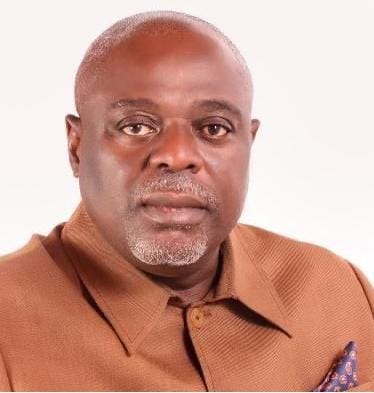

I am grateful for the honour and opportunity of being present at this great bastion of University Education in Ghana, the Kwame Nkrumah University of Science and Technology, to reflect on a subject that touches the very nerve of our national life: “The Evolution and Role of the Media in Ghana’s Democratic Development – 1992-2026.”
I spent some years in political communication and served as Director of Communications for the Atta-Mills Campaign Team in opposition. I later served as Head of Communications at the Presidency and Presidential Spokesperson to President John Evans Atta-Mills. Now a Communications Consultant, writer/author, member of the Institute of Public Relations Ghana, and Communications Advisor to the General Secretary of the Christian Council of Ghana, the subject of our conversation today sits pretty well with my professional existence.
I chose to organise this conversation around three anchors that are not academic abstractions, but words we have inherited as a nation: the motto “Freedom and Justice,” inscribed on our coat of arms; the covenant words of our national anthem, which bind us to cherish fearless honesty and to resist the oppressors’ rule with all our will and might for evermore. It covers a critical, heuristic examination of what l consistently refer to as “media tyranny” – a phenomenon we must name and examine honestly if our media is to remain worthy of the freedoms it has won.
Ghana is routinely described as one of Africa’s most stable and durable democracies, and its media system is central to that reputation. Since the return to constitutional rule in 1992 – the National Democratic Congress (NDC) and the New Patriotic Party (NPP) – have alternated power peacefully on eight occasions, a record, widely attributed in part to a relatively free, pluralistic, and combative media environment that enables public scrutiny of incumbents.
Yet, the relationship between media and democracy in Ghana has never been simply one of media strengthening democracy in a linear fashion. (Such a teleological reading of the media-democracy nexus has proven to be simplistic, and largely inaccurate).
It has been a relationship of mutual shaping: constitutionally guaranteed spaces for media pluralism; which has in turn, both consolidated democratic norms and, at times, threatened them.
Ghana stands, in 2026, at an instructive juncture. Our press freedom ranking has just recorded its best performance in five years – 39th of 180 countries in the Reporters Without Borders World Press Freedom Index, and fourth on the African continent.
Still, the very same year has seen renewed anxiety over the safety of journalists investigating illegal mining; the economic precarity of newsrooms, and the corrosive effects of social media disinformation on public trust.
This conversation asks a single overarching question: what has the Ghanaian media actually become, across thirty-four years of unbroken constitutional rule, and does it still answer to the moral charge our founding generation wrote into our national symbols?
To answer this question honestly requires that we resist two temptations – to romanticize 1992 as a clean beginning, and to treat 2026 as an unblemished arrival.
The truth lies, as it usually does, in the historical middle: in a long, contested, unfinished negotiation between state power, media power (“power” as in “media politics”, including its political economy or “politics of the media” that focuses on the media institutions’ micro-politics and the public’s right to truth or a version of it since there isn’t one truth. The journalistic imperative of objectivity is not the absence of bias, and therefore, a proposition of “the truth”, but a type of editorial practice that allows journalism claims and conclusions – “a truth” claim, to be verified.
Long before the first printing press touched the shores of the Gold Coast, our communities already possessed disciplined systems of public accountability – the linguist (ōkyeame), who spoke hard truths to chiefs on behalf of the people; the town crier who carried news through the village; the durbar at which grievances were aired in public, and the talking drums that could summon a community to attention. These were, in every meaningful sense, media institutions: they informed, held power accountable, and mobilised collective will. (For instance, the Apor festival of the people of Techiman signifies the act of communal feedback to traditional authority when citizens are immune from retribution for criticizing the chief).
Formal print journalism arrived with missionary and commercial activity from the mid-nineteenth century. Newspapers such as the Accra Herald, founded in the 1850s, gave the emerging educated coastal elite – lawyers, clergy and merchants – a platform to comment on and critique the colonial administration’s taxation, and chieftaincy affairs. The colonial government responded with the tools of control it knew best: licensing requirements and seditious libel prosecutions, designed to keep the nationalist press in check.
The Nationalist Press and the Road to Independence
It was Kwame Nkrumah who most decisively turned the press into an instrument of mass political awakening. The Accra Evening News, founded in 1948, fused journalism with the organisational work of the Convention People’s Party, teaching a Ghanaian generation to see themselves as active participants in their own liberation rather than passive subjects of colonial rule.
By 1957, therefore, Ghana’s media culture already carried two inheritances that would shape everything that followed: an instinct, learned from the colonizer, that the press must be tamed (because it conceptualized it as an agent of governance and imposition of a worldview); and an instinct, learned from the nationalist struggle, that the press could be a weapon of mass mobilisation as much as a mirror of projecting a/the truth.
Independence in 1957 brought both hope and new forms of control. Under Osagyefo Dr. Kwame Nkrumah, the state rapidly consolidated ownership of the media. Private newspapers were progressively eliminated through the Newspaper Licensing Act and the Preventive Detention Act and by 1966, the press landscape was almost entirely state-controlled. Nkrumah established important institutions – Ghana News Agency, the Ghana Institute of Journalism, and the Ghana Broadcasting Corporation, but subordinated them to the ideological project of the Convention Peoples Party. The NWICO – New World Information and Communication Order debates were also rife at this point on the global stage where a more equitable information distribution between the global South and North was being advanced).
The three and a half decades between independence and the Fourth Republic were, for the Ghanaian press, largely a story of subordination to executive power.
Successive governments – the CPP, the National Liberation Council, the Busia administration, the National Redemption Council and Supreme Military Council, the Limann government, and the Provisional National Defence Council under Flt.-Lt. Jerry John Rawlings – each, in their own way, maintained a state monopoly over broadcasting through the Ghana Broadcasting Corporation and treated the print press as an object to be managed rather than an institution to be trusted.
It is against this long history of suppression, coup and counter-coups that we must measure the significance of what happened in 1992.
The return to constitutional government was not simply a change of administration; it was Ghana’s deliberate and conscious attempt to break a thirty-five-year pattern of media timidity and subjugation.
Chapter 12 of the 1992 Constitution – “Freedom and Independence of the Media” – together with Article 21’s guarantee of freedom of expression, is the single most consequential act of media legislation in Ghana’s history.
It banned censorship, established the National Media Commission as an insulating buffer against political control, and, for the first time, gave constitutional force to the idea that Ghanaian journalism should answer to the public, rather than to the government of the day. (“Public” is a very fluid concept: as aggregate of (unknown) individuals who constitute an “imagined community” (Anderson, 1983) called Ghana; as a community of listeners/readers to any programme/newspaper; or defined by “shared consequence” (Dewey, 1927); or anything in-between The Public and its problems online version.
But a constitution is a promise, and practice is another matter. Criminal and seditious libel remained on our statute books for nearly a decade after 1992, meaning journalists could still, in principle, be imprisoned for what they published. It was the repeal of these laws in 2001, under Act 602, that most Ghanaian media historians regard as the true turning point – the moment constitutional freedom became lived freedom.
Nearly two decades later, the Right to Information Act of 2019 gave journalists a further statutory instrument: the legal right to demand information from public institutions, however imperfectly this right is honoured in practice.
Diagram/Table 1. Milestone Timeline, Pre-Independence to 2026
| Period | Development | Democratic Significance |
| Pre-1850s | Indigenous oral public sphere: linguists, town criers, durbars | Earliest African precedent for public accountability |
| 1850s–1948 | Colonial print press; licensing and seditious libel controls | First contest between press freedom and state control |
| 1948–1957 | Nkrumah’s Accra Evening News and the nationalist press | Press as an instrument of anti-colonial mobilization/and articulating an alternative experience (ontology) |
| 1957–1992 | State monopoly of broadcasting; recurrent censorship under successive regimes | Long suppression of independent journalism: from developmental journalism to stenographic reporting |
| 1992 | Fourth Republican Constitution; Chapter 12; National Media Commission established | Constitutional entrenchment of media freedom and “independent “regulator |
| 2001 | Repeal of Criminal Libel and Seditious Laws (Act 602) | Removal of imprisonment threat for publication; practical turning point |
| 2019 | Right to Information Act (Act 989) | Statutory tool for investigative and accountability journalism |
| 2020–2026 | Growth of social media, AI-generated content, disinformation concerns; 2026 press freedom rank rises to 39th globally (4th in Africa) | New democratisation alongside new risks of manipulation and “media tyranny”. The use of strategic lawsuits against public participation “slapps” to control critical editorial. |
A Visual Timeline
| Pre-1850s
Indigenous oral |
1850s–1957
Colonial & |
1957–1992
State-controlled |
1992–2001
Constitutional |
2001–2019
Post-libel-repeal |
2019–2026
RTI Act, digital & |
Diagram 1. Six eras of Ghanaian media history, pre-1850s to 2026 – a visual companion to the Table
“Freedom and Justice”: Reading the National Motto as a Media Mandate
Ghana’s coat of arms bears the motto “Freedom and Justice”. Our Freedom and Justice motto must not be recited and heard as heraldic ornament but as a direct instruction to the press.
Freedom is the right to investigate, to publish, to dissent, without fear of arbitrary punishment – the right that Chapter 12 of our 1992 Constitution was written to protect.
Justice is the corresponding duty: to be fair, accurate, proportionate, and answerable to the very public whose trust makes press freedom meaningful in the first place.
A press that claims freedom while abandoning justice – publishing unverified allegations, destroying reputations without evidence, feeding partisan or ethnic division – does not honour the motto; it inverts/subverts it. It converts a shield the nation built against tyranny into a new instrument of harm.
This is the precise hinge on which today’s discussion of “media tyranny” turns, and I will return to it directly in Part VII.
The Anthem’s Covenant: “Cherish Fearless Honesty” and Resistance to Oppressors’ Rule
Our national anthem contains what I regard as the clearest civic charge to journalists found anywhere in our official national symbolism. In its exact and enduring words, we are called to:
Fill our hearts with true humility,
Make us cherish fearless honesty,
And help us to resist oppressors’ rule
With all our will and might for evermore.
— Ghana National Anthem, Verse 1 (1957, as revised)
“Fearless Honesty” as a Professional Discipline
“Fearless” speaks to courage – the willingness to report corruption, illegal mining, electoral malpractice and abuse of office by anyone who does so (including our elected Presidents and government officials) even when doing so invites intimidation, litigation or personal danger. A true and fearless media does not care whose ox is gored for as longs as it inures to the ultimate good of the nation.
“Honesty” speaks to truth – accuracy, multiple sourced verification, and the discipline to resist fabrication, distortion for partisan or commercial advantage.
A journalism that is fearless without honesty becomes reckless; a journalism that is honest without fearlessness becomes silent, docile and/or stenographic. The anthem asks for both, held together.
“Resist Oppressors’ Rule” as a Standing Democratic Mandate
The anthem does not confine “oppressors’ rule” to the colonial past; read as a living covenant, it obliges each generation of Ghanaian journalists to resist whichever form of oppression confronts their own era – whether the criminal libel laws of the twentieth century, the intimidation of reporters investigating galamsey and corruption today, or the newer, subtler oppression of disinformation and algorithmic manipulation that I will describe shortly as forms of “media tyranny” in their own right. In this sense, the anthem’s covenant is not nostalgic; it is a continuing assignment.
It is worth noting, too, that this covenant is bound explicitly to national purpose: we are to do all this so that God may “make our nation great and strong.” Journalism, on this reading, is not a private trade but a form of nation-building infrastructure, standing alongside our courts, our Parliament, and our Electoral Commission.
Periodisation of Media–Democracy Relationship in Ghana, 1992–2026
The table below periodises the evolution of Ghana’s media environment against the backdrop of the country’s democratic development since the promulgation of the 1992 Constitution. It established the Fourth Republic and, in Chapter 12 and Article 21(1)(a), enshrined freedom of speech, expression, and the press as fundamental rights, alongside a constitutionally protected National Media Commission (NMC) charged with insulating state-owned media from government control and promoting press freedom.
| Period | Label | Defining Characteristics |
| 1992-2000 | Constitutional “Re-founding” | Fourth Republic established; state broadcasting dominance persists; private press/media re-emerges cautiously under residual criminal libel exposure. |
| 2001-2008 | Liberalisation: democratic “consolidation” (Huntington, 1991), through peaceful transfer of power to another political party/govt | Repeal of criminal libel/sedition laws (2001); explosion of private FM radio; alternation of power (NPP-NDC) tests media impartiality. |
| 2009-2016 | Digitization and Pluralism | Growth of online news portals, mobile internet, and satellite/cable TV; National Media Commission consolidates regulatory role. |
| 2017–2020 | Social Media Ascendancy | Facebook, WhatsApp and Twitter/X become primary political battlegrounds; Right to Information Act passed (2019); rise of citizen journalism and “fake news.” |
| 2021-2024 | Contraction and Contestation | Arrests and harassment of journalists using residual criminal statutes; declining press-freedom rankings; economic crisis weakens media houses; polarised 2024 election coverage. |
| 2025-2026 | Fragile Recovery | Change of government (Mahama, Jan. 2025); renewed advocacy by Ghana Journalists Association/Media Foundation for West Africa (GJA/MFWA); Ghana climbs to 39th globally (72.20) in the 2026 Reports Without Borders (RSF) Index, yet ownership concentration and “trial-by-media” concerns persist. |
Table 1. Periodisation of Ghana’s media–democracy nexus, 1992–2026. (Anyidoho, 2026).
The Constitutional Founding and the Long Shadow of Criminal Libel
Although the 1992 Constitution guaranteed press freedom, colonial-era criminal libel and sedition laws remained on the statute books throughout the 1990s and were used to prosecute and imprison journalists critical of the government, producing a chilling effect that constrained investigative and opposition-aligned reporting even as multiparty politics resumed.
A defining point came on 27 July 2001, when Ghana’s Parliament unanimously repealed the criminal libel and seditious laws, fulfilling a campaign pledge by newly elected President John Agyekum Kufuor and his Attorney-General, Nana Akufo-Addo, who had personally piloted the repeal bill through Parliament. The repeal, formalised as the Criminal Code (Repeal of Criminal Libel and Seditious Laws) (Amendment) Act, 2001 (Act 602), shifted defamation disputes from criminal prosecution (with the threat of imprisonment) to civil tort remedies, and is widely credited with catalyzing the explosive growth of independent FM radio stations and a more assertive private press through the 2000s. A “more assertive media”, yes, “catalyzing the explosive growth of independent FM radio” debatable).
Digitalization, social media, and the Right to Information Act
The 2010s saw rapid growth in mobile internet penetration and smartphone use, giving rise to online news portals, blogs, and – increasingly – Facebook, WhatsApp, and Twitter/X as primary platforms for political discussion (only political?). Ghana’s Right to Information Act, 2019 (Act 989), operationalised the constitutional right of access to information held by public bodies, formally strengthening the media’s investigative toolkit, although implementation has been hampered by bureaucratic delay.
The Positive Role: Media as Democratic Infrastructure
Before turning to the more critical “media tyranny” framework, it is important to register the substantial positive contributions of Ghanaian media to democratic consolidation, which remain the dominant scholarly and civic assessment of the sector.
- Watchdog and Accountability: Private newspapers in particular (Chronicle, Free Press, The Guide, The Independent, The Statesman), during the mid-1990s, earned the reputation of being “opposition press” by subjecting the Rawlings administration to extremely intense scrutiny. With more media outlets (print, electronic) emerging, subsequent administrations have faced similar investigations of corruption, policy failure, abuse of power. Investigative journalism, though uneven, has contributed to public discourse on accountability.
- Electoral transparency: radio call-in shows, live election-night broadcasts, and now social media livestreams have made vote collation and results announcements far more visible to citizens, complicating attempts at electoral manipulation and reinforcing public trust in transitions of power, including the peaceful concessions of 2000, 2008, 2016, and 2024.
- Civic education and Public Sphere: The ability of citizens to call into live TV/Radio programmes has democratized debates. Citizen participate in national conversations on policy, culture, and governance in ways unimaginable under previous regimes. (even if the quality of this public discourse has fallen short as benign instead of deliberative)
- Pluralism and local-language access: the proliferation of vernacular-language media houses has extended political participation to rural and non-elite audiences historically excluded from English-language print media.
- Institutional buffering: the constitutionally entrenched National Media Commission, alongside professional bodies such as the Ghana Journalists Association and advocacy organisations such as the Media Foundation for West Africa, have provided an institutional counterweight to periodic executive overreach. (“The fourth estate” being an abiding example)
- Digital Transformation: From the early 2000s to date, the internet and social media platforms have expanded exponentially -making news and information travel faster than the speed of lighting. These days, it is impossible to arrest anyone without the news going viral within seconds – making it highly impossible to abduct people and torture them for mainly political reasons as happened in the past.
These achievements are the backdrop against which the more troubling dynamics discussed below must be understood: they are not a repudiation of media freedom, but a caution that freedom without complementary safeguards can generate new forms of unaccountable power.
A Heuristic Examination of “Media Tyranny” Model: A Conceptual Framework
I use the term “media tyranny” not as settled legal doctrine but as a heuristic – a teaching and thinking device meant to provoke honest discussion rather than to deliver a verdict.
“Media tyranny” is not a standard, settled term in the communications literature in the way that “agenda-setting” or “mediatisation” are; rather, it is used here as an organising label – an original synthesis for this paper – for a cluster of related phenomena documented separately in political-communication scholarship on media capture, populism, and platform governance.
The term deliberately echoes classical political theory’s concern with the “tyranny of the majority” (Tocqueville, Mill) to highlight a structural parallel: just as unconstrained majoritarian power can crush minority rights even within a formally democratic system, unconstrained media power – whether commercial, partisan, populist, or algorithmic – can crush individual reputations, distort public deliberation, and intimidate dissent even within a formally free press system.
The model does not suggest that Ghana’s media are, on balance, tyrannical; it proposes five diagnostic dimensions along which the risk of media tyranny can be assessed in any given period or case.
| Dimension | Mechanism | Ghanaian Manifestation |
| 1. Ownership Tyranny | Concentration of media ownership in the hands of political actors, party financiers, or a narrow business elite, narrowing the range of editorial viewpoints available to citizens. (i.e. “manufacturing consent” Herman and Chomsky, 1992) | Radio and TV stations openly branded and operated by, or aligned to, the NDC and NPP; “communication directors” doubling as station owners or panelists. |
| 2. Partisan Tyranny | Systematic one-sidedness in coverage that functions as propaganda rather than journalism, silencing opposing views through omission rather than law. | Morning “political shows” on partisan stations that consistently favour one party’s framing during election seasons, shaping public perception through repetition. |
| 3. Populist / Mob Tyranny | The capacity of social media to generate instant, coordinated (coordinated or band wagon?) public condemnation that substitutes for due process – “trial by timeline.” | Viral WhatsApp and X/Facebook pile-ons against public officials, celebrities, or ordinary citizens following unverified allegations, sometimes preceding or replacing judicial or institutional processes. Popularity over substance; exposure to content (frequency of clicks) over engagement |
| 4. State/Legal Tyranny | Residual or repurposed statutes (false-news, electronic-communications, contempt provisions) used to arrest or intimidate journalists despite the 2001 repeal of criminal libel. Strategic lawsuits against public participation,. | Arrests of journalists and bloggers under Section 208 of the Criminal Offences Act and the Electronic Communications Act; police detention preceding bail. |
| 5. Algorithmic Tyranny | Platform architectures (engagement-optimised algorithms) that reward sensationalism, outrage and disinformation over verified reporting, distorting the public agenda. (why engagement-optimised and not subject-optimised?) | Rapid diffusion of unverified claims and doctored images on Facebook and TikTok during election cycles and crises (e.g., illegal mining/galamsey coverage). |
Table 2. The Media Tyranny model: five dimensions applied to the Ghanaian case, (Anyidoho, 2026).
Why a New Model Is Needed
Existing frameworks are each partial. Media-capture literature explains ownership concentration but says little about mob-driven social media pile-ons. Disinformation studies explain algorithmic amplification but rarely connects it to domestic criminal-law repression of journalists.
The Media Tyranny model is offered as an integrative heuristic for Media and Communications students to hold these different mechanisms in a single analytical frame, and to ask, of any media event, ownership tyranny, whose voice is missing? who is being punished without process? which law is being invoked? and which algorithm is amplifying this?
Interactions Between Dimensions
The five dimensions are not mutually exclusive; in practice they reinforce one another. A partisan station (partisan tyranny) may be owned by a politically connected businessperson (ownership tyranny); its content may be clipped and circulated by algorithmically optimised platforms (algorithmic tyranny), generating a viral backlash against a target (mob tyranny), which the state may then exploit by arresting the original source under a residual statute (state/legal tyranny) – ostensibly to protect public order, but with the practical effect of reinforcing the dominant partisan narrative. Ghanaian cases discussed in Section 6 illustrate several such chains.
Case Illustrations, 2020–2026
Civil-society monitors have documented a pattern, particularly acute in 2021-2022 and recurring into late 2025 and on-going in 2026, of journalists and bloggers being arrested and briefly detained following complaints of “publishing false news” or defamatory material, invoking Section 208 of the Criminal Offences Act and the Electronic Communications Act rather than the repealed criminal libel provisions. Civil-society organisations, including the Ghana Centre for Democratic Development and the Africa Centre for International Law and Accountability, have characterised this as the state criminal law being deployed in a manner functionally equivalent to the libel regime abolished in 2001 – an illustration of state/legal tyranny operating through substitute statutes rather than through the original, more visible law.
Partisan Broadcasting During Election Cycles
Ghana’s private radio and television landscape includes numerous outlets widely perceived as aligned with, or owned by, figures connected to the two dominant parties.
During the 2020 and 2024 election campaigns, morning political-discussion programmes on such stations were frequently identified by media monitors as systematically one-sided in framing, exemplifying partisan tyranny compounded by ownership tyranny (Net2 exemplifies this). This contributed to an increasingly polarised information environment even as overall electoral administration remained credible enough to produce accepted, peaceful transitions in both 2020 and 2024.
Social Media Pile-Ons and “Trial by Timeline”
The growth of Facebook, WhatsApp, X (formerly Twitter) and especially, TikTok, as primary arenas of political and social discourse has generated a recurring phenomenon of rapid, large-scale public condemnation of individuals – officials, celebrities, or private citizens – based on unverified allegations, sometimes preceding, substituting for, or actively pressuring formal judicial or institutional processes.
This dynamic exemplifies both populist/mob tyranny and algorithmic tyranny, since platform ranking systems that reward engagement (or exposure measured by clicks) tend to amplify emotionally charged, unverified content over slower, verified reporting.
As we have this conversation, many TikTokers have been picked up by the Ghana Police for making extremely defamatory statements – one has been sentenced to a custodial sentence of one year.
Question is; how many of these social miscreants can you arrest? So, if we cannot arrest all of them should we throw our hands up in despair?
Regulatory and Legal Environment
- 1992 Constitution, Chapter 12 and Article 21(1)(a): guarantees freedom of speech, expression, and the press, and establishes the National Media Commission to promote and insulate press freedom.
- Criminal Code (Repeal of Criminal Libel and Seditious Laws) (Amendment) Act, 2001 (Act 602): abolished criminal libel and sedition as prosecutable offences, shifting defamation to civil tort remedies.
- Electronic Communications Act, 2008 (Act 775), and Section 208 of the Criminal Offences Act, 1960 (Act 29): retained “false news” and public-order provisions that civil-society groups argue have been used as functional substitutes for the repealed criminal libel law.
- Right to Information Act, 2019 (Act 989): operationalises the constitutional right to access information held by public institutions, strengthening investigative journalism, though implementation continues to face bureaucratic delay.
- National Media Commission (NMC) and self-regulatory bodies (Ghana Journalists Association Ethics Committee, Ghana Independent Broadcasters Association): provide institutional and professional oversight, though enforcement capacity and independence from political-economic pressure remain contested.
Balancing Freedom and Accountability
The Ghanaian case demonstrates that press freedom and democratic accountability are not identical: it is possible for formal press freedom to expand – as reflected in Ghana’s improved 2026 RSF ranking – while informal, non-state forms of media power (partisan ownership, algorithmic amplification, mob justice) continue to erode the deliberative quality of public discourse, or turn them into echo chambers for like-minded discussants.
For Media and Communications students, the central analytical lesson is that safeguarding democracy requires attention not only to constitutional and legal guarantees against state censorship – the traditional battleground of press-freedom advocacy – but also to competition policy and ownership transparency (addressing ownership tyranny), professional ethics and self-regulation (addressing partisan tyranny), media literacy and platform accountability (addressing mob and algorithmic tyranny), and continued vigilance against the re-purposing of ordinary criminal statutes to silence speech (addressing state/legal tyranny).
The Media Tyranny model should be treated as a teaching heuristic rather than a validated empirical instrument: it has not been operationalised with indicators or tested against comparative data in the manner of the RSF Index, and students are encouraged to critique, refine, or contest its five dimensions rather than treat them as fixed.
The Media Tyranny Matrix
To make this heuristic usable in discussion, I offer a simple two-by-two matrix, crossing the Source of power (the state, or media owners and platforms) against the Target of harm (journalists themselves, or the wider citizenry and due process).
| TARGET: Journalists / Media Workers | TARGET: Citizens / Due Process / Public Discourse | |
| SOURCE: State & Political Power | Quadrant I – Classical State Tyranny e.g. criminal libel (pre-2001), licensing pressure, arrest/assault of reporters, withdrawal of state advertising | Quadrant II – State Manipulation of Public Opinion e.g. “propaganda model” (Herman and Chomsky, 1992), selective information control, weaponized “fake news” statutes against citizens |
| SOURCE: Media Owners/ Platforms | Quadrant III – Ownership concentration; Internal Newsroom Pressure e.g. proprietor interference, partisan editorial capture, precarious employment silencing reporters | Quadrant IV – Tyranny Over the Public e.g. trial-by-media, sensationalism, mis/disinformation, algorithmic curation, uncritical editorial/coverage. |
Diagram 2. The Media Tyranny Matrix – four quadrants of possible abuse, source against target.
The honest conclusion this matrix forces upon us is that Ghana’s media occupies all four quadrants simultaneously, and often within the same news cycle.
A radio station may be defending a reporter under Quadrant I pressure from a district assembly while, in the very next segment, committing a Quadrant IV harm by naming a citizen as guilty ahead of any court verdict.
A mature account of the media’s democratic role must hold both realities in view at once, refusing the comfort of a single villain.
Synthesis: Symbol, Law and Practice Together
Table 2. Mapping the National Covenant onto Law and Practice
| Symbolic Principle | Constitutional/Legal Translation | Journalistic Practice Today |
| “Freedom” (motto) | Chapter 12 non-censorship guarantee; free establishment of media houses | Plural private radio, television and online news since the 1990s |
| “Justice” (motto) | National Media Commission mandate to regulate and insulate media while promoting standards | Professional codes of ethics; self-regulation by GJA and GIBA |
| “Fearless honesty” (anthem) | Repeal of criminal libel (2001); protection for investigative reporting | Exposés on corruption and illegal mining, often at real personal risk |
| “Resist oppressors’ rule” (anthem) | Transparency; Right to Information Act (2019); continuing advocacy against residual “false news” statutes | Investigative and rights-based reporting; press-freedom advocacy by GJA/MFWA, (what about citizen journalism vs institutional gate-keeping controls?) |
| “Make our nation great and strong” (anthem) | Media treated as accountability infrastructure alongside courts, Parliament and Electoral Commission | Documented media role in safeguarding credible elections, 1992–2024 and acting as a conduit for public discourse formation. |
Conclusion: The Unfinished Covenant
The evolution of the Ghanaian media’s democratic role is not a straight line from darkness into light. It is a long, still-unfinished negotiation that began in the durbar grounds and coastal print shops of the nineteenth century, radicalised by the nationalist press of the 1940s, endured three and a half decades of state suppression, and was re-founded in 1992 on a constitutional promise of freedom bound inseparably to justice.
Our national symbols already contain the standard by which we must judge ourselves: freedom (from tyranny) and justice to all, not one without the other; fearless (as attitude) honesty (as conduct), not fearlessness alone or honesty alone; resistance to oppressors’ rule, understood as a continuing, unending assignment rather than a settled historical fact.
A press/media that has escaped the tyranny of state control still carries the responsibility not to become, in its own right, a tyranny over the truth, over due process, and over the coherence of our national conversation
To you students, you are not simply being trained in a craft. You are being handed the custodianship of a constitutional and civic covenant – to cherish fearless honesty, to resist whatever form oppression takes in your own time, and to help make Ghana, in the anthem’s own words, great and strong.
I thank you for your kind attention.
Anyidoho, former Director of Communications at the Presidency under the late President John Evans Atta–Mills, delivered this lecture at Kwame Nkrumah University of Science and Technology, Kumasi, Ghana, as part of the Public Lecture Series in Communication, Journalism and Media Studies