


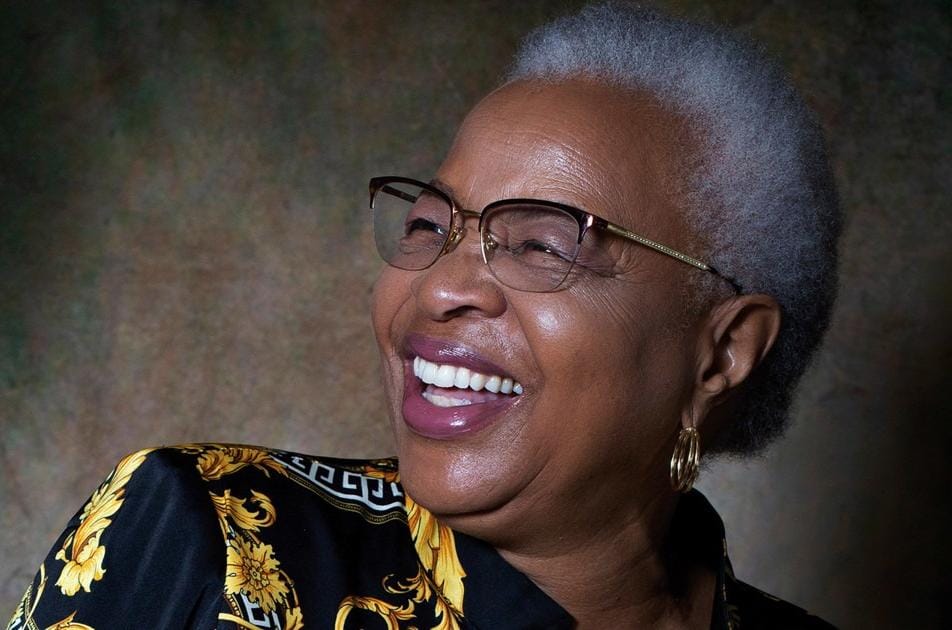

Graça Machel’s journey from Education Minister in Mozambique to First Lady of two African nations remains extraordinary.
Samora Moisés Machel drew inspiration from his valiant family lineage while at the forefront of Mozambique’s battle against Portuguese colonisation. His grandfather, Malengani, fought alongside Gaza Province ruler Ngungunyane against the Portuguese in 1895.
In 1956, while working at a hospital on Inhaca, an island across the bay from Mozambique’s colonial capital, Lourenço Marques, Samora began a relationship with Sorita Chiankomo, with whom he had two children, Jucelina and Edelson. Although they never married, Samora ferried Sorita back to the mainland in 1959 and fathered two more children, Olívia and Ntewane, with her while working as a nurse at Miguel Bombarda Hospital.
In 1964, Josina Muthemba, a Frelimo recruit and active member of the student organisation Nesam, fled her rural Mozambican home in Inhambane for Nachingwea, Tanzania, to join the Frelimo liberation movement. She was captured by Rhodesian security forces and, as was standard practice, handed over to PIDE, the Portuguese intelligence service in Mozambique. She escaped and fled to Dar es Salaam the following year.
In 1967, Josina and 24 other women volunteered for military training at Nachingwea, after which she became a leader of the Destacamento Feminino, the female wing of Frelimo. Josina’s dedication to Frelimo attracted the attention of its leaders, Eduardo Mondlane and Samora.
Despite his marriage to Irene Buque, a nurse at Miguel Bombarda who gave birth to his daughter Ornila, Samora openly courted Josina. He and Josina married at the Frelimo Education Centre in Tunduru on May 4, 1969. Many senior Tanzanian officials, including President Julius Nyerere, attended their wedding. That November, Josina gave birth to a boy named Samito (little Samora).
On April 7, 1971, two years after their wedding, Josina died of leukaemia at the age of 26. At a meeting in Lusaka organised by Zambian President Kenneth Kaunda on September 7, 1974, the Portuguese-led Armed Forces agreed to relinquish power to Frelimo within a year. On the evening of June 24, 1975, two months after his mother’s death, Samora Machel was sworn in as president of Mozambique at Machava Stadium in Matola, on the outskirts of Maputo.
Following a short but discreet romance, Samora married Graça Simbine, his Minister of Education, on September 7, 1975. They had moved in similar circles in Lourenço Marques but had never socialised. They reconnected in 1974 when Graça travelled to Dar es Salaam, joined Frelimo and affectionately began referring to Samora as Cheri.
Forging a blended family was laborious. The children, born to three different mothers, were unfamiliar with one another. Given Samora’s patriarchal tendencies, and without considering the emotional cost of his lengthy separation from his children, he acted insensitively and brought them all to Maputo.
In Samora’s biography, A Life Cut Short, Graça elaborates on how he insisted that all his children live together and follow a regimented itinerary, despite her reservations about separating them from their maternal families. The proposal required the children to live at Ponta Vermelha Presidential Palace, rise at 5.30 am and exercise for an hour before breakfast. After school, they had to complete their homework, work out and have dinner together at 7 pm every day.
As First Lady and Minister for Education, Graça embarked on a programme to expand access to education and reorganise the curriculum. In 1973, 588,868 learners attended Mozambican schools. Five years later, under Graça’s free education programme, the number had more than doubled. Her ideological position made her a champion of girls’ and women’s access to tertiary education.
She introduced policies to combat the institutional oppression of women and created new vocational opportunities in the workplace. Urban women made small but significant advances, finding employment as tractor drivers, construction workers, police officers and administrators. She subsequently ensured that women constituted about half of the students selected to study in Cuba as engineers, physicians, dentists and teachers.
Graça also lobbied for a vaccination campaign against measles, smallpox and tetanus, a programme that immunised 90 per cent of the country’s population within two years. As a result, the World Health Organization declared Mozambique the most successful initiative in Africa, leading to a 20 per cent decline in its infant mortality rate.
By 1977, the Ministry of Health had recruited 500 foreign medical workers from 20 nations, and Samora announced the nationalisation of medicine, making medical care a right of all citizens rather than a commercial venture fraught with racism.
The Frelimo government came up with tactical interventions in response to fears of post-Independence paralysis. Abandoned farms and plantations were nationalised and reorganised into state farms, preserving jobs for thousands of rural workers. Within two years of Samora’s rule, 160,000 Mozambicans living in sub-standard housing were relocated to urban residences repossessed by the state. To avert the collapse of strategic industries, Samora nationalised them. He also seized mismanaged companies and, by 1979, more than 150,000 industrial workers had secured permanent employment.
Across the border, South Africa’s PW Botha’s apartheid regime and Ian Smith’s Flechas Arrows Rhodesian forces grew increasingly agitated by Mozambique’s rise. They began funding the Mozambican militant rebel group Renamo and recruited Africans who had previously worked for PIDE. Having captured the imagination of South Africa’s militant youth, who adopted the Frelimo slogan “Aluta continua” during the 1976 school uprising, Pretoria repeatedly attempted to assassinate Samora and eventually succeeded.
On October 20, 1986, Graça received a traumatising call informing her that Samora had died the previous night in a plane crash in the Lebombo Mountains in South Africa.
In a letter to Graça, Nelson Mandela, through his wife Winnie, informed her that he had unsuccessfully petitioned to be allowed to travel from his prison cell on Robben Island to honour his fallen comrade. That letter began a heartfelt correspondence between Graça and Nelson. Twelve years later, they married on his 80th birthday in Johannesburg, making Graça the only person in history to become the First Lady of two separate nations.
A novelist and Big Brother Africa 2 Kenyan Contestant, Jeff Anthony is the founder of Jeff’s Fitness Centre. He can be reached (@jeffbigbrother). This article was first published by The Nation, Kenya