



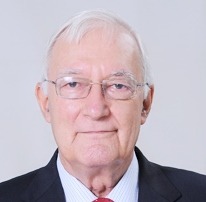

Had Emeritus Professor Albert Alós lived for 10 more days, last week, September 17, would have been his 87th birthday. He died on 7 September 2026, after a brief illness. Alós was one of those rare Nigerians who chose a lifetime of service and left behind a legacy built to endure. At a time when public life often rewarded mere visibility or position, he embraced the slower, harder work of building institutions, strengthening educational and professional communities and, above all, shaping generations of people.
Albert Alós arrived in Nigeria from Spain in 1967, aged 28, during the turbulent opening months of the Civil War. For nearly sixty years, Nigeria became the place of his work, his service to God and his fully adopted country.
For Alós, whose life was deeply shaped by Opus Dei, work was never merely employment, professional advancement or the acquisition of titles. It occupied a central place in his spiritual and moral development. He lived out Opus Dei’s conviction that ordinary work, undertaken with competence, integrity and love, can become an act of worship.
Work was vocation; vocation was service; and service, properly understood, was a way of honouring God by improving the world entrusted to one’s care. This consciousness gave unity to a career that moved from engineering and academic work to management education and the founding of a university. His name came to evoke excellence, moral seriousness and disciplined service by making them operational.
I joined the faculty of Pan-Atlantic University’s School of Media and Communication at a pivotal moment, as Professor Alós was retiring, on attaining the age of 70. Yet, even as he was stepping back from formal administrative responsibilities, he took a personal and generous interest in my arrival. He went out of his way to help me understand the University’s culture, its systems and the values that sustained it. His support was practical, attentive and characteristic of his belief that institutions endure only when new members are properly inducted into their purpose.
Professor Alós was particularly passionate about the case-study method as a means of teaching not only professional judgment but ethical reflection. He graciously invited me to contribute basic insights into two of his media case studies. Those encounters revealed both his intellectual curiosity and his instinct for the future.
Even then, the visionary in him was already anticipating the technological transformations that would reshape education, media and society. He spoke often, and with conviction, about the need for a Technology Innovation Centre or Hub, an idea that reflected his enduring belief that institutions must prepare seriously for the future rather than merely react to it.
He began as an engineering teacher and made his mark at the Universities of Ife, Lagos and Ibadan, becoming Professor of Electrical Engineering. He believed a university must do more than produce graduates; it must form men and women of competence, character, responsibility and courage.
Professor Alós most consequential work began in 1993, after 25 years in academia, when his intimate, lounge-style executive education classes evolved into the Lagos Business School. He was initiator, chief marketer, curriculum designer and lead faculty, working with a small, dedicated team to turn a daring proposition into a leading centre of management education and later a cornerstone of Pan-Atlantic University.
Alós insisted that business education must join professional rigour to ethical reflection, treating leadership as stewardship, trust and service rather than privilege or self-enrichment.
As founder and pioneer Vice-Chancellor of Pan-Atlantic University, Professor Albert Alós brought to higher education the philosophy that guided his entire life: institutions are sustained not by buildings, mission statements or the prestige of founders, but by the daily conduct of the people within them. Quality, in his view, had to become habitual and standards had to survive pressure.
The educational ecosystem associated with his work grew into a formidable network of secondary schools, technical and vocational institutions, Lagos Business School and Pan-Atlantic University. These institutions reflected his conviction that Nigeria’s future depended on forming citizens and leaders able to unite knowledge with conscience and professional competence with ethical responsibility.
Alós’ influence extended far beyond the offices he occupied, travelling from classrooms to boardrooms, professional associations and the wider business community. He mentored without fanfare, listened carefully and offered counsel with a quietness that made his counsel compelling. His authority rested on the coherence of his life: disciplined, humble, simple and attentive to people.
The loss of Alós will be felt in the lives of former students, academics, administrators, entrepreneurs and business leaders shaped by his demanding but humane understanding of work and leadership.
Nigeria has no shortage of talent, vision or grand declarations. Its recurring challenge is to convert promising beginnings into institutions strong enough to outlive their founders and withstand changing political and economic conditions. But Alós understood that national renewal rests less on dramatic gestures than on the repeated decision to do work well, preserve standards and do what is right.
Albert Alós’ most enduring legacy lies in the cultures of excellence and service he set in motion, and in the generations of people he equipped to carry that work forward. What he built was designed to outlast him; what he inspired in others will continue to grow beyond him. In that continuity lies the most persuasive answer to mortality.
Dr Richard Ikiebe is a Media and Management Consultant, Teacher and Chairman, Board of Businessday Newspaper