



“Courts exist to dispense justice, not to demand respect from litigants as the price of admission.” David Pannick, Judges, 135 (1987)
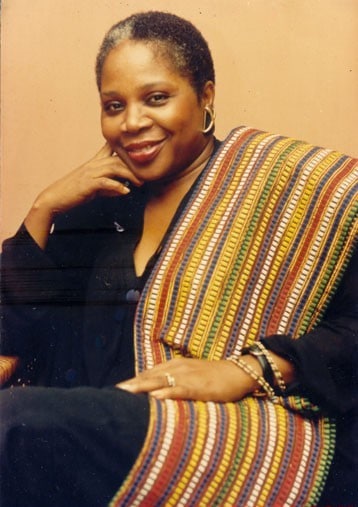
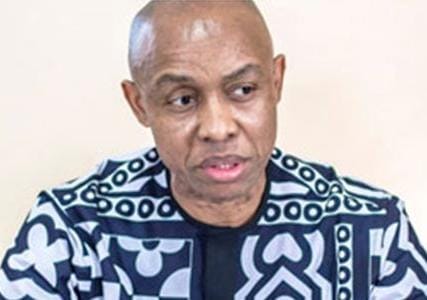
The announcement by the president of the Nigerian Bar Association (NBA) referring senior lawyer, Kalu Kalu, to the Legal Practitioners’ Disciplinary Committee (LPDC) for using the expression “coconut judge” in relation to a judge has been predictably controversial. Kalu Kalu invented that expression in response, ostensibly, to the latest controversial judgment handed down by le juge du moment in Nigeria, Peter Lifu.
The reactions to the intervention by the NBA president fall broadly into three categories. Her supporters underscore a duty of the lawyer to “always treat the court with respect, dignity and honour.” There are some, however, who fear that the NBA president chose the wrong case to make her point. Stephen Kola Balogun, for instance, points out that the “charge cannot be reasonably sustained, for three reasons: ambiguity, context, and perception.” Others accuse the NBA president of hurtling under cover of law into a cauldron of party politics.
In announcing the referral to the LPDC, the NBA president dwells on the obligations of lawyers in Nigeria “to maintain high standards of professional conduct.” Kalu Kalu was not in court when he spoke the words complained of. He was neither lawyer nor litigant in the case. The referral by the NBA, therefore, invites scrutiny of the association’s record in censuring its members for what they do outside the court. It’s a squalid record.
Consider the case of Alhaji Rauph Omobolaji Gaji. Alhaji Rauph was a senior lawyer when, on 3 December 1972, at his home in Kaduna, he fatally assaulted his secretary, Miss Cordelia Ego Ejiofor. As life seeped out of her, Alhaji Rauph drove more than 16 kilometres to the outskirts of the city where, along Kachia Road, he disposed of Cordelia’s body.
The police recovered only parts of the remains after Alhaji Rauph led them to the point where he dumped her. On 23 May 1975, the Supreme Court unanimously affirmed his conviction for culpable homicide not punishable with death (manslaughter) with a sentence of 12 years in prison.
Nigeria law treats Alhaji Rauph’s case as a classic on circumstantial evidence, but the case is significant for much more. Lawyers obviously do not attend law school to acquire qualifications in perpetrating homicide or grievous bodily harm, or in the disposal of human remains. It is difficult to see how a person convicted of such a heinous crime can remain a lawyer. If anything was done, however, to disbar or strike Alhaji Rauph from the roll of lawyers in Nigeria, there appears to be no public record of it.
Tafa Balogun was a senior lawyer and former Inspector-General of the Nigeria Police Force when he pleaded guilty in 2005 to eight counts of laundering and plundering over 13 billion Naira in public funds. The Federal High Court convicted and sentenced him to six months in prison. He also forfeited over US$150 million worth of stolen cash and property, but Mr Balogun happily remained on the roll of lawyers until his death in 2022.
There was the case of Kunle Kalejaiye, a Senior Advocate of Nigeria who was found to have been involved in corrupt relations with a judge, Thomas Naron, in an election petition. In 2013, Thomas Naron lost his job. Six years later, the Supreme Court interposed a confounding technicality to ensure Mr. Kalejaiye kept his.
In 2021, the same court similarly decided that there should be no consequences in the case of Dr. Joseph Nwobike, SAN, whose specialty was “inducing court registrars to ensure that his cases were assigned to his preferred judges so he could obtain favourable judgments.” The NBA did nothing.
On 10 December 2021, the Supreme Court of Nigeria determined that former Attorney-General of the Federation (HAGF), Michael Aondoakaa, “had, by his conduct, undermined and subverted the administration of justice and the independence, authority and integrity of the judiciary” and “ought not to be entrusted with any other public office at all.” The antecedents of this decision were staggering.
In the Uyo Federal Constituency of Akwa Ibom State, Bassey Obot prevailed in primaries conducted in December 2006 by the then ruling party, the Peoples’ Democratic Party (PDP), for the right to fly its flag in the election to the House of Representatives in 2007. Some unknown persons contrived to remove Mr Obot’s name from the records of the Independent National Electoral Commission, INEC, substituting him with one Mr Bassey Etim as the PDP candidate.
In December 2007, the Court of Appeal ordered the President of the Court of Appeal to constitute a new tribunal in Uyo to hear Mr. Obot’s case. Mr. Aondoakaa, then newly installed as the HAGF, wrote to the President of the Court of Appeal (PCA) presuming to instruct him to disobey the order of the Court of Appeal because, he claimed, he was considering a petition from Mr. Etim. Unable to contrive a sensible excuse for casualizing the court over which he presided, the PCA disregarded Mr. Aondoakaa’s importuning.
In April 2008, the Tribunal decided in favour of Mr. Obot, ordering INEC to certify him as the winner. The Court of Appeal, the final arbiter then in disputes over elections to parliament, affirmed the tribunal. In separate letters thereafter to the INEC Chairman and to the Speaker of the House of Representatives, Mr Aondoakaa again required them to disregard the Court of Appeal. They complied. Allegations that Mr Aondoakaa issued those letters in exchange for value were not implausible.
On 15 May 2009, Mr Obot, whose victory the HAGF had frustrated, returned to the Federal High Court asking it to declare that Mr Aondoakaa had abused his office and desecrated the third arm. On 1 June 2010, the Federal High Court obliged, lamenting that “the hallowed office of the HAGF has been gradually desecrated and put into disrepute with the likes (of Mr. Aondoakaa) being appointed and occupying it. It is meant for learned, eminent members of the Bar and not for political charlatans, jobbers or latter-day praise singers/converts….”
On 3 September 2015, the Court of Appeal affirmed the High Court with the hope that “that office [of HAGF] should never again be occupied by individuals of such poor quality as [Mr. Aondoakaa].” The Court went further and invited the Nigerian Bar Association, NBA, “to subject (Mr Aondoakaa) to its appropriate disciplinary processes.” Nothing of the sort followed.
When it dismissed Mr Aondoakaa’s appeal, the Supreme Court called him “reprehensible”, “reckless” and “unbecoming of the occupant of such an exalted office.” It accused him of violating Rule 30 of the Rules of Professional Conduct (RPC) in the Legal Profession, which requires every lawyer to refrain from doing “any act or conduct… in any manner that may obstruct, delay or adversely affect the administration of justice.” Mr Aondoakaa remains a lawyer.
In July 2026, the Federal High Court ordered final forfeiture of 48 different items of property valued at over 212.8 billion Naira, belonging to or connected with former Attorney-General and Minister of Justice, Abubakar Malami. In Malami, the office of the HAGF finally met an appointee arguably of poorer quality than Mike Aondoakaa. The NBA has not yet noticed.
No one should suffer adjectives for honest work, with emphasis on honest; and no person should abide that. When, however, a professional association suddenly discovers umbrage at what its members say and how they say it, but not when its senior-most practitioners kill, steal, plunder the patrimony, and pervert the course of justice, questions are bound to be asked about both its motives and its votives.
Any suggestion that, in such a system, official institutions alone enjoy a monopoly on scrutiny of judicial conduct misapprehends both the source of judicial authority and the vocation of democracy.
On 20 November, in the spirit of balance, I shared an adulatory piece authored by a faceless group called “Friends of Justice Peter Odo Lifu”. None of those previously concerned about “high professional standards” have complained. The reason is obvious: Viewpoint discrimination can hide under cover of concern for professional standards. That said, the NBA President deserves our thanks for triggering a long-overdue debate on the professional priorities of the organisation she now leads.
A lawyer and a teacher, Odinkalu can be reached at chidi.odinkalu@tufts.edu