



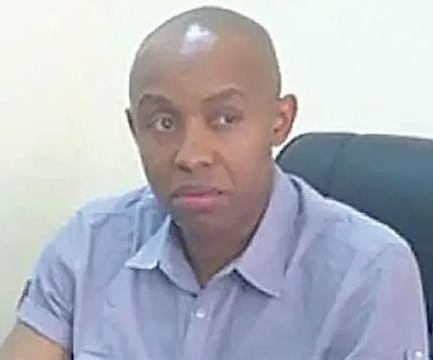

In a week in which the Nigerian judiciary at all levels has been the focus of considerable civic and party-political energy, it may seem odd to expend bandwidth on the travails of an investor or businessman, but Ernest Azudialu-Obiejesi is no ordinary businessman. The story of the ongoing ordeal in the Nigerian court system involving him, his wife, Nnenna – an entrepreneur in her own right – and various companies in which they are cross-invested, will for long be studied as an example of how disreputable dispute resolution constrains development and can blight even the ablest.
These cases involve the control of assets running into billions of dollars and claims concerning the structure and enforcement of secured credit transactions whose value is equally mouthwatering. The issues and sums involved are consequential for the fate of Nigeria’s economy. The performance of the courts has been just as consequential but for mostly the wrong reasons.
These cases have worked their way with dutiful relentlessness through every nook and cranny of the Nigerian court system. In the past six months alone, they have traveled through multiple judges of the Federal High Court; up to the Court of Appeal; and then to the Supreme Court from where they have returned to the Federal High Court. These cases have also generated tens of thousands of pages of court filings and records and thousands of billable hours for the most expensive lawyers in Nigeria.
As with many such cases involving commercial transactions at the sharp end, these cases can seem interminable, and their narrative can appear complex. Amidst the fog of legal attrition, however, the plot is discernible. What they reveal about how courts can dissipate a country and its well-being bears close attention.
Better known as “Obijackson”, the name of the trading company under which he first made his foray into the Piranha-infested waters of Nigerian enterprise in 1983, Ernest Azudialu-Obiejesi is one of Nigeria’s richest. In 1991, during the heady days of military rule, he ventured beyond trading and founded Nestoil, an engineering, procurement, construction, and commissioning company active in the provision of services to the hydrocarbons and adjacent sectors in the country.
Neconde Energy, another company founded by Obijackson, is a leading indigenous operator in hydrocarbons exploration and production in Nigeria. Among other holdings, Neconde Energy owns 45% of Oil Mining Lease (OML) 42. The remaining 55% is owned by the Nigeria National Petroleum Company (NNPC) Exploration and Production Limited (NEPL).
These companies are part of the Obijackson Group, which employs over 3,000 Nigerians directly. Up to 15,000 indirect jobs depend on their operations, too.
As with many operators in the hydrocarbons and adjacent sectors, it is not unusual for such companies to require lines of credit from financial institutions. Indeed, this can itself be proof of the value and profitability.
In December 2022, the First Bank Group led a syndicate of financial institutions, including 16 Nigerian banks, in restructuring and consolidating the long-term indebtedness of Nestoil into a pool designated as “Global Facilities,” and under a document known as Common Terms of Agreement (CTA). The consortium also included some lenders who were non-Nigerian, such as the Africa Export-Import (Afrexim) Bank, headquartered in Cairo.
The CTA contained provisions governing applicable law as well as dispute resolution forum. It appears that the parties agreed that the applicable law will be English law and the forum for resolution of disputes will be England. How or why they made this choice is not in issue at this moment.
Neconde Energy, together with Obijackson and Nnenna Obiejesi – guaranteed this transaction.
Around 22 October 2025, the second anniversary of the onset of his judicial career, Deinde Isaac Dipeolu, a judge of the Federal High Court in Lagos, issued an order at the instance of the FBNQuest Limited, a Merchant Bank, and First Trustees Limited, both members of the First Bank Group, authorizing a receiver/manager appointed by them to take control of the assets of Nestoil and Neconde Energy. The basis was a claim that there had been a default in the debt, which crystallized enforcement against the assets on which the debt was secured. Importantly, the order declined to extend judicial protection to the receiver/manager.
The understanding of the creditors appeared to be that those assets included a mini-skyscraper known as Nestoil Tower, located in a choice part of Victoria Island in Nigeria’s commercial capital of Lagos. The occupants of this building include staff of Nestoil and of Neconde Energy. However, the building is owned by another company called Drawcock Estates Limited, which was not a party to the Global Facilities or the CTA.
One year earlier, on 8 October 2024, another judge of the Federal High Court, Ambrose Lewis-Allagoa, had apparently issued an order restraining “any persons whatsoever”, from taking such adverse enforcement action against the building. This order was not challenged.
Similarly, before the CTA, in 2019, another judge of the same court, Muslim Sule Hassan, had made another order requiring the parties – in a formulation that has now become familiar to Nigerians – to preserve the status quo ante bellum.
It appeared that Deinde Dipeolu had set out to anchor a young judicial career on a distinguished track-record of controversial ex parte orders involving both hydrocarbon interests and bankers. On the last working day of 2024, 30 December, again at the instance of the First Bank Group, he dutifully issued an order freezing the accounts of General Hydrocarbons Ltd in a dispute concerning credit facilities to the operators of OML 120. However, three weeks earlier, his colleague, Ambrose Lewis-Allagoa, appeared to have issued an order restraining such action.
Deinde Dipeolu’s order of October 2025 threatened to ransack the life of Nestoil and the Obijackson Group as a going concern. To enforce the order, the Nigeria Police Force deployed to seal Nestoil Tower. Following a petition by Obijackson alleging judicial malpractice, the Chief Judge of the Federal High Court transferred the case to another judge of the court, Daniel Osiagor, who, on 20 November, vacated Deinde Dipeolu’s ex parte orders. This enabled the company to do so, at least temporarily, and return to its headquarters building.
The First Bank Group filed a notice of appeal on 21 November 2025 against Daniel Osiagor’s decision. On 26 November, unknown to anyone, they followed this up with an application ex parte asking the Court of Appeal to issue a “restorative injunction” returning them to the building and affording judicial protection to the manager/receiver.
At this time and on this day, however, no records of appeal had been prepared or transmitted to the Court of Appeal. So, there was no appeal before the Court. Mind you, the lower court had declined judicial protection to the receiver/manager. So, there was nothing about that to “restore” either.
Yet, the following day, 27 November, a three-judge panel of the Court of Appeal sat promptly and, in the absence of an underlying appeal, granted the application for “restorative injunction” without hearing the other side. If anything qualifies as a judicial miracle, this was it.
But this Court of Appeal had only just begun its career in judicial miracles.
In the third week of January 2026, they disqualified lawyers instructed by Obijackson and Nnenna Obiejesi, his wife, as well as Neconde Energy, from participating in the proceedings. According to the Court of Appeal, only the receiver/manager (the validity of whose appointment was disputed) could exercise that right. The audacity of this reasoning did not pass the smell test.
On 10 April 2026, the Supreme Court agreed, accusing the Court of Appeal in this case of having “abdicated its judicial responsibility and enabled blatant abuse of process of court when it granted the application.” Stronger judicial condemnation is difficult to imagine.
Now that the Supreme Court has settled the matter of legal representation, the parties must return to the High Court for the underlying dispute. How long this will take or how many more twists of judicial malefaction could accompany the journey to a resolution of the mouthwatering sums involved is anyone’s guess. Investors elsewhere desiring to make Nigeria a destination and looking at this will be forgiven if they were to decide to sit it out or find a more sensible destination.
A lawyer and a teacher, Odinkalu can be reached at chidi.odinkalu@tufts.edu