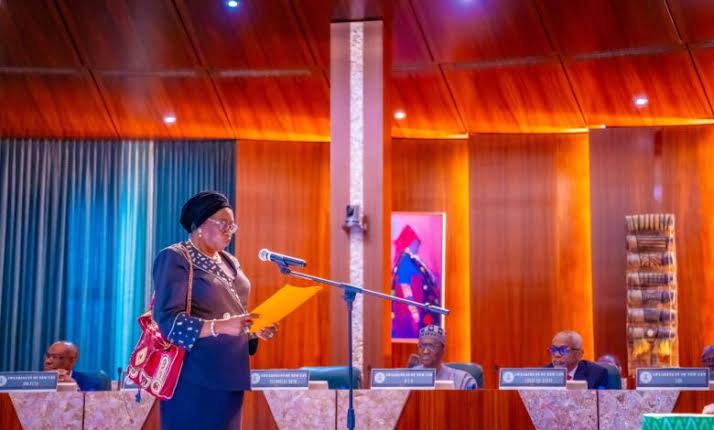




First, a disclosure: I have not yet read General Yakubu Gowon’s newly published memoir, My Life of Duty and Allegiance. This reflection is NOT a review of the book, but a reflective commentary from its public presentation in Abuja on 19 May 2026, press reports, and Bishop Matthew Hassan Kukah’s review.
I write, therefore, as an analyst of the book’s moment, its framing, and, above all, its title.
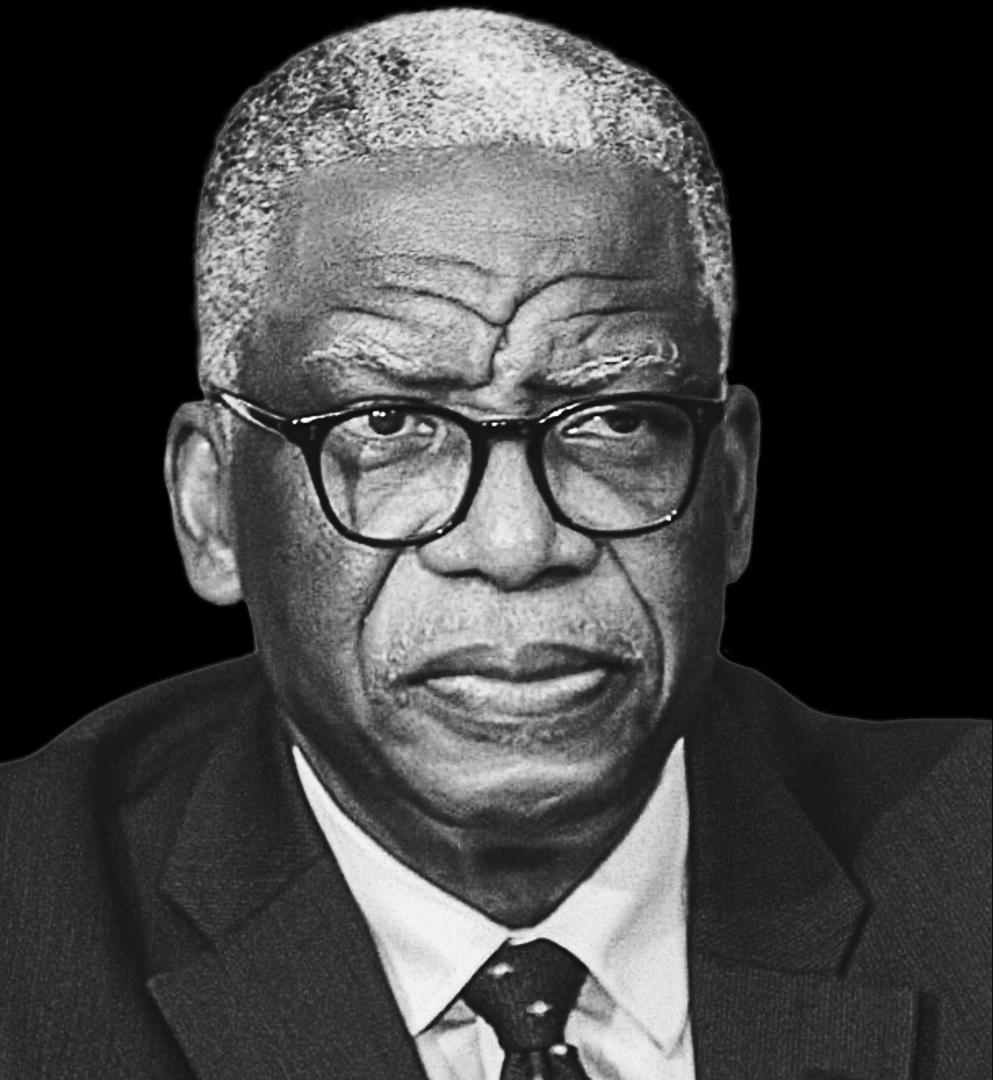
At 92, General Yakubu Gowon has finally spoken at book-length. My Life of Duty and Allegiance, launched in Abuja before a “Grade A” gathering of former presidents, religious leaders, traditional rulers, and state functionaries, was presented by the highly respected General Gowon as a work of correction. He said it was an effort to address misinformation, preserve institutional memory, and offer his side of Nigeria’s most turbulent decades. It is not, he insisted, an act of score-settling, but simply his truth.
The title tells us something the narrative may not fully say. “Duty” is a word we understand. It is directional and points to obligations: to the country, to the office, or to the requirements of the moment. “Allegiance,” however, is a far more complicated word. It implies a hierarchy of loyalties, which in any account of Gowon’s nine years in power was never simple, singular, or entirely his own to define.
Gowon’s allegiances as recorded by history are layered, complex and competing. There was his allegiance to the Nigerian federation as a constitutional ideal. There was his allegiance to the military institution that made him and sustained him. There was the allegiance to the Northern political hegemony, whose support underpinned his authority following the crisis of 1966.
There was his allegiance to British strategic expectations, which consistently prioritised a “united Nigeria” over a federation. And then there is the allegiance Gowon has been cultivating since he was forced from office 50 years ago, and most conspicuously in his old age; the allegiance to his legacy, in a field of competing historical memories where most of the other voices have gone permanently silent. This last allegiance is the one the memoir most vividly performs, even if it least openly declares.
On the question of memory, we must be precise about what kind of memory Bishop Kukah’s review is telling. The book was written without access to Gowon’s personal records and drawn, in his own words, “straight from whatever he could remember.” That is a remarkable, if precarious, undertaking for a man of 92.
The memoir is better read as a retrospective self-testimony than as a systematic map of the forces and pressures bearing on General Gowon at the time.
Memory at any age is not forensic. It is reconstructive and morally curated. Kukah described the book as storytelling “from the heart” and cautioned that no autobiography has finality, since history has no finishing post. That was an important warning about managing expectations.
The warning sharpens considerably when we consider the roles of major actors who are no longer here to respond. Biafran leader Chukwuemeka Odumegwu Ojukwu and Joseph Garba are dead. Of the twelve military governors at the time of Gowon’s overthrow in 1975, only Alfred Diete-Spiff and Oluwole Rotimi are known to be still alive. Most members of the then-Supreme Military Council are gone. Generals Gowon, Olusegun Obasanjo, and T.Y. Danjuma are, in the most literal sense, the last men still standing in memory of that era. Gowon’s memoir orbits in the space where cross-examination is profoundly asymmetrical.
Nowhere does this asymmetry matter more than in the treatment of Aburi. In Gowon’s memory, the January 1967 meeting in that Ghanaian town was not a sealed compact. Gowon has argued elsewhere, and the memoir appears to repeat, that the failure of the Aburi Accord between himself and Ojukwu just before the full-fledged Biafra war was a failure of interpretation of outcomes: different expectations and different understandings of what was agreed; a tragedy of incompatible motives.
However, much of the historical record suggests that a political settlement that was reached, celebrated in the immediate press coverage as a breakthrough, and then systematically dismantled under pressure from those whose interests a confederate arrangement directly threatened: military and regional power elites, federal civil servants, and a Britain deeply uneasy about any weakening of the federal centre.
Beyond a diplomatic episode, Aburi was the last realistic opportunity to build a political settlement before war hardened the fault lines. This memoir was the one remaining opportunity to give a full account of Aburi: What was agreed in Accra, what was walked back in Lagos, which pressures were decisive, and at what point did the possibility of peace give way irreversibly to war. Instead, the account appears to retreat into the language of national survival, misunderstanding, and tragic escalation, and away from the harder anatomy of power, factional coercion, and broken trust.
The book is worth reading not cynically but critically. It is a late telling of history that preserves duty, service, restraint, and the imperative of unity. But it failed to supply the whole unsparing truth of a nation that, at Aburi, was offered a slim chance to choose a different future, and whose leaders, for reasons the memoir illuminates only partially, failed to take it.
The duty of remembering is also the duty of telling everything. Allegiance to history demands no less.
Dr Richard Ikiebe is a Media and Management Consultant, Teacher and Chairman, Board of Businessday Newspaper