




If any Nigerians took lightly American President Donald Trump’s threat in November to deploy U.S. military ‘guns-a-blazing’ to Nigeria, over alleged mass killing of Christians by Islamic jihadists, the Senate President Godswill Akpabio, the nation’s number-three citizen, was not one of them.
Speaking in the red chambers of the National Assembly in Abuja recently, Akpabio warned his fellow lawmakers against the lenient “bow-and-go treatment” of ministerial nominees, because Trump is on our neck.
However, even he must have been so surprised that Trump would direct the American Department of War airstrikes in Nigeria’s north-western Sokoto state so soon, as an unusual “Christmas present.”
Villagers in Jabo, on the outskirts of the ancient city of Sokoto, were woken by unusual sounds and devastation from the American bombs on the evening of 25th December, while the unsavoury news of the strikes greeted other Nigerians on the morning of Boxing Day.
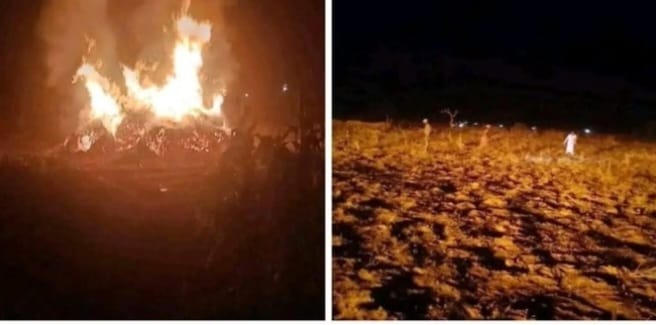
Impact of the airstrikes
Writing on his Truth Social platform, Trump said that under his direction, the U.S. launched a “powerful and deadly” strike against forces of the ISIS group in Nigeria, after accusing the Nigerian government of failing to stop the targeting of Christians.
In a statement later, Nigeria’s Ministry of Foreign Affairs said it was a joint/collaborative operation, involving “exchange of intelligence and strategic coordination in ways consistent with international law, mutual respect for sovereignty and shared commitments to regional and global security.”
“The Federal Government continues to work with its partners through established diplomatic and security channels to weaken terrorist networks, disrupt their financing and logistics, and prevent cross-border threats, while strengthening Nigeria’s own security institutions and intelligence capabilities,” the statement added.
Nigeria has been fighting multiple armed groups, including those affiliated with ISIS, such as Boko Haram, the Islamic State West Africa Province (ISWAP) and the lesser-known Lakurawa group, operating in the north-western states.
Trump said the airstrikes were launched against IS militants “who have been targeting and viciously killing, primarily, innocent Christians.”
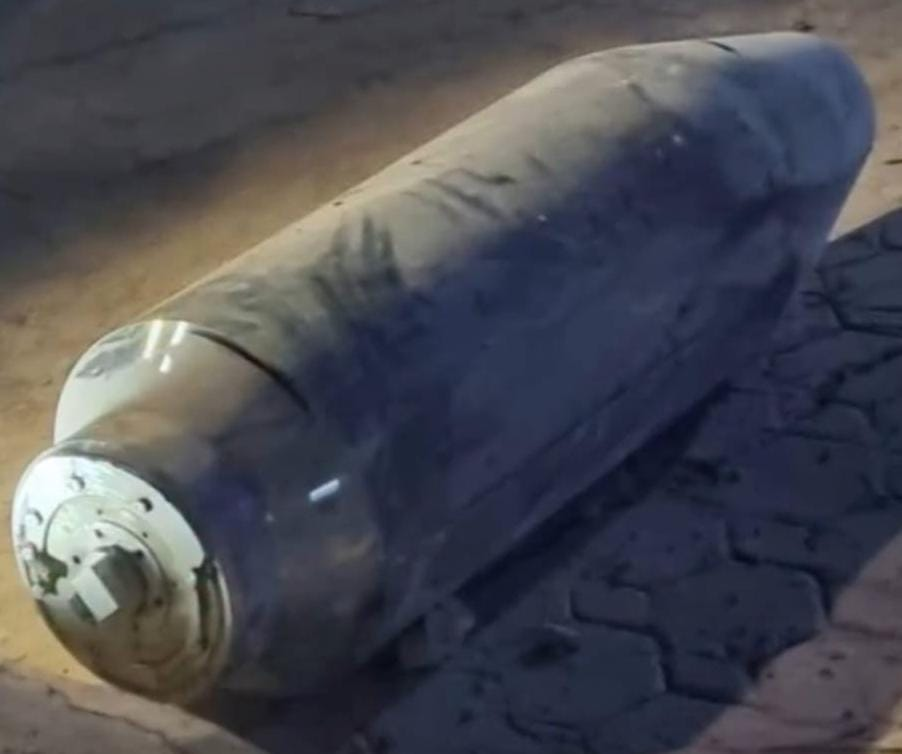
Spent munition from the airstrike
In November, he reinstated Nigeria on the list of Countries of Particular Concern CPC, and also ordered the Pentagon to begin planning for potential military action to curb “Christian persecution” in the country.
The State Department also recently announced it would restrict visas for Nigerians and their family members involved in killing Christians.
Like Trump’s threat in November, the airstrikes have elicited mixed reactions among Nigerians, with Sheikh Ahmad Gumi, a controversial Islamic scholar and a former soldier, urging Nigeria to “immediately halt military cooperation with the United States” because of the military operation, arguing that America’s involvement could escalate Nigeria’s security crisis and deepen religious divisions.
On his Facebook page, he questioned America’s “moral authority,” warning that Nigeria should not be turned into a “theatre of war” for foreign powers. Gumi argued that “US involvement under the guise of protecting Christians could polarize Nigeria,” adding that airstrikes “alone cannot defeat terrorism.”
He insisted that Africa’s most populous nation of more than 220 million people has enough personnel to handle its security challenges if properly organized, or instead, seek military assistance from China, Turkey, or Pakistan. Gumi, himself, has come under criticism for preferring dialogue with terrorists.
For his part, former President Olusegun Obasanjo, in a recent viral video, dismissed calls for dialogue with terrorists, insisting that “Nigeria must adopt decisive measures and seek international assistance to confront worsening insecurity.”
Meanwhile, the opposition Peoples Democratic Party (PDP), has expressed concern that “Nigerians were notified of the American strike on terrorists… through …social media pages of President Trump and other American officials before the spokesperson of the Ministry of Foreign Affairs issued a vague statement many hours later, offering a passive confirmation of the knowledge and cooperation of the Nigerian Government in the operation.”
“This inverted communication approach does not help the Federal Government or Nigerians in any way, especially when taken against the background that the US military has been reported to have previously entered and operated in Nigeria successfully without the permission and knowledge of the government,” the party said.
It urged “the Federal Government to ensure that the defence agreement with the United States …includes joint operations, which will ultimately result in knowledge-sharing and experiential learning to help Nigeria sustainably combat insecurity, rather than full, externally-led ‘precision attacks.’”
When Trump threatened military action in Nigeria in November, some commentators pandering to patriotic sentiments raised the issue of national sovereignty. But that is now diluted by Nigeria’s recent military operation in neighbouring Benin to help foil an attempted military coup.
Like Gumi, but perhaps for different reasons, many would argue that Nigeria has what it takes, militarily, to defeat Boko Haram and other terrorist armed groups.
However, successive governments have failed since 2009, not for want of trying, but because of a combination of reasons, including religious and ethnic division, lack of political will, insincerity, corruption and sabotage.
In 2012, former President Goodluck Jonathan disclosed that Boko Haram sympathizers were in his government. This was corroborated by former Foreign Minister Bolaji Akinyemi, who recently narrated how a US-assisted rescue plan for Chibok Girls was aborted in 2014 due to an information leak.
“When the Chibok girls (more than 200 of them) were picked up by Boko Haram, the Americans came in quietly at the invitation of the Jonathan administration, and in collaboration with the Nigerian troops. They discovered the camp where the girls were being kept. And they said, all right, we will throw gas into those camps, and while everybody is sleeping, including the Boko Haram militants, we’ll go in with the Nigerian troops and take out the girls,” the former Minister said.
However, he revealed: “When the Americans sent the reconnaissance aircraft over the camp, what did they find? Boko Haram militia were wearing (gas) masks, which means somebody within the Nigerian army had leaked to Boko Haram what the plan was.”
Similar fifth-columnist betrayal could be blamed in the recent case of a Nigerian Army Gen. Musa Uba, reportedly killed after an ambush by ISWAP terrorists, who intercepted communication between him and his colleagues in North-east Borno state.
No casualty figures have been made public, but there are concerns about possible civilian collateral damage in the type of airstrikes carried out against the reported Lakurawa group in Sokoto, which has become increasingly lethal in the region, often targeting remote communities and security forces.
Many had thought that Sambisa Forest in Borno State, regarded as the epicentre of terrorists in northern Nigeria, would be a priority target. But security experts have explained that the Americans must have relied on actionable intelligence gathered after weeks of surveillance in picking their targets, indicating that Sokoto could be a key supply line for the terrorists.
Still, Nigerian authorities have some explaining to do. For instance, what was the country’s input into the planning of the Christmas operation? If it was based on shared intelligence, how come Nigeria was rather reactive, given the time-lag between Trump’s tweet and the Nigerian Foreign Ministry’s statement on the airstrikes? And what is in it for the Americans, given that Trump is a self-professed deal-maker or transactional in his dealings?
Nigeria and some other African countries have rejected U.S. requests to host America’s African Military High-Command (AFRICOM). Has Nigeria finally given in to this request?
The perennial ineffective communication was again a major failure by the Nigerian government on the Christmas airstrikes, which many Nigerians learned about through foreign media. Television interviews by Minister Yusuf Tuggar and subsequent explanatory statements by the Armed Forces and the Ministry of Information followed the statement by the Foreign Ministry.
If the operation was coordinated, the initiative for public information should have come from Nigeria, the target of the airstrikes.
With American Congressman Riley Moore saying on his X handle that the Christmas strikes were “just the first step to ending the slaughter of Christians and the security crisis affecting all Nigerians,” there is a need for better coordination and communication from both sides to clear all possible doubts and avoid unintended casualties.
Additionally, if Nigeria is concerned about its national sovereignty, the government must prioritise the country’s security as part of its governance deliverable, beyond the laser focus on politicking and the next elections.
The argument that terrorists also kill people of other faiths and not only Christians rings hollow. Under the Constitution, no Nigerian citizen deserves to die needlessly; be made a refugee, or forced into Internally Displaced Persons (IDP) camps, on account of his/her religion, ethnicity, creed, social status or political persuasion.
The security of life, property, and citizens’ well-being are the primary responsibilities of any government.
Nature abhors a vacuum, and an African proverb translates to “when a man neglects or abandons his farmland, other men can farm or appropriate it!”
Paul Ejime is a Media/Communications Specialist and Global Affairs Analyst