



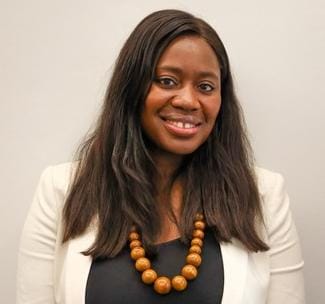

Born in Monrovia and forced to flee Liberia’s civil war as a child, Miatta Fahnbulleh went from refugee to rising political star, earning the new Prime Minister Andy Burnham’s trust. Now, as energy secretary, she’s tasked with overhauling Britain’s energy system while easing pressure on household bills.
Born in Monrovia in 1979, Miatta Fahnbulleh was a child when violence and dictatorship engulfed Liberia, forcing her to flee with her parents and younger brother, Gamal.
Her father, Henry Boimah Fahnbulleh – Liberia’s former foreign minister who later served as national security adviser in the Ellen Johnson Sirleaf administration – had fallen out with the military regime of Samuel Doe that ruled the country, turning the family into targets as political tensions escalated.
Their search for safety first took them to Sierra Leone, her mother’s homeland, before the family eventually settled in Britain. Fahnbulleh arrived in the UK at the age of seven, and her family was granted asylum. It was the beginning of a remarkable journey, from a refugee child rebuilding her life in a new country to one of the Labour Party’s most influential policy voices.
Gamal would later carve out his own public career as a journalist and presenter with ITV Granada, while Miatta took a different path through economics, public policy and, eventually, Westminster.
Her own experience of migration has informed her belief that behind the arguments over immigration are real lives, families and communities rebuilding after upheaval.
“My family left Liberia during a time of deep political unrest,” she said in a newspaper column in 2025. “We fled for our lives because my father spoke out against a military regime that would drive the country into a brutal civil war.”
Britain became home, but Fahnbulleh never lost her connection to her West African roots. Growing up in London, she found a sense of belonging in Peckham, the vibrant south-east London community she would later represent in parliament, shaped by decades of African and Caribbean migration.
That personal connection would later become part of her political message: that migration is not simply about people arriving in a country, but about the communities they help build.
“The people who come here don’t just settle; they contribute,” she said. “They open shops, run market stalls, drive buses, clean offices, teach in schools, and keep the NHS going.”
Her own experience has shaped one of her strongest political convictions: that immigration should be understood as a source of renewal rather than division.
In an October 2022 interview with IMIX, a charity that challenges negative media narratives about people who migrate or seek safety in the UK, Fahnbulleh argued that the debate around immigration had become increasingly distorted.
“For me, immigration is a success story of every country,” she said. “It is sad, we have got to a point where immigration has been made toxic, but if you look at the facts, the benefits of immigration to any country, any society always outweigh the losses.”
Long before she entered Westminster, Fahnbulleh had already established herself as a leading voice on Labour’s policy landscape. Trained as an economist, she studied philosophy, politics, and economics at Oxford before completing a doctorate in economic development at the London School of Economics. Her research focused on industrial policy in Ghana and Kenya, examining how governments can build economies and create opportunities.
Her career took her through some of Britain’s most influential policy institutions. She worked as head of cities in the Cabinet Office policy unit, became director of policy and research at the Institute for Public Policy Research, and later served as chief executive of the New Economics Foundation from 2017 to 2023.
At the British think-tank New Economics Foundation, she became known for advocating a more interventionist approach to economics, arguing that the government should play a stronger role in tackling inequality, supporting communities and driving the transition to a greener economy.
By the time she entered politics, she was already viewed as one of Labour’s emerging intellectual voices. The New Statesman named her among the most influential figures in progressive politics before she was elected, describing her as a natural candidate for Labour’s front bench.
Fahnbulleh’s rise through Westminster has been remarkably fast. She won the Peckham seat in Labour’s 2024 landslide victory, succeeding a constituency with a long Labour tradition.
Within days of entering parliament, she was appointed a junior minister at the Department for Energy, Security and Net Zero, giving her early experience in the department she would later lead.
Her political influence grew alongside her relationship with Andy Burnham, the former Labour leadership contender and now prime minister. Fahnbulleh became one of Burnham’s trusted policy voices, helping shape ideas around devolution, economic renewal, energy, and the cost-of-living crisis.
The fact that right-wingers are losing their minds over this appointment is evidence that Miatta Fahnbulleh is a good pick for this job.
Her position within Labour’s soft-left tradition has made her both influential and controversial. Supporters see her as a politician combining academic expertise with lived experience; critics have portrayed her as part of a broader ideological shift within the party.
British-American journalist Mehdi Hasan defended her appointment, saying on X: “The fact that right-wingers are losing their minds over this appointment is evidence that Miatta Fahnbulleh is a good pick for this job…”
Behind Fahnbulleh’s rise in British politics lies a family history shaped by public service, political struggle, and cultural influence. She was born into one of Liberia’s prominent families, where politics and social activism shaped generations.
Her grandfather, Henry Boimah Fahnbulleh Sr., was a prominent Liberian diplomat and intellectual whose career was marked by both influence and controversy. A former ambassador and senior government figure, he was convicted of treason in 1968 after prosecutors accused him of plotting against the government. It was alleged that he had criticised Liberia’s leadership in conversations with foreign ambassadors while serving as the country’s envoy to Kenya.
Fahnbulleh Sr. denied the charges, arguing that the case was politically motivated. After taking office in 1971, President William R. Tolbert Jr. pardoned him, recognising that he had been the victim of unjust accusations.
The family’s commitment to public life continued through Fahnbulleh’s grandmother, Mary Nema Brownell, a respected educator and peace activist who founded the Liberia Women Initiative and played a key role in mobilising women in Liberia’s peacebuilding efforts after the civil wars.
Fahnbulleh was named after her aunt, Miattah Fahnbulleh, one of Liberia’s most celebrated performers and widely known as the ‘doyenne diva’ of Liberian music.
Her aunt’s career crossed continents. She studied performing arts in the United States, performed at Harlem’s Apollo Theatre, worked with New York’s Negro Ensemble Company, and collaborated with South African jazz legend Hugh Masekela. She also represented Liberia at FESTAC ’77, the World Black Festival of Arts and Culture in Lagos, Nigeria.
Later, she became a leading advocate for women and children, founding Obaa’s Girls Educational Outreach to support girls’ education and campaigning for greater representation of women in public life.
Sheriff Bojang Jnr is a UK-based journalist. The Africa Report.com first published this article.