



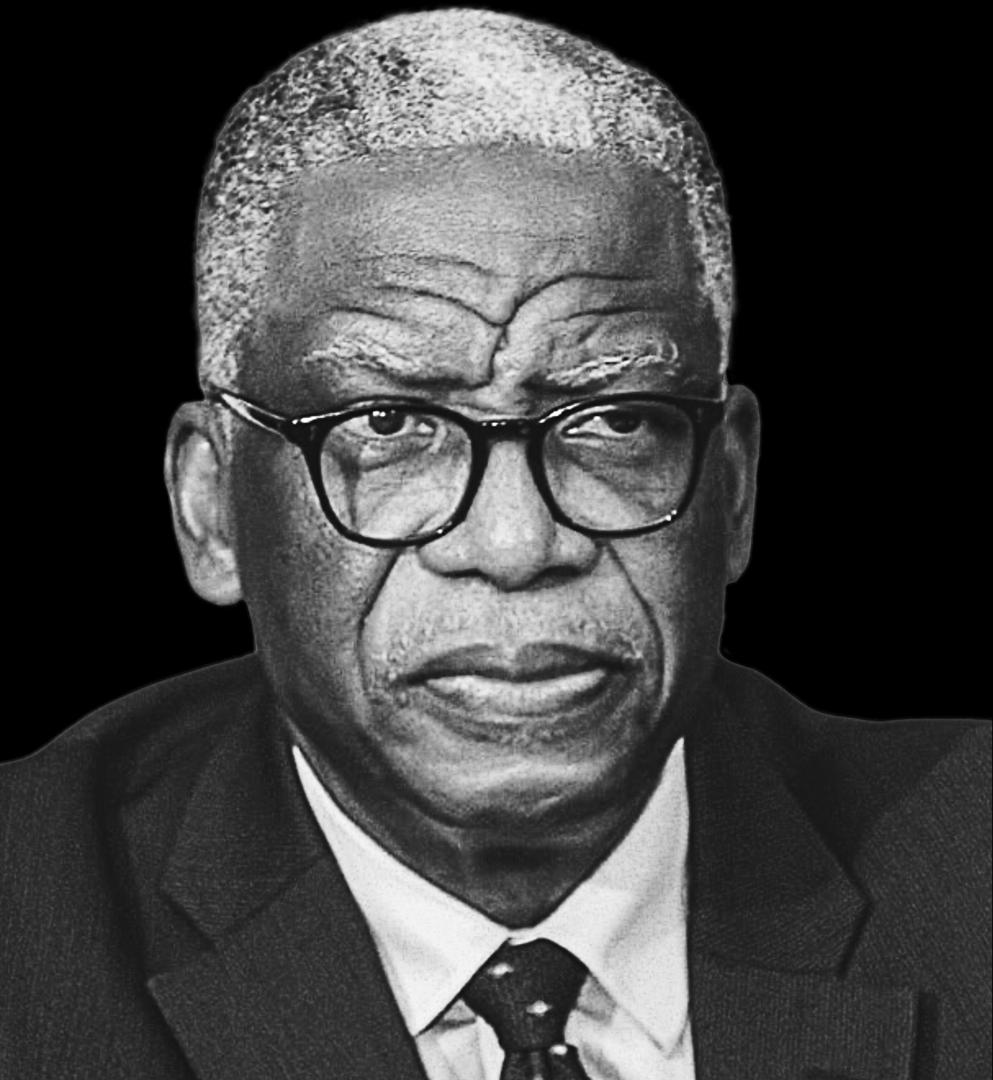

Many people outside East Africa may not have heard of Tundu Lissu, the Tanzanian opposition politician who is today in prison facing a treason charge that could carry the death penalty.
Lissu is not an obscure political activist in his native Tanzania. He is the leader of CHADEMA, Tanzania’s principal opposition party, a former presidential candidate and one of the most prominent challengers to the country’s long-ruling Chama Cha Mapinduzi (CCM). Few outside East Africa know his name, yet his extraordinary story captures the opposition crisis in Africa.
In 2017, when the late President John Magufuli was still in power, gunmen ambushed Lissu outside his Dodoma home and shot him 16 times. He survived and spent nearly five years in self-exile in Belgium. No one has been convicted for the attack. When Magufuli died and Samia Suluhu Hassan became president, Tanzania seemed to be reopening. Rally bans were lifted, and in January 2023 Lissu came home, believing the country was safe enough for him to resume politics.
He returned to a familiar role as an agitator for reform. CHADEMA adopted the slogan “No Reforms, No Elections,” demanding constitutional and electoral changes before the country’s 2025 vote. In April 2025, Lissu was arrested and charged with treason; his party was also barred from the presidential race, which incumbent President Samia Hassan won with 97.66% of the vote.
Protests, an internet shutdown, disappearances and killings followed. A government-appointed inquiry later reported 518 unnatural deaths, including 197 shootings, and recommended further investigation. Opposition sources put the figures as twice the numbers declared by the government.
Lissu has remained in detention since his arrest in April last year. In August (2026), a three-judge High Court panel ruled he has a case to answer on the treason charge tied to his 2025 election-boycott statements. The trial is now in its defence phase.
Lissu’s case typifies the story about African opposition politics. Across the continent, the rules of political contest are being rewritten in varied, country-specific ways. The troubling pattern is unmistakable – opposition is treated as an irritation to be neutralised rather than an alternative government to be accommodated.
In Uganda, Kizza Besigye has spent years confronting a state that has repeatedly treated opposition politics as a security problem, while Bobi Wine has faced severe restrictions.
In Cameroon, Maurice Kamto was prevented from contesting the 2025 presidential election, and Issa Tchiroma subsequently emerged as the main challenger to Paul Biya. After claiming victory, Tchiroma went into exile following violent post-election repression.
Zimbabwe offers another model – opposition leaders may remain outside prison while the institutional conditions necessary for effective political competition are progressively weakened.
Côte d’Ivoire demonstrates yet another version, where questionable changes to constitutional and electoral rules have become central to determining who may compete.
However, Malawi, so far, has shown that the picture isn’t uniformly bleak: genuine electoral turnover still happens on the continent, a reminder that decay is a trend, not a destiny.
The emerging trend is a managed, careful crushing of opponents. They are allowed to exist but not to threaten the incumbent, to campaign within shrinking limits, and to contest elections on incumbent-set terms. Too often, criticism is re-labelled as incitement or sedition. The approach is subtler than the old one-party state, but it makes alternation of power much harder.
Lissu’s trial is important to Africa, with the late Julius Nyerere’s homeland as the unlikely setting. Tanzania, the land of Ujamaa, unity and stability, was largely spared the coups and implosions that scarred many nations in Africa. Tanzania’s unravelling teaches Africa an urgent and savoury lesson that democracy can vanish, gouged out from within, even while regular or periodic elections continue.
The decisive test has gone beyond the casting of ballots. A functioning opposition assures citizens that power is temporary and contestable. Can citizens still organise to replace those who govern them ineffectively? It is this replacement capacity that makes opposition indispensable. Now it is evaporating in many parts of Africa.
Sadly, the injury to one politician extends far beyond the nation; such an assault on democracy makes it possible for the architecture of accountability to be gradually dismantled.
At the end of last August, Tanzania’s Vice-President Emmanuel Nchimbi resigned, effective 4th September 2026. There had been reported tension with President Hassan over his public remarks favouring constitutional reform; the ruling party subsequently expelled him for alleged indiscipline. The episode suggests the reform argument is now surfacing inside the ruling establishment itself.
Nyerere understood what many contemporary establishments seem to have forgotten: legitimacy rests not on how long a party governs, but on whether citizens retain a real chance to remove it when it becomes ineffective and self-serving.
Africa now faces a choice to either preserve that principle or normalise a new electoral politics in which governments are elected, but credible alternatives are systematically blocked from becoming governments.
The trial of Lissu and of opposition politics embody this danger. Lissu has travelled nearly the full distance between the possibility of attaining high office and near-assassination. But the deeper tragedy is that Africa is growing accustomed to the strangulation of opposition. If an opposition leader can be shot, exiled, arrested, charged with treason, and erased from politics while the democratic world moves on, what does “democracy” really mean?
Dr Richard Ikiebe is a Media and Management Consultant, Teacher and Chairman, Board of Businessday Newspape